
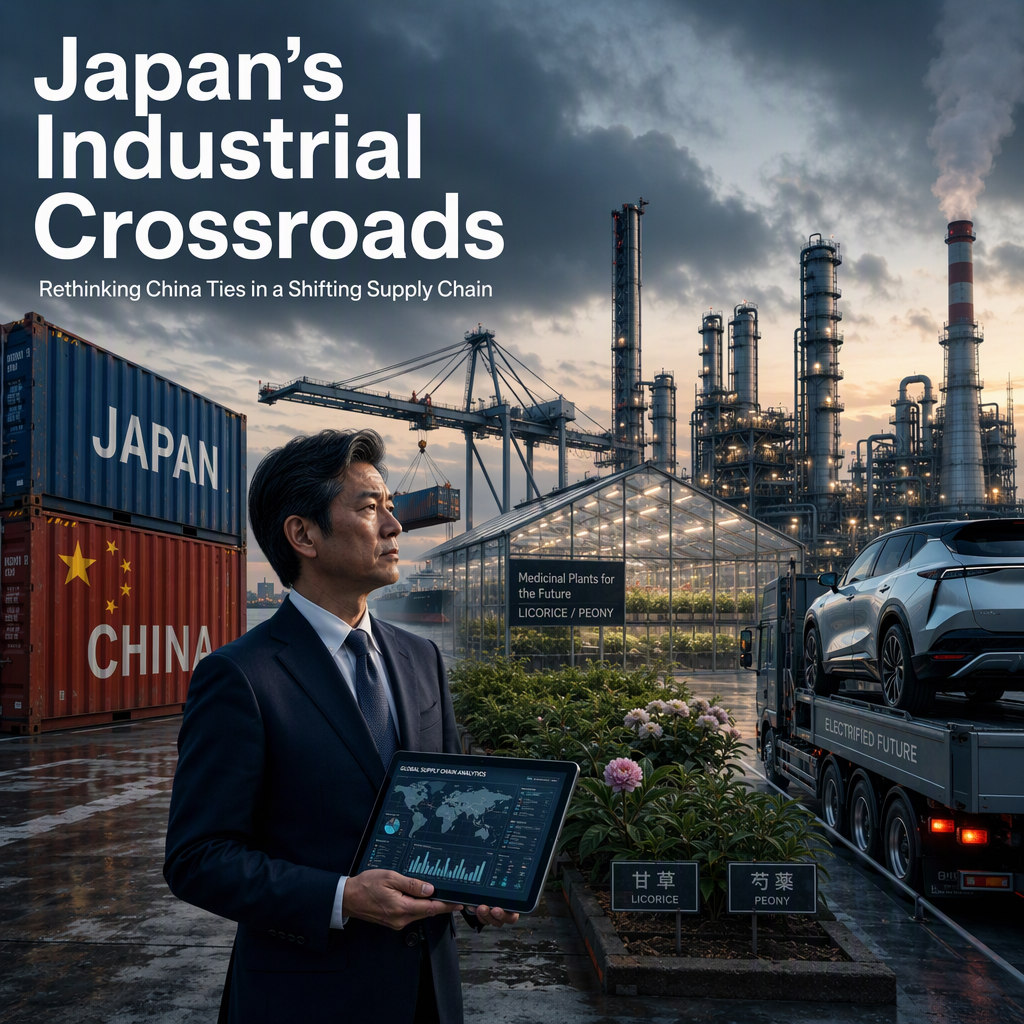
Japanese industries are undergoing significant shifts in their supply chain strategies as reliance on China becomes increasingly complex and competitive. In the pharmaceutical sector, companies like Tsumura & Co. are actively developing domestic supply chains to reduce dependence on Chinese imports for key herbal ingredients such as licorice root and peony root. This move is driven by recent supply shocks, intensified competition for raw materials, and a desire to ensure stable, high-quality supplies while supporting Japanese agriculture. The Kampo medicine market in Japan is expanding, fueled by greater health consciousness and an aging population, prompting firms to prioritize supply chain resilience and risk diversification [1].
Meanwhile, Japan's chemical industry is facing mounting pressure from a surge in Chinese plastic and chemical imports, which have jumped 52% since the start of the U.S.-Iran war. This influx is squeezing the margins of Japanese producers, especially in the naphtha-based plastics sector, as rising naphtha prices and cheaper Chinese imports reshape the market landscape. Japan has shifted to being a net importer of petrochemicals, raising concerns about long-term supply security and the viability of domestic production. Industry executives are urging government intervention to address the competitive imbalance, warning of potential erosion of Japan's chemical manufacturing base if the trend continues [2].
In the automotive sector, Toyota Motor's decision to source more components from Chinese suppliers for its upcoming luxury electric SUV, the bZ3X, marks a significant shift in procurement strategy. The bZ3X, introduced in China in March 2025, is believed to use many Chinese-made components, reflecting the need for cost-competitive production in the world's largest EV market. This move has alarmed traditional Japanese suppliers, who now face exclusion and increased pressure to cut costs and innovate to remain relevant. The trend underscores the broader challenges facing Japan's auto parts sector as electrification and Chinese competition intensify [3].
Across these sectors, Japanese companies are reassessing their supply chain dependencies and competitive strategies in response to both external shocks and the growing influence of Chinese suppliers. The market implications are significant, with potential long-term impacts on domestic production capacity, supplier relationships, and industry profitability.
CONCLUSION
Japanese industries are at a crossroads as they navigate rising competition and supply chain vulnerabilities linked to China. While some sectors are seeking to localize procurement and reduce risk, others are being forced to adapt to the realities of cost pressures and shifting global dynamics. The outcome of these strategic adjustments will be critical for the future competitiveness of Japan's manufacturing and supply sectors.