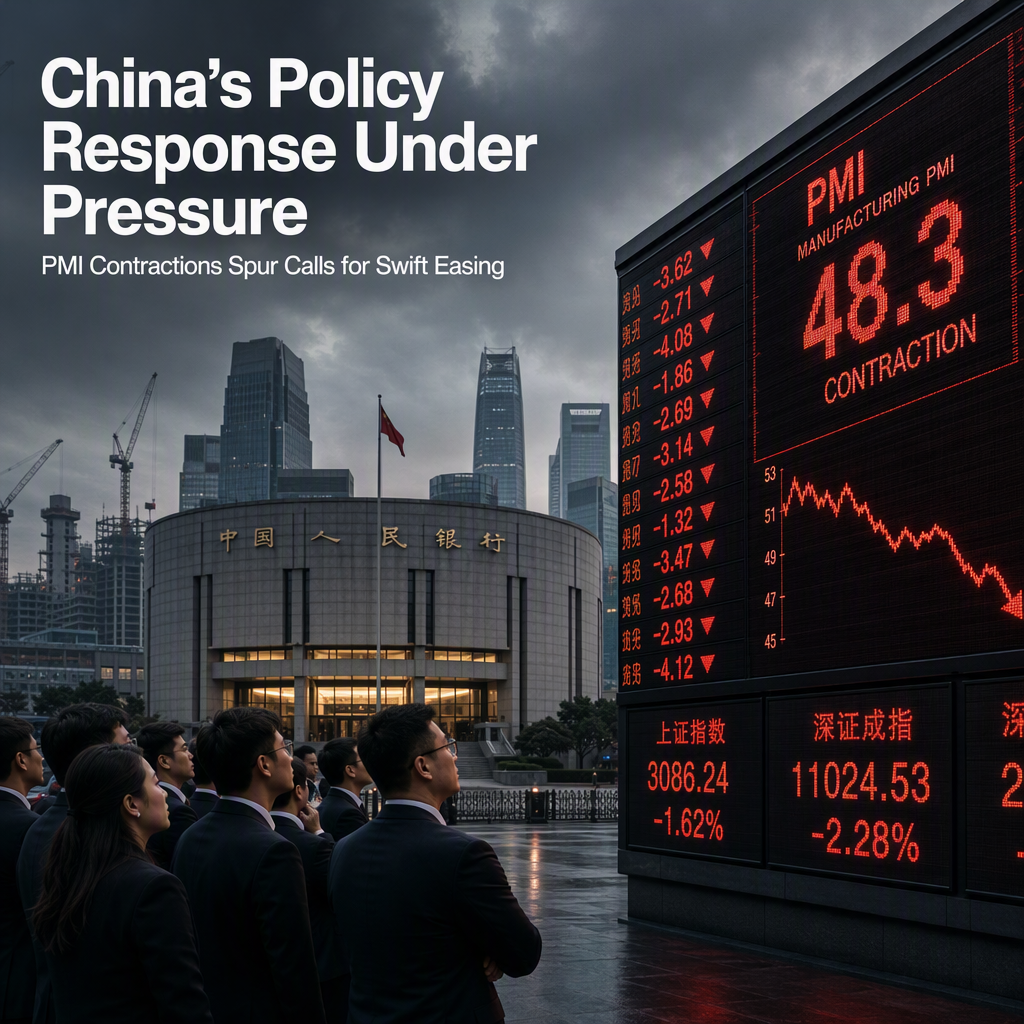
China's economic outlook has come under increased scrutiny following two consecutive months of broad Purchasing Managers' Index (PMI) contraction, which has left Gross Domestic Product (GDP) growth tracking below the official 4.5%-5.0% target range, according to Commerzbank’s Dr. Henry Hao [1]. This underperformance has heightened pressure on Beijing to implement more substantive policy support measures. Fiscal spending contracted by 4.4% year-on-year in July, marking an improvement from June's 11.9% decline and indicating a gradual easing of the previous austerity stance [1]. Vice Finance Minister Liao Min confirmed that new coordinated fiscal and financial policies are being drafted for deployment in the second half of the year, signaling a calibrated fiscal response [1].
On the monetary front, the People's Bank of China (PBoC) reaffirmed its commitment to a moderately loose policy in its Q2 monetary policy implementation report and pledged to strengthen counter-cyclical adjustments [1]. The central bank also signaled plans to make greater use of overnight reverse repo operations as a liquidity management tool [1]. With the August PMI data highlighting ongoing demand-side weakness and the fiscal policy rollout lagging behind schedule, the likelihood of pre-emptive monetary easing, including potential Reserve Requirement Ratio (RRR) and rate cuts before year-end, has increased [1].
Overall, the combination of weak economic indicators and delayed policy responses has intensified expectations for both fiscal and monetary easing in the coming months [1].
CONCLUSION
China's economy is facing mounting pressure due to consecutive PMI contractions and GDP growth falling short of official targets. Both fiscal and monetary authorities are signaling increased support, with pre-emptive easing measures likely before year-end. Market participants are closely watching for the rollout of new policies to stabilize growth.