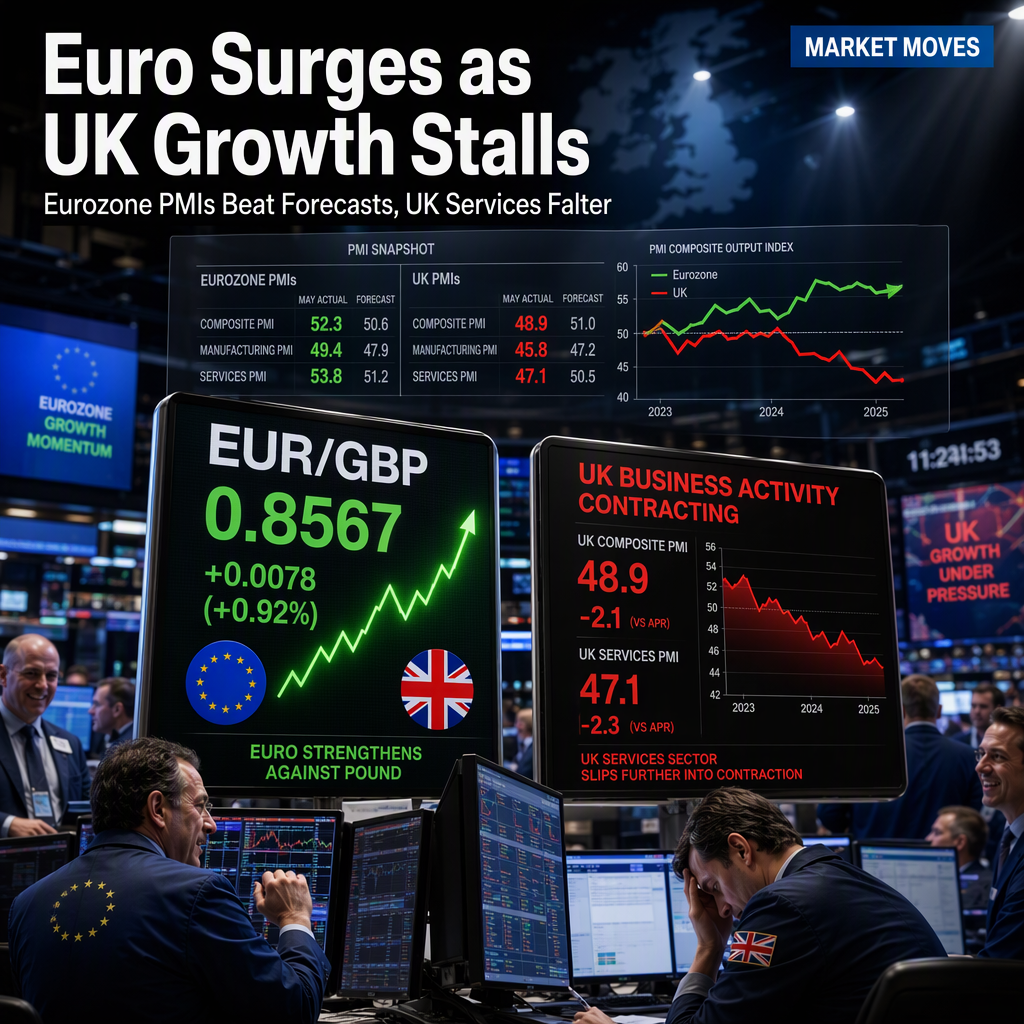
The Euro (EUR) rallied against the British Pound (GBP) on Wednesday, with the EUR/GBP pair reaching session highs at 0.8590, approaching the top of its monthly range near 0.8600, following the release of mixed UK Purchasing Managers' Index (PMI) data for September [1]. The preliminary UK S&P Global PMI figures showed manufacturing activity improved to 52.0 in September from 51.7 in August, surpassing expectations of a mild slowdown to 51.6. However, services activity declined to 51.7 from 52.5 in the previous month, falling short of the 52.0 market consensus. As a result, the Composite Index dropped to 51.7 in September from 52.5 previously [1].
The PMI report highlighted that input price inflation accelerated for the second consecutive month, reaching its highest level since June, with survey respondents citing increased energy, fuel, and raw material costs. Chris Williamson, Chief Business Economist at S&P Global Market Intelligence, commented that September is witnessing a 'worrying combination of disappointingly sluggish economic growth and intensifying inflationary pressures,' with subdued business confidence and high costs discouraging hiring [1].
In contrast, Eurozone data was more positive. The preliminary Eurozone Services PMI rose to 53.0, its highest in 10 months and above expectations of 51.7, while Manufacturing PMI remained steady at 52.7, matching market consensus. Germany's services sector activity improved to 52.9 after five months of contraction, beating expectations of 50.0, though manufacturing activity slowed to 53.8 from 54.3, still indicating solid business activity [1].
Despite the supportive data, the Euro faces headwinds from political uncertainty in Germany following poor state election results for the ruling CDU party, raising questions about Chancellor Frederich Merz’s leadership. Additionally, France’s public debt has reached its highest level since 1978 and is expected to continue rising amid increasing borrowing costs, which could trigger a credit crisis [1].
CONCLUSION
The Euro's rally against the Pound was driven by disappointing UK business activity data and stronger-than-expected Eurozone PMIs. However, political uncertainty in Germany and rising French public debt present ongoing risks for the Euro. Market participants remain cautious amid these mixed signals.