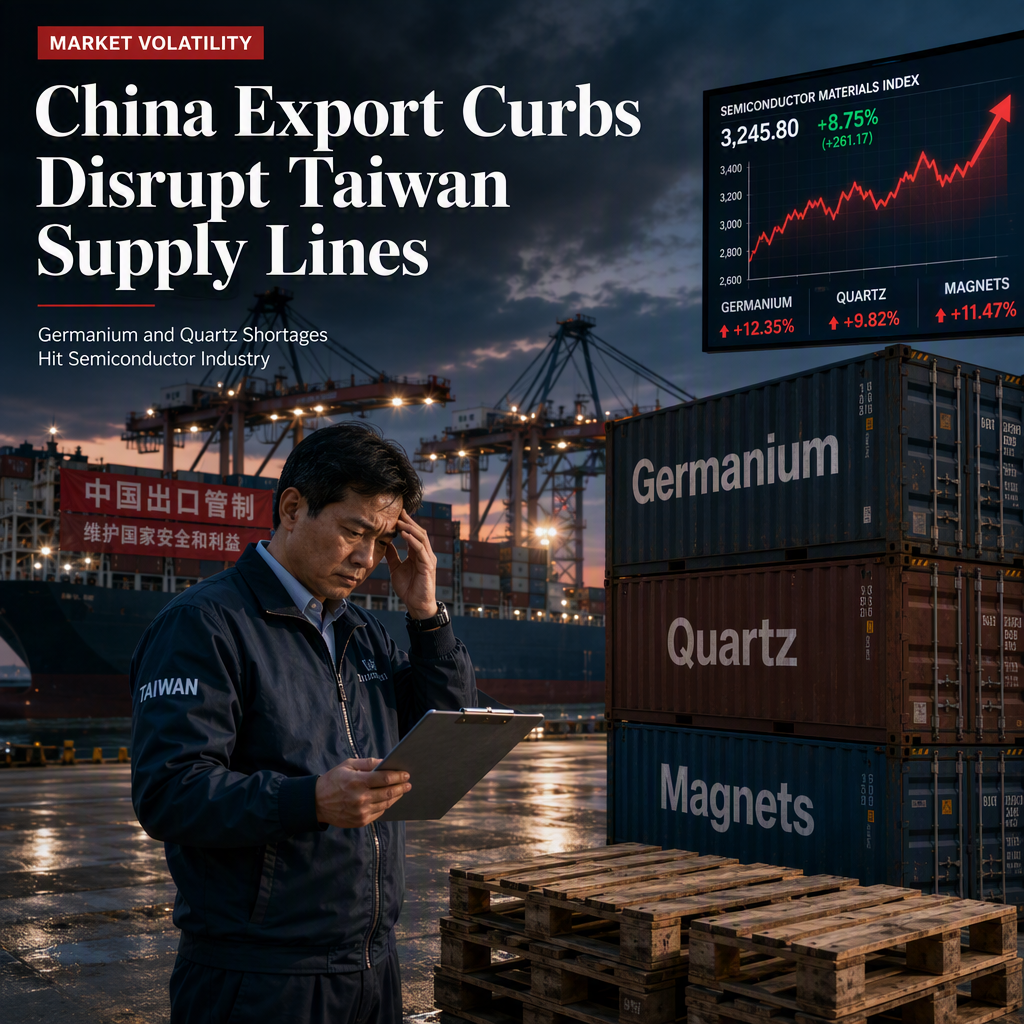
China has begun restricting or delaying exports of critical aerospace and optical materials to Taiwan, causing significant supply chain disruptions for Taiwanese industries, particularly in the semiconductor and optics sectors [1]. The affected materials include germanium- and quartz-based products, as well as certain magnets, all of which are essential for high-tech manufacturing [1]. China, which controls the supply of many key industrial materials, has previously used export curbs as a response to geopolitical tensions, and this latest move is seen by market analysts as a reaction to rising cross-strait tensions [1].
Industry insiders report that shipment lead times for these materials have increased substantially, with some orders only partially fulfilled or delayed for 'additional checks' [1]. A senior executive at a major Taiwanese optical components manufacturer stated that delays now range from weeks to months, putting pressure on production lines [1]. Financial data indicates a decline in both the volume and value of these materials entering Taiwan since early summer 2026 [1]. Spot market prices for germanium-based products have risen by up to 15%, and quartz wafer prices are also trending higher due to tightening supply [1].
Some Taiwanese companies have sought alternative suppliers in Europe and North America, but these options are more expensive and involve longer procurement cycles [1]. Technical analysts warn that continued restrictions could increase cost pressures on downstream electronics, optics, and chipmaking companies, potentially eroding margins and delaying delivery schedules for global clients [1]. The shortage of high-purity quartz and specialized magnets could also impact the production of advanced semiconductor equipment and aerospace systems [1].
Market sentiment is described as cautious, with traders monitoring support levels for germanium-related stocks on the Taipei Exchange and technical indicators pointing to increased volatility [1]. Companies are being advised to secure alternative supply lines and hedge against further price increases [1]. The situation remains fluid, with industry executives and market watchers closely observing potential policy changes from Beijing that could further affect export restrictions [1].
CONCLUSION
China's export restrictions on key optical and aerospace materials to Taiwan are causing significant supply chain disruptions, price increases, and heightened market volatility. The ongoing situation is prompting Taiwanese companies to seek alternative suppliers and hedge against further risks, while global supply chains remain vulnerable to additional policy shifts from Beijing.