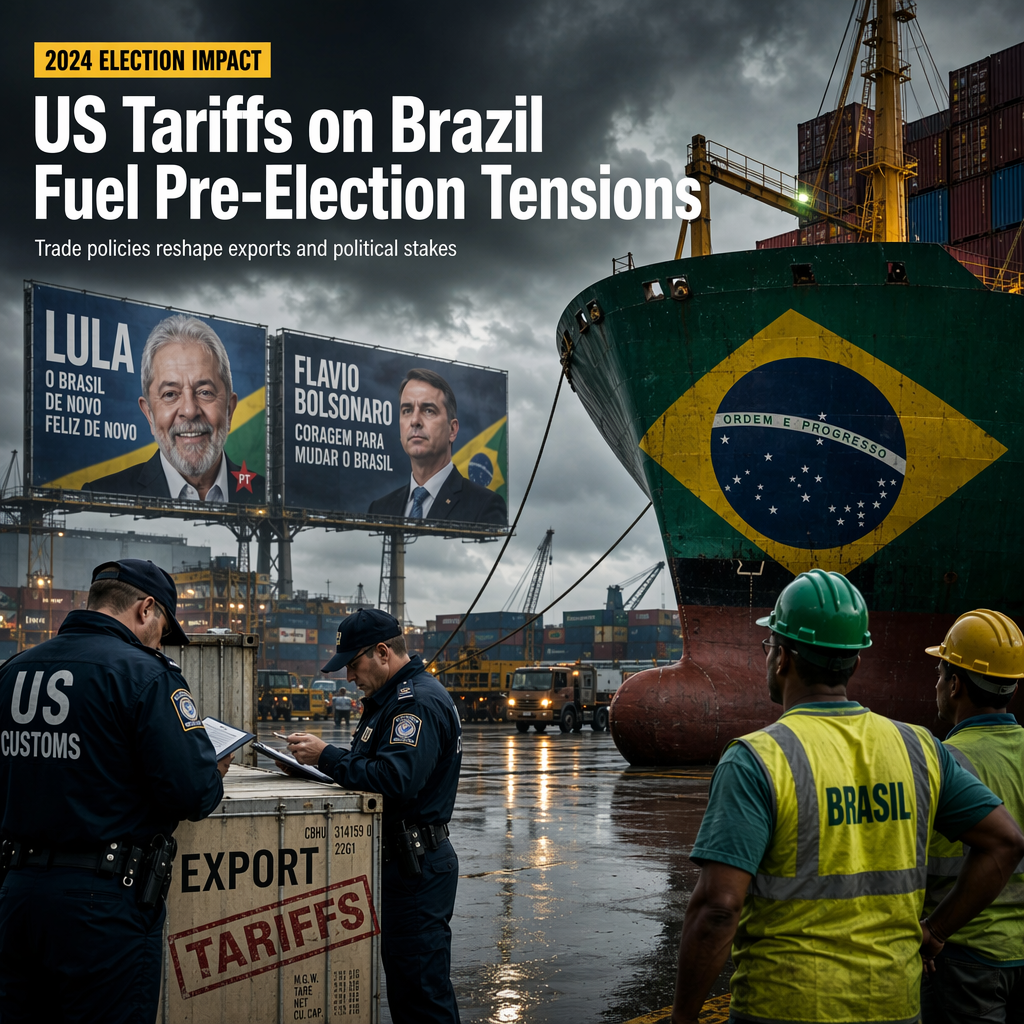
The United States has imposed new Section 301 tariffs on Brazilian exports, with a 25% levy set to take effect on July 22. There is a possibility that this tariff could increase to 37.5% pending the outcome of an ongoing investigation, although this would still be below the 50% tariff imposed by IEEPA last July due to concerns related to former President Jair Bolsonaro's trial [1]. Standard Chartered’s Dan Pan notes that over 30% of Brazilian exports are exempt from the announced 25% tariff, which is expected to limit the economic pain for Brazil [1]. Despite the tariffs, Brazil's total exports have continued to grow, supported by favorable terms of trade and strengthened relationships with trade partners in Asia and the Middle East [1]. However, the tariffs have contributed to a notable decline in bilateral trade between the US and Brazil since mid-2025, following the announcement of the 50% IEEPA tariff [1]. Politically, the fallout from these tariffs is significant, with Standard Chartered suggesting that President Lula may be strengthened against Flavio Bolsonaro in the upcoming October election [1]. The year-long trade and political feud between the US and Brazil is expected to continue as Section 301 tariff investigations progress [1].
CONCLUSION
While the new US tariffs on Brazilian exports are expected to have a limited economic impact due to exemptions and diversified trade ties, they have already caused a decline in bilateral trade and are shaping Brazil's political landscape ahead of the October election. The ongoing tariff investigations suggest continued tensions, with potential implications for both trade and domestic politics.