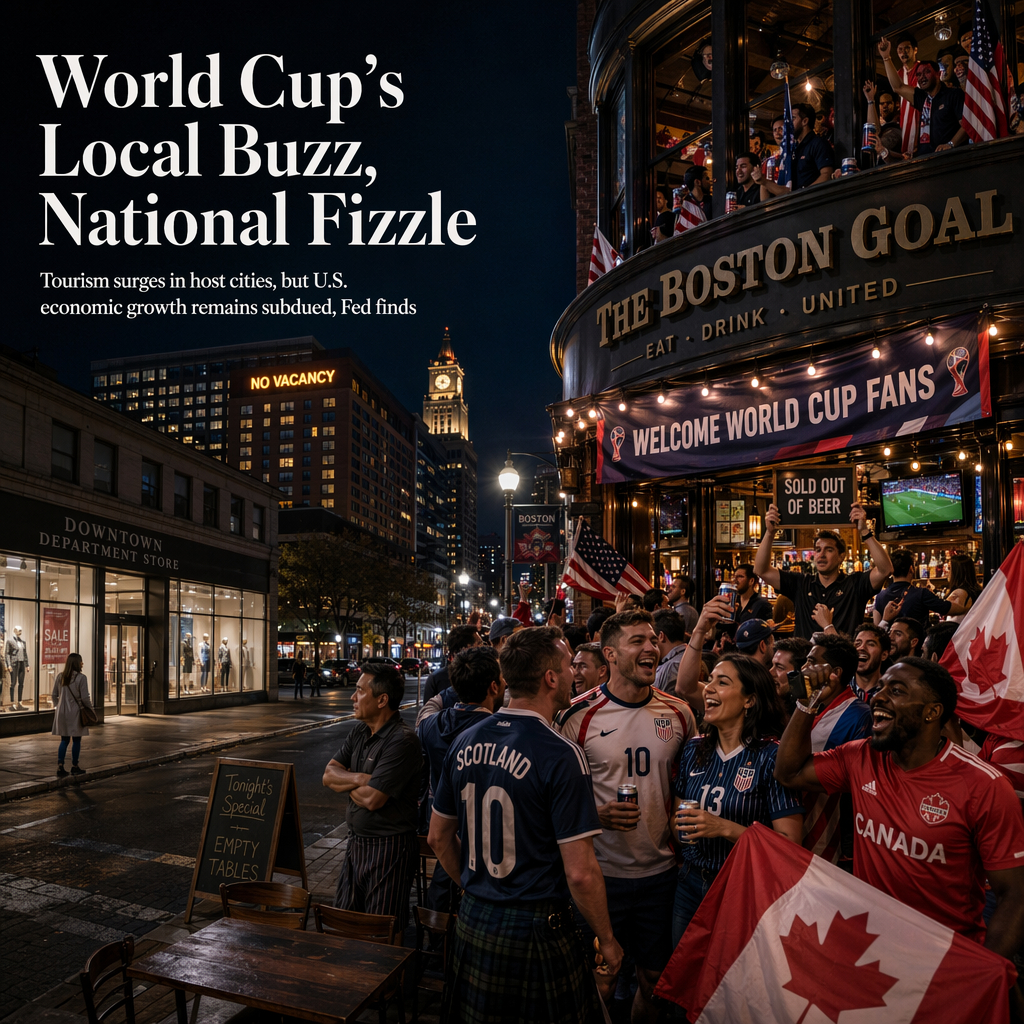
The Federal Reserve's latest Beige Book report highlighted that the 2026 FIFA World Cup, co-hosted by the United States, provided a notable tourism boost to host cities, particularly benefiting bars and restaurants with increased sales and higher hotel occupancy rates [1]. Median admissions prices for the tournament exceeded $900, according to TicketData [1]. In Boston, hotel bookings initially lagged expectations but eventually met forecasts after price reductions, and local bars experienced a surge in beer sales, with some establishments running out of stock during the influx of Scottish fans [1]. The Boston Fed also noted an uptick in Canadian visitors compared to the previous summer, though these levels remained well below historical averages, impacting tourism-dependent areas in coastal Maine and northern Vermont [1].
In New York City, some restaurants and bars reported strong sales linked to match-viewing events, and hotels saw increased occupancy and room prices [1]. However, other eateries experienced a decline in international visitors, particularly from Canada, attributed to fewer border crossings following U.S. tariff policies and sovereignty concerns [1]. Despite increased foot traffic from the tournament, at least one department store reported no corresponding rise in sales, and mid-tier attractions saw weaker performance [1].
The San Francisco Fed observed high tourist volumes in World Cup host cities within its region, but noted that in other markets, local consumers reduced spending on restaurants, hotels, and entertainment [1]. Overall, the demand for consumer and business services "slowed somewhat on net" according to the report [1]. The Fed attributed the cap on consumer spending growth to rising oil prices, which prompted consumers to seek cheaper alternatives or cut back on discretionary purchases [1].
The report underscores that while the World Cup generated localized economic benefits, these were offset by broader signs of consumer caution and spending restraint across the U.S. economy [1].
CONCLUSION
The 2026 FIFA World Cup delivered a short-term boost to tourism and hospitality sectors in host cities, but the Federal Reserve's Beige Book indicates that broader U.S. economic growth remained subdued. Rising oil prices and cautious consumer behavior limited the tournament's overall impact, signaling ongoing challenges for discretionary spending.