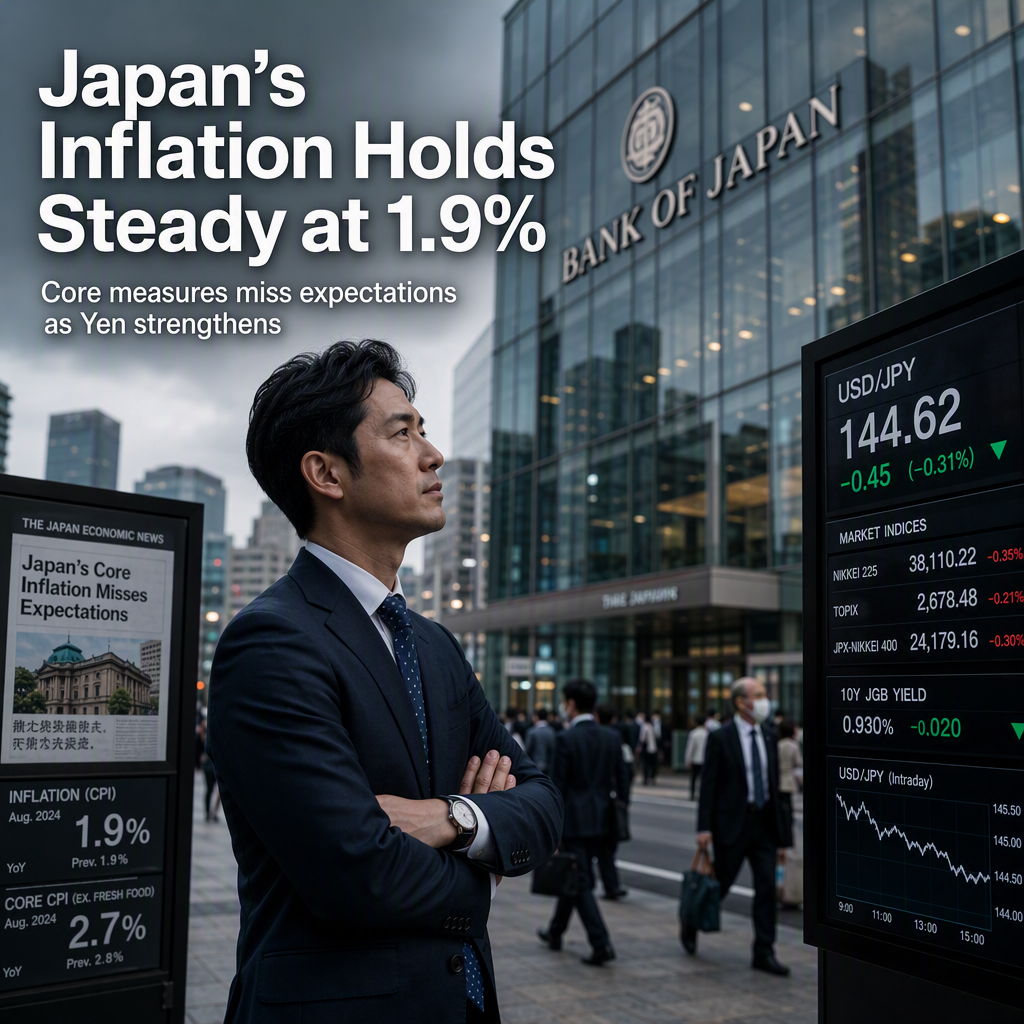
Japan's National Consumer Price Index (CPI) increased by 1.9% year-on-year in August, matching the previous month's reading, according to data released by the Japan Statistics Bureau on Friday [1]. The National CPI excluding Fresh food registered a 1.7% YoY rise, down from 1.8% in the prior month and below the market consensus of 1.8% [1]. Additionally, CPI excluding Fresh Food and Energy also rose 1.7% YoY, compared to 1.8% previously [1].
The market responded to the CPI data with the USD/JPY pair declining by 0.15% to 156.03 at the time of reporting [1]. This suggests a mild strengthening of the Japanese Yen following the release of inflation figures that were slightly below expectations for core measures [1].
The Bank of Japan (BoJ), which targets an inflation rate of around 2%, has recently shifted away from its ultra-loose monetary policy. In March 2024, the BoJ raised interest rates, marking a retreat from its previous stance of quantitative and qualitative easing and negative interest rates [1]. The BoJ's policy changes have influenced the Yen's value, with the currency depreciating during periods of aggressive stimulus but showing signs of recovery as the central bank unwinds its ultra-loose policy [1].
The decision to tighten policy was driven by a weaker Yen and rising global energy prices, which pushed Japanese inflation above the BoJ's 2% target. Expectations of increasing salaries in Japan also contributed to the central bank's move [1].
CONCLUSION
Japan's August CPI data shows inflation holding steady at 1.9%, while core measures fell short of expectations. The market reacted with a modest strengthening of the Yen, reflecting investor sensitivity to inflation trends and central bank policy shifts. The BoJ's recent policy tightening continues to shape currency and inflation dynamics in Japan.