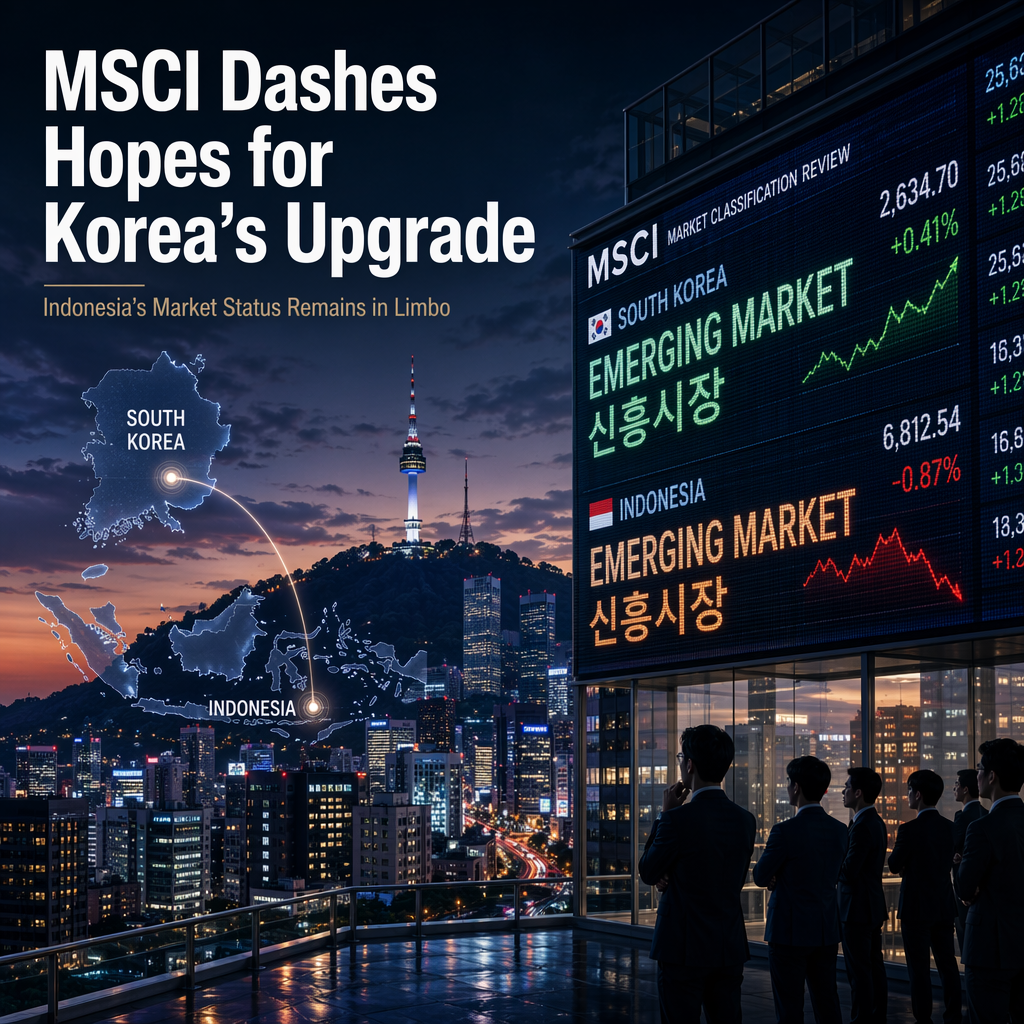
MSCI has decided to keep South Korea classified as an 'emerging market' in its latest review, disappointing expectations that the country might be added to the Developed Markets watchlist—a necessary precursor to an upgrade in status. The index provider cited several persistent barriers to reclassification, including the limited convertibility of the Korean won in offshore markets, a rigid investor identification system, restrictions on in-kind transfers and off-exchange transactions, and limits on investment products due to exchange data regulations. While MSCI acknowledged recent measures announced by South Korean authorities to address these issues, it stated that 'investors have communicated that the underlying issues have not been fully resolved' [1].
South Korea is set to launch 24-hour trading in the dollar-won spot market on July 6, marking the latest effort to open its foreign exchange market to overseas investors. The South Korean Finance Ministry responded to MSCI's decision by affirming its commitment to ongoing reforms, expressing confidence that continued progress in foreign exchange and capital market reforms could eventually lead to inclusion among advanced economies [1].
For Indonesia, MSCI extended its review of the country's market status until November, following earlier concerns about market accessibility and a freeze on Indonesian stocks from its indexes in January due to investability issues. MSCI indicated that if recent reforms by Indonesian authorities are deemed insufficient, it may consider a range of options, including a potential downgrade to frontier-market status [1].
Analysts previously told CNBC that an upgrade for South Korea could help address the 'Korea discount,' referring to the lower valuations often assigned to South Korean stocks compared to global peers [1].
CONCLUSION
MSCI's decision to maintain South Korea's emerging market status and extend Indonesia's review signals ongoing concerns about market accessibility and regulatory reforms. While both countries are taking steps to address these issues, further progress is needed before any upgrade or reclassification is considered. The outcome maintains uncertainty for investors seeking greater market inclusion and valuation improvements.