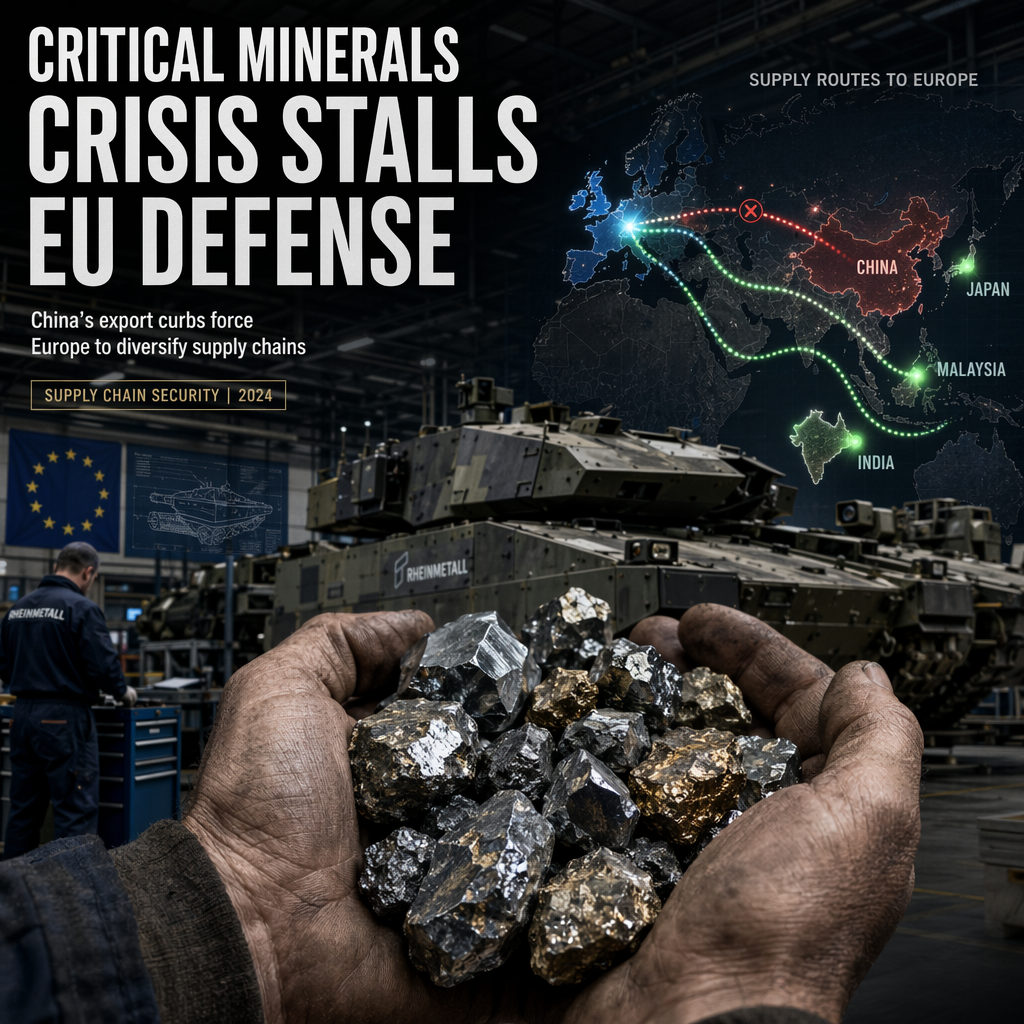
The European Union's efforts to enhance its defense capabilities are facing significant challenges due to China's export controls and sales restrictions on critical raw materials, including rare earths, tungsten, and other strategic metals essential for advanced weapon systems and military hardware production [1]. In response, EU leaders are urging member states to accelerate the diversification of their supply chains, with calls to collaborate more closely with countries such as Japan, Malaysia, and India to secure alternative sources of these vital minerals [1].
German defense companies, notably Rheinmetall, are adapting to the situation by repurposing automotive parts plants into weapons manufacturing facilities, reflecting a broader shift within the European defense industry to reduce reliance on Chinese suppliers [1]. European NATO countries are also building strategic stockpiles and seeking partnerships with non-Chinese suppliers as part of their strategy to mitigate the risks posed by Beijing's control over critical mineral exports [1].
Market analysis indicates that the EU's ability to independently source critical minerals will be a decisive factor in the success of its rearmament and modernization programs [1]. The establishment of new supply chain partnerships and increased investment in domestic mining and recycling capabilities are identified as essential steps to ensure long-term security and stability in the European defense sector [1].
European officials have expressed concerns that ongoing Chinese restrictions could delay or derail key projects aimed at strengthening the bloc's military capabilities, underscoring the urgency of diversifying supply chains and securing alternative sources of strategic materials [1].
CONCLUSION
China's export controls on critical minerals pose a significant threat to the EU's defense modernization efforts, prompting urgent calls for supply chain diversification and new international partnerships. The success of the EU's rearmament programs will depend heavily on its ability to secure independent sources of strategic materials and invest in domestic capabilities.