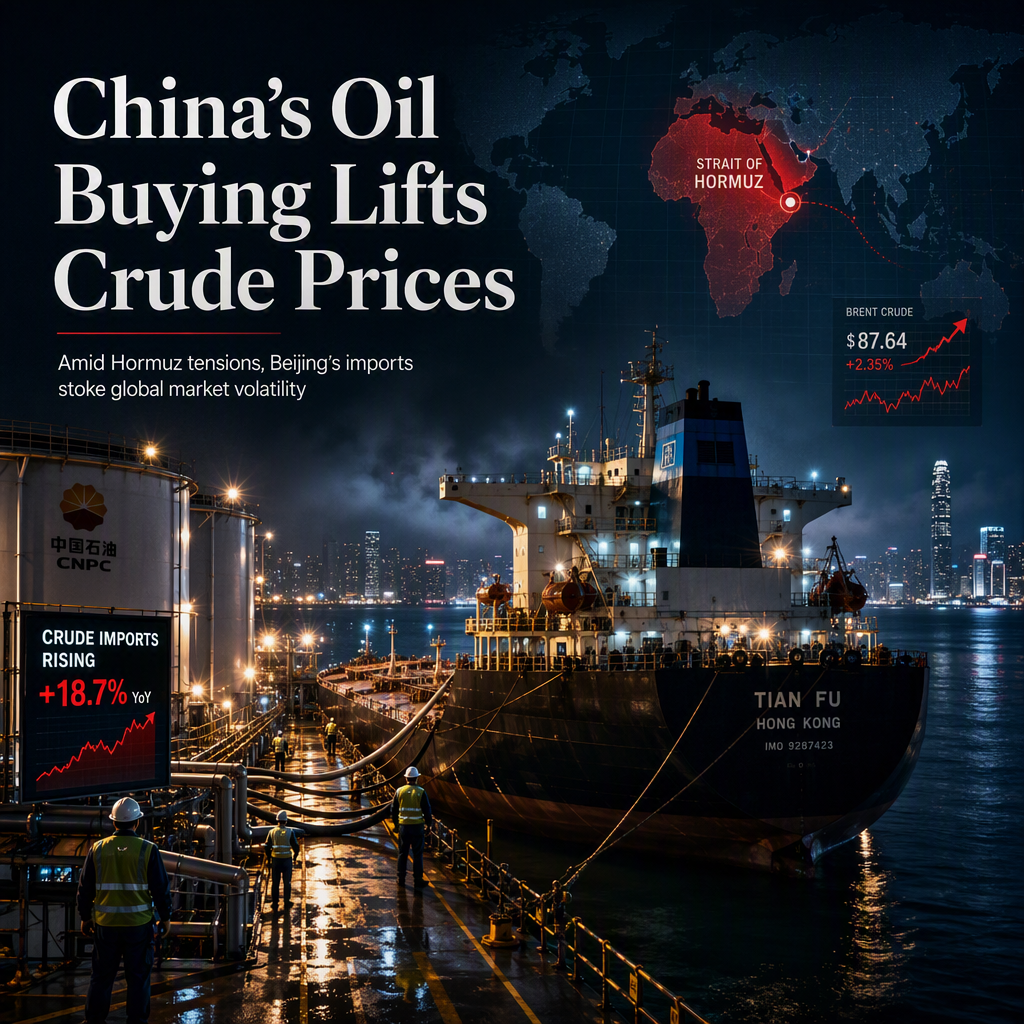
China has re-entered the oil market as renewed hostilities in the Strait of Hormuz drive up crude prices, following a period of reduced imports after the outbreak of the Iran war [1]. Chinese oil imports, which had previously dropped to an eight-year low earlier this year, are now rebounding, though they remain below prewar levels [1]. This renewed buying activity is seen as an effort by China to replenish its oil inventories and capitalize on any price dips, according to analysts [1].
The timing of China's return is significant, as the Strait of Hormuz is a critical shipping lane through which a fifth of the world's oil supply passes, and ongoing tensions there have already led to sharp increases in crude prices [1]. Market participants suggest that China's increased imports are likely to provide additional support to global crude prices, which are already elevated due to fears of supply disruptions [1].
Some analysts warn that if the situation in Hormuz escalates further, Brent crude prices could surpass $100 per barrel, intensifying inflationary pressures worldwide [1]. Technical analysis indicates that Brent crude faces resistance near the $100 per barrel mark, with support at around $92.50; a sustained break above resistance could trigger further buying, while a drop below support might lead to a short-term correction [1].
China's actions are being closely monitored by other major oil importers and traders, as its purchasing patterns have a significant influence on global market sentiment and price dynamics [1].
CONCLUSION
China's renewed oil buying amid heightened Hormuz tensions is supporting already rising crude prices and could drive further increases if hostilities escalate. Market participants and analysts are watching China's moves closely, as they have the potential to amplify global inflationary pressures and impact oil price trends.