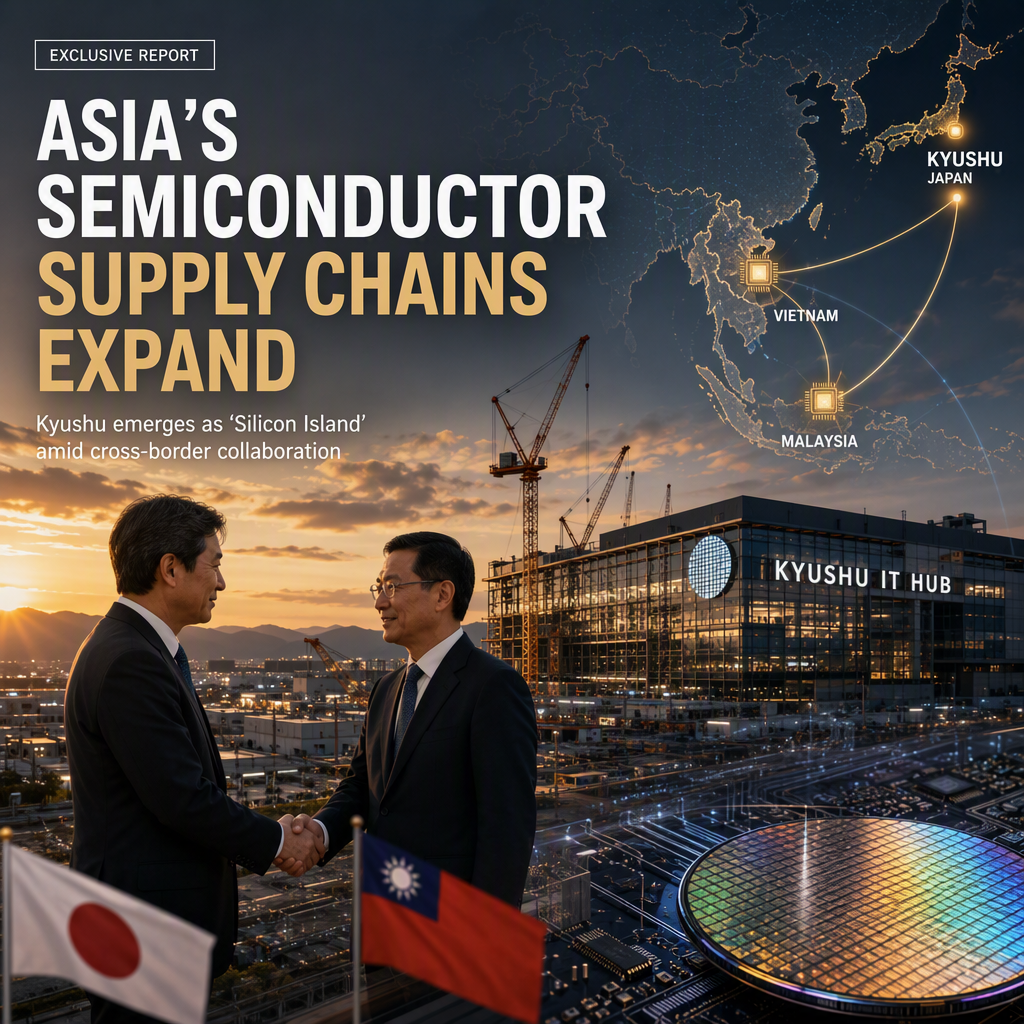
Two significant developments in the Asian semiconductor supply chain have been reported. First, Itochu Techno-Solutions (CTC), a unit of Itochu, is partnering with Taiwan's largest IT services provider to support Taiwanese semiconductor-related companies expanding into Japan, specifically targeting the Kyushu region. This joint venture aims to strengthen Kyushu's position as a semiconductor industry cluster, providing comprehensive IT and business support to help Taiwanese chipmakers and suppliers establish a stronger presence in Japan. The initiative is part of a broader trend, with global companies and investors increasingly viewing Kyushu as a potential 'Silicon Island,' especially following major investments from companies like Sony and TSMC in advanced image sensor plants. The article notes that this move comes amid renewed interest in the region after natural disasters impacted local industries, but does not disclose specific financial figures or market analysis [1].
In a separate but related development, Japanese silicon manufacturer Tokuyama is expanding its production of a key chip material by establishing new plants in Vietnam and Malaysia. This strategy is intended to diversify Tokuyama's supply chain, moving away from concentrated production in Japan to reduce the risk of disruptions. The new plant in southern Vietnam will increase capacity and extend production beyond the company's existing Japanese factory. Tokuyama's efforts are part of a broader industry trend to build more resilient and distributed supply chains, particularly as demand for semiconductors rises due to the growth of artificial intelligence (AI) applications. The article highlights that minimizing supply chain risks has become a major focus for chip material makers as the global semiconductor market becomes more competitive and sensitive to regional instabilities [2].
Both articles underscore the importance of cross-border collaboration and supply chain diversification in the semiconductor industry. While Itochu and its Taiwanese partner are focused on supporting the expansion of Taiwanese chipmakers into Japan, Tokuyama is spreading its manufacturing footprint across Southeast Asia to ensure greater operational resilience. No specific financial data, market reactions, or analyst opinions are provided in either article [1][2].
CONCLUSION
The reported initiatives by Itochu, its Taiwanese partner, and Tokuyama reflect a strategic shift toward greater supply chain resilience and cross-border collaboration in the semiconductor sector. These moves highlight Kyushu's growing role in the industry and the increasing importance of distributed manufacturing across Asia. While concrete financial impacts are not disclosed, the developments signal a proactive response to rising demand and supply chain risks.