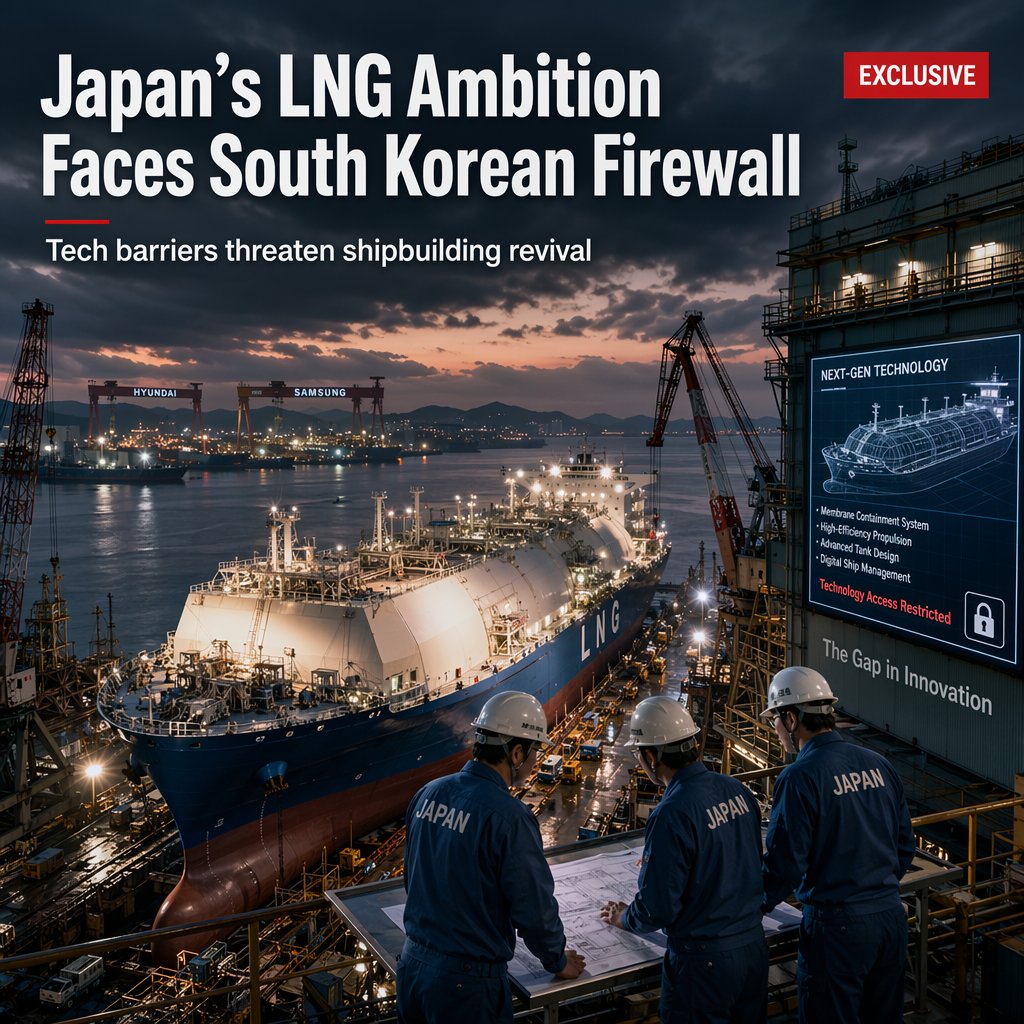
Japan is seeking to revive its domestic liquefied natural gas (LNG) carrier construction industry, a sector where it was once a global leader, but now faces significant challenges due to its reliance on advanced technology from South Korea [1]. South Korea currently dominates the LNG carrier market, and Japanese shipbuilders are struggling to compete on cost and efficiency, particularly in areas such as membrane tank technology and specialized welding techniques [1]. However, South Korean law restricts the transfer of key shipbuilding technologies, creating a major barrier for Japan's ambitions [1].
Industry analysts highlight that without access to these technologies, Japanese shipbuilders may find it difficult to regain competitiveness against South Korean and Chinese rivals [1]. The market for LNG carriers has expanded rapidly in response to growing global demand for cleaner energy sources, making the stakes particularly high for Japan [1]. Individual LNG carriers can cost over $200 million to build, and reentering this market could provide a significant financial boost to Japan's shipbuilding sector, which has seen declining orders in recent years [1].
Despite these obstacles, Japanese shipbuilders remain hopeful for collaboration. A senior executive at a major Japanese shipyard stated, "We need to develop partnerships and find ways to legally access the best available technologies," emphasizing the importance of innovation and cross-border cooperation [1]. However, analysts caution that securing South Korean technology is essential but not guaranteed under current regulations, and Japan's path to reviving its LNG carrier industry remains uncertain, hinging on complex negotiations and potential policy changes in South Korea [1].
CONCLUSION
Japan's efforts to revive its LNG carrier industry face significant technological and regulatory hurdles, particularly regarding access to South Korean shipbuilding technology. While the potential market impact is substantial, the outcome depends on Japan's ability to secure necessary partnerships and navigate legal restrictions.