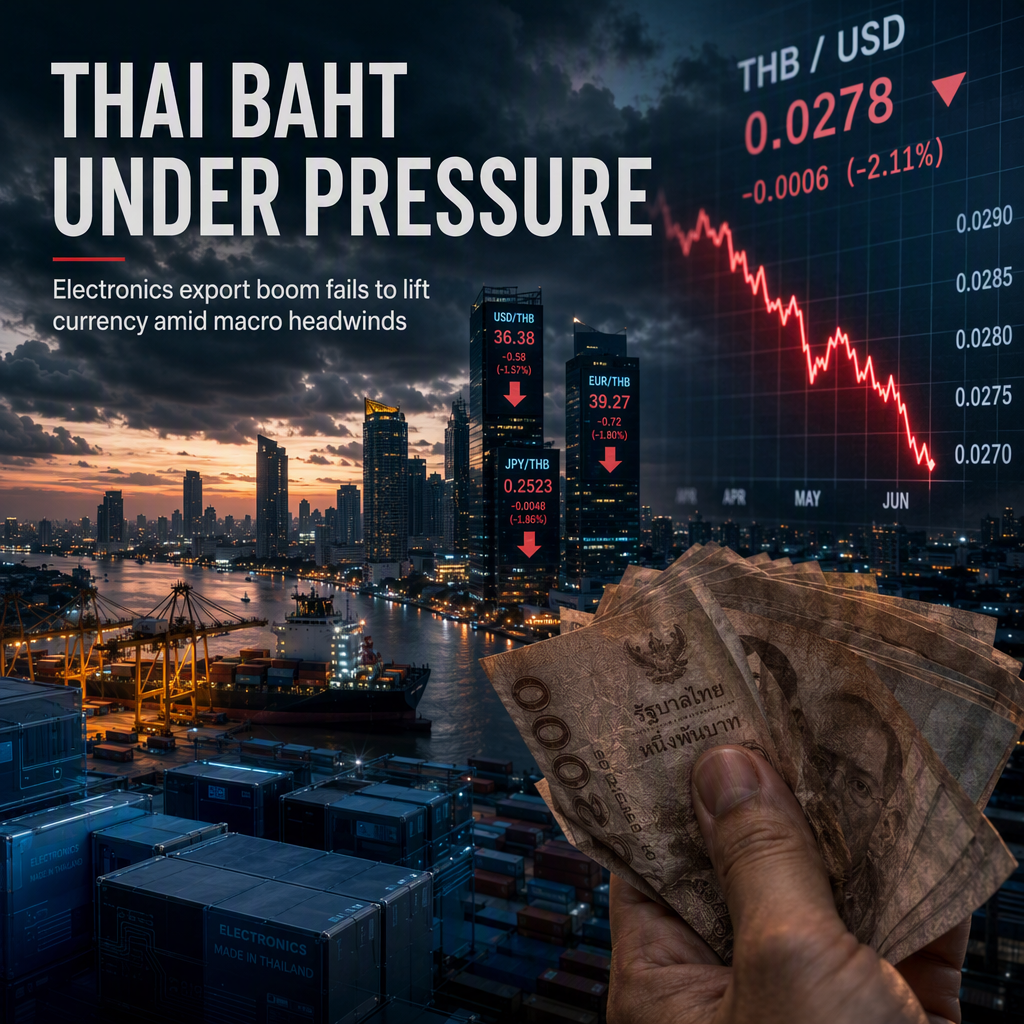
MUFG’s Lloyd Chan maintains a cautious outlook on the Thai Baht (THB), keeping the USD/THB forecast at 34.00 by the end of the year [1]. While Thailand is experiencing a boom in electronics exports due to the global technology cycle, MUFG notes that these gains are being offset by several macroeconomic headwinds [1]. Specifically, the report highlights that Thailand is a net importer of semiconductors, and rising chip prices along with higher imported content have increased the electronics import bill, thereby limiting the net positive impact on the country’s foreign exchange position [1].
The report further points out that Thailand is facing a broader commodity shock, with terms of trade falling to a 27-year low due to higher prices for energy, metals, and intermediate goods [1]. This deterioration in terms of trade is weighing on Thailand’s external balances. Additionally, Thailand’s GDP growth slowed to 1.9% year-on-year in Q2, with net exports acting as a significant drag on overall growth [1].
On the monetary policy front, the Bank of Thailand’s policy rate remains at just 1.0% and is expected to stay at this level into early 2027, even as the US Federal Reserve has raised rates and may tighten further in the coming months [1]. The combination of low domestic rates, baht overvaluation, persistent net foreign portfolio outflows, and limited fiscal capacity to cushion the impact of higher oil prices is expected to keep the Thai Baht under sustained downside pressure, according to MUFG [1].
CONCLUSION
Despite a surge in electronics exports, MUFG sees limited support for the Thai Baht due to deteriorating terms of trade, weak GDP growth, and persistent capital outflows. The bank maintains a bearish outlook, forecasting USD/THB at 34.00 by year-end, with downside risks persisting amid challenging macroeconomic conditions.