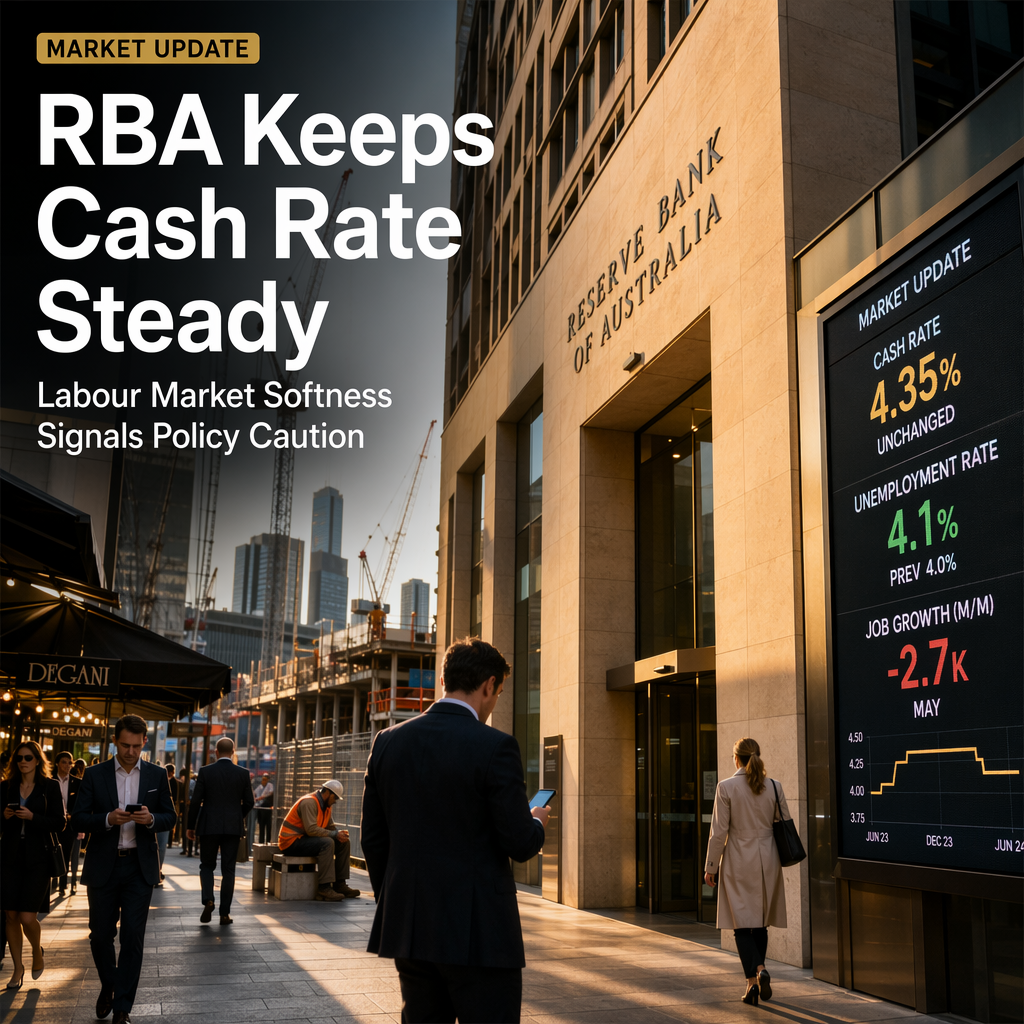
Australia's May labour data revealed a rebound in headline employment figures, but underlying indicators such as rising underemployment and declining hours worked suggest softer labour market conditions, according to UOB’s Lee Sue Ann [1]. This combination points to moderating economic activity and emerging slack in the labour market, supporting the view that the Reserve Bank of Australia (RBA) will maintain its current cash rate of 4.35% through at least the second quarter of 2027, while remaining data-dependent [1].
The report notes that the latest employment numbers largely represent a reversal of April’s weakness rather than a renewed surge in labour demand. While the headline figures indicate resilience, the underlying data aligns with other recent indicators showing softer growth momentum and gradually easing, though still-elevated, inflationary pressures [1].
Labour market conditions remain a critical factor for the RBA as it balances the goal of returning inflation to target with sustaining employment. The RBA’s forecasts anticipate a gradual rise in unemployment over the medium term as economic growth slows below potential [1]. Earlier in the month, the RBA held the cash rate at 4.35% after three consecutive hikes, citing the need to assess the lagged effects of previous tightening measures. The May labour market report does not provide sufficient reason to alter this stance [1].
UOB’s base case is that the RBA will keep the cash rate unchanged at 4.35%, adopting a cautious and data-dependent approach. Should unemployment rise further or if there are clearer signs of weakening labour demand in the coming months, it would reinforce the view that monetary policy is sufficiently restrictive and reduce the likelihood of additional rate hikes [1].
CONCLUSION
The latest Australian labour data supports expectations that the RBA will keep its cash rate steady at 4.35%, as underlying softness in the labour market offsets the headline employment rebound. Market participants are likely to interpret this as a signal of continued policy caution, with the RBA remaining vigilant and responsive to future economic data.