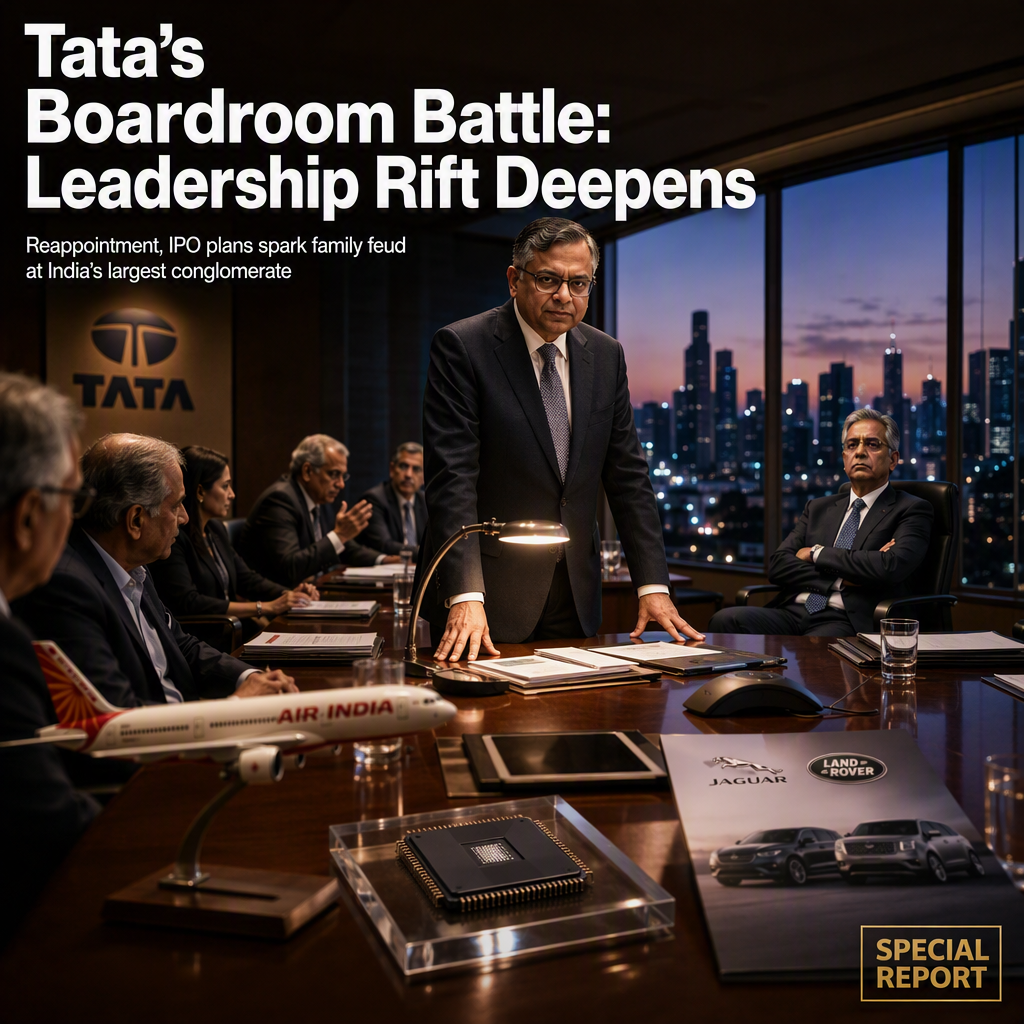
On Thursday, the board of Tata Sons, the holding company of India's Tata Group, voted by majority to reappoint N. Chandrasekaran as chairman after his current tenure ends next year, despite his earlier decision not to seek another term and the Tata Trusts' advice to initiate a successor selection process [1][2]. Noel Tata, the heir of the Tata family and chair of Tata Trusts, publicly declared the reappointment 'illegal,' highlighting deepening boardroom rifts over leadership and the company's future direction [2]. The board also indicated it would comply with requirements for a public listing, overruling Noel Tata's opposition to an IPO [1].
Tata Group, which owns Jaguar Land Rover (JLR), Air India, and is a key Apple supplier, faces a critical funding gap. Tata Sons needs over 290 billion rupees ($3 billion) annually to support loss-making businesses such as Air India, Tata Digital, and Tata Electronics, and another 900 billion rupees for a planned $11 billion semiconductor plant. However, it earns just over 300 billion rupees in dividends, leaving a substantial shortfall [2]. According to Deven Choksey, listing Tata Sons could help bridge this gap, potentially fetching a gross valuation of over 12 trillion rupees [2].
The dispute centers on Noel Tata's desire to keep Tata Sons private to safeguard current ownership, while Chandrasekaran advocates for bold expansion strategies requiring massive capital, including the turnaround of Air India and investments in semiconductors and electronics [2]. Tata Trusts holds a 66% stake in Tata Sons, with Shapoorji Pallonji Group owning 18% and Tata Group companies 13% [2].
Analysts warn that if the deadlock persists for more than six months, as occurred a decade ago, it could delay the prospective listing of Tata Sons and slow capital-intensive projects in Air India, semiconductors, and batteries. Jaydeep Mukherjee, professor of Economics at Great Lakes, Chennai, emphasized the need to separate operational leadership from shareholder-trust politics for Tata to move forward [2].
CONCLUSION
The Tata Sons board's decision to reappoint Chandrasekaran and pursue a public listing has intensified internal disputes, with Noel Tata challenging the legality of the move. The outcome of this leadership battle will be crucial for Tata Group's ability to fund its ambitious expansion plans and maintain stability in its key businesses. Market observers are watching closely, as prolonged boardroom conflict could delay strategic investments and impact the conglomerate's growth trajectory.