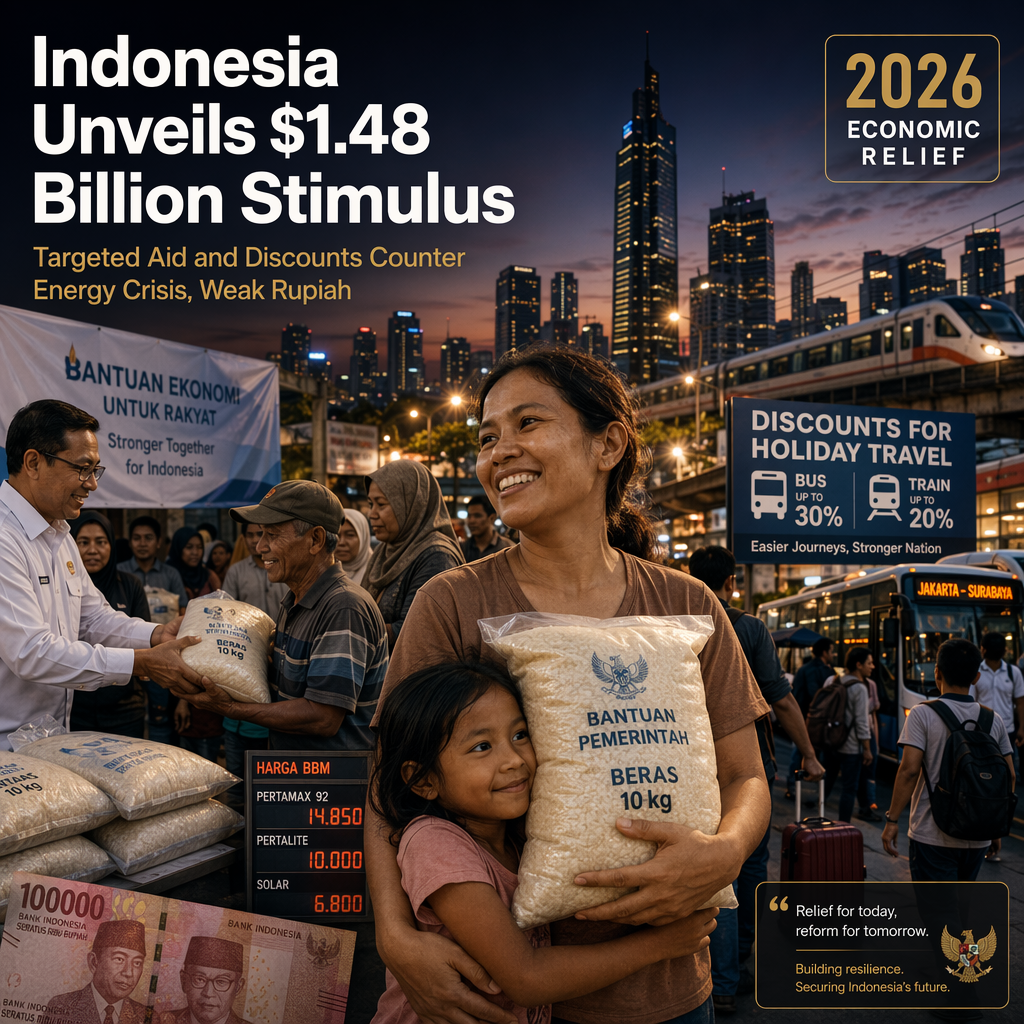
Indonesia has announced a 26.34 trillion rupiah ($1.48 billion) economic stimulus package for the second half of 2026, aiming to address the challenges posed by the global energy crisis and a weakening domestic currency [1]. The government’s measures include distributing 10 kilograms of rice to 33 million people and providing holiday transport discounts, with the goal of supporting vulnerable households and stimulating domestic demand amid rising energy costs and the depreciating rupiah [1].
The stimulus package is designed to cushion the impact of surging fuel and electricity prices, which have been exacerbated by the global energy crisis and the falling value of the rupiah, leading to increased inflationary pressures [1]. The government has emphasized that the interventions are targeted at the most affected segments of society, particularly low-income families, although a detailed breakdown of all stimulus components beyond rice distribution and transport discounts was not provided [1].
Officials hope that these measures will help stabilize the currency, bolster consumer confidence, and sustain economic growth through the remainder of the year [1]. The market implications of the stimulus are centered on its potential to protect purchasing power and maintain economic stability in the face of ongoing external and domestic pressures [1].
CONCLUSION
Indonesia’s $1.48 billion stimulus package is a targeted response to rising energy costs and a weakening rupiah, focusing on supporting vulnerable households and stimulating demand. The government aims to stabilize the currency and sustain economic growth, though the full details of the package remain limited. Market participants will be watching for signs of improved consumer confidence and currency stability in the coming months.