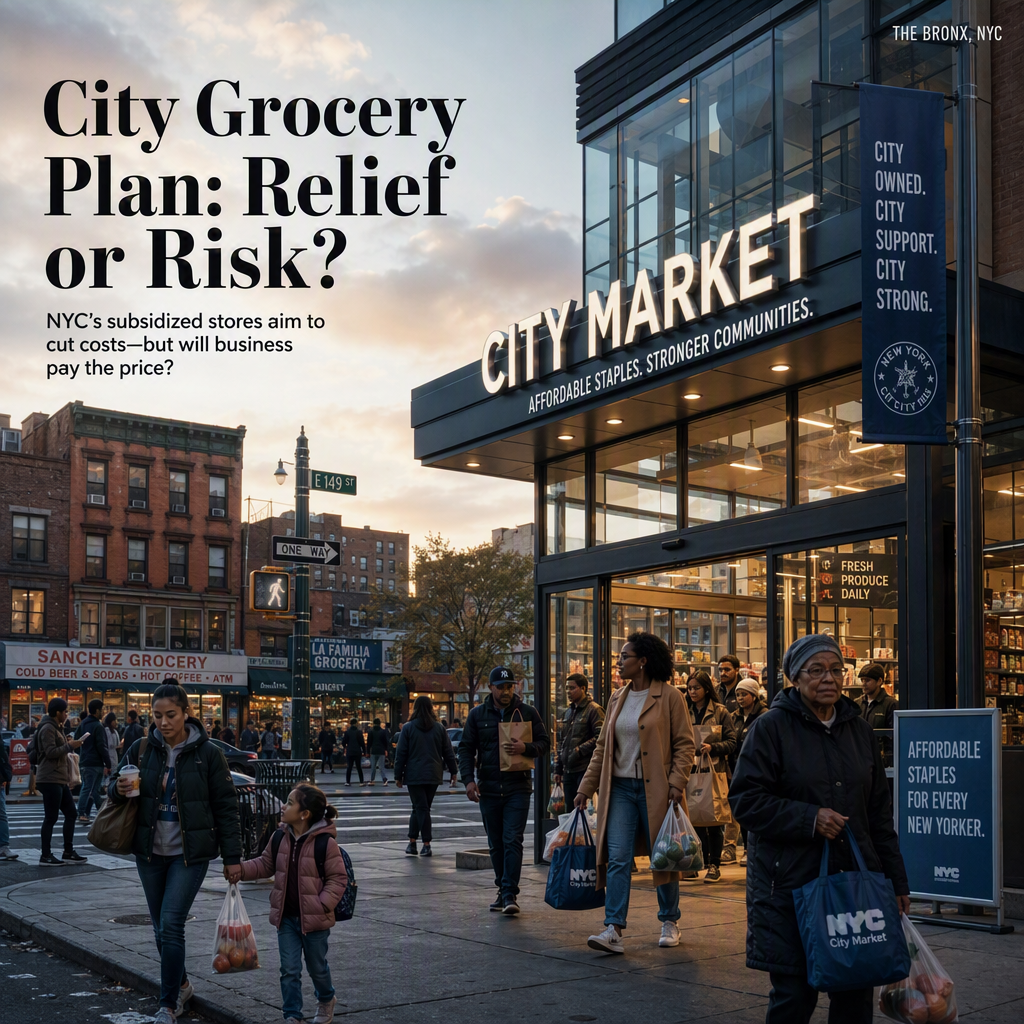
New York City Mayor Zohran Mamdani is advancing a plan to establish city-owned grocery stores, with one store planned for each borough. The first location is expected to open in the Bronx in 2027, with additional stores to follow by the end of Mamdani's term. The city will own the land, cover construction costs—tens of millions of dollars have already been allocated—waive rent and taxes, and subsidize a core basket of staple goods so they sell at roughly 30 percent below typical retail prices. Day-to-day management will be handled by a private operator, but pricing and labor rules will be set by the city [1].
Supporters of the initiative argue that it will provide relief from high food costs for New Yorkers. However, critics, referencing historical analysis by the Muslim scholar Ibn Khaldun, warn that government intervention in competitive sectors can distort competition, discourage independent merchants, and ultimately weaken the commercial vitality of cities. The article draws parallels between Khaldun's theory—where rising taxes and government monopolies lead to economic decline—and the potential long-term consequences of Mamdani's plan. It is noted that such policies may result in inefficiencies, shortages, and declines in quality, with the short-term benefit of lower food prices potentially offset by long-term damage to the city's business climate [1].
Robert Wolf, Mayor Mamdani's business advisor, discusses the impact of tax hikes on high-value real estate, suggesting that the current business environment in New York City is already under pressure due to Mamdani's tax-the-wealthy proposals. The article does not provide specific market reactions or analyst forecasts but emphasizes the risk of a shrinking tax base and weakened economic activity if the proposed policies are implemented [1].
CONCLUSION
Mayor Mamdani's proposal for city-owned, subsidized grocery stores aims to address high food costs but raises concerns about long-term economic impacts. Critics warn that such intervention could undermine private businesses and weaken New York City's commercial foundation. The market takeaway is cautious, with potential risks to the city's business climate highlighted.