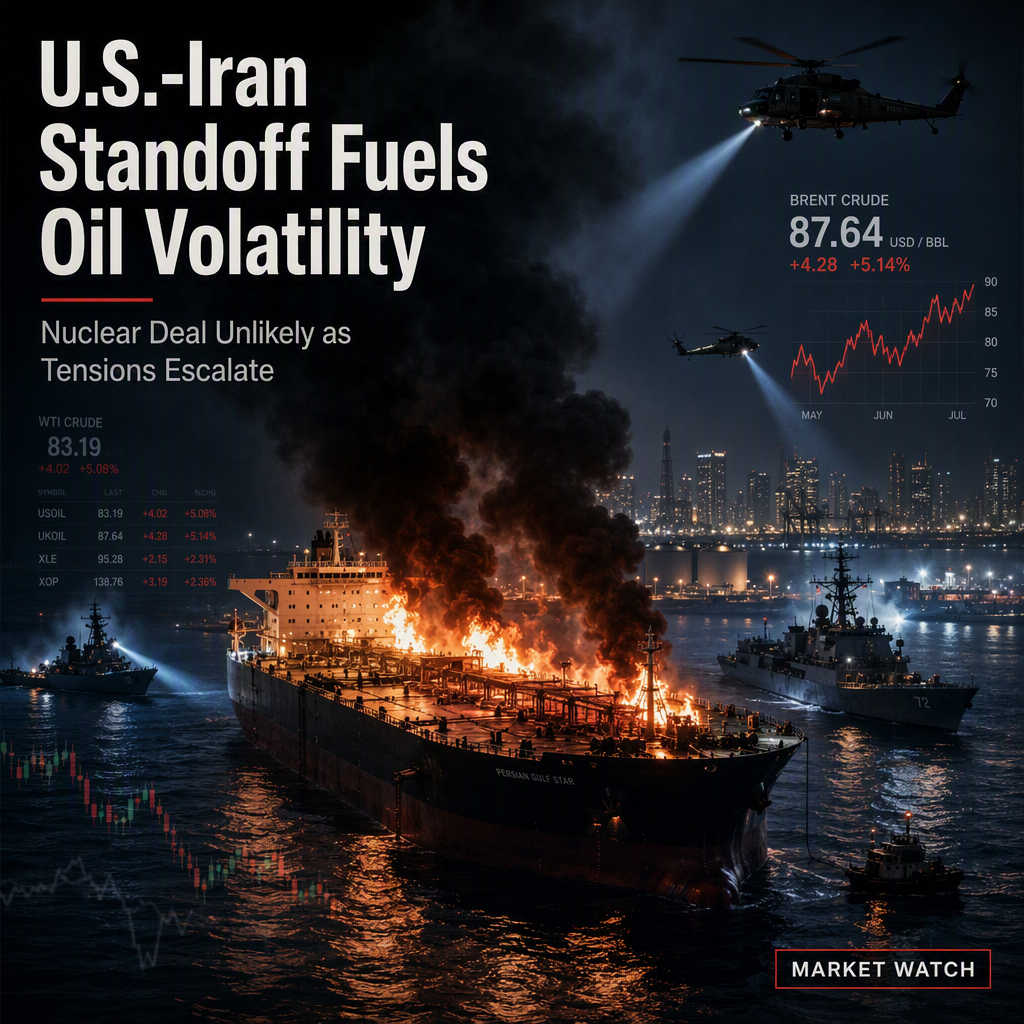
U.S. Energy Secretary Chris Wright stated on Sunday that the United States may not reach a nuclear agreement with Iran, as the conflict between the two countries continues into its seventh month [1]. Wright emphasized that preventing Iran from obtaining a nuclear weapon remains a central objective of the U.S. campaign, echoing President Donald Trump's stance. He noted that the U.S. might focus on destroying Iran's nuclear capabilities rather than pursuing a negotiated settlement, suggesting that any agreement could be delayed until a new administration takes power in Iran [1].
Wright further clarified that the U.S. military's primary role in the region is to halt the export of Iranian crude oil and related products, including natural gas, as part of efforts to 'strangle' Iran's economy and force a change in policy or regime [1]. This approach has contributed to soaring energy prices worldwide, reflecting the significant impact of the ongoing conflict on global markets [1].
In response, Iran's parliament speaker and chief negotiator Mohammad Bagher Ghalibaf warned that Iran's 'proportionate responses' to U.S. attacks have ended, promising that any future violations of Iran's interests would be met with 'faster, heavier, and more painful' retaliation [1]. Ghalibaf also acknowledged the severe economic challenges facing Iran, including fluctuations in the exchange rate, inflation, unemployment, and market management issues, which have placed considerable pressure on the population [1]. He called for increased reliance on domestic production and technology to address these challenges [1].
The latest escalation follows U.S. strikes on three Iranian crude oil carriers, further tightening sanctions and intensifying volatility in energy markets [1].
CONCLUSION
The U.S. administration is signaling a hardline stance on Iran, with little expectation of a near-term nuclear agreement and a focus on economic and military pressure. This approach, combined with Iran's threats of harsher retaliation, is fueling uncertainty and volatility in global energy markets. The situation remains highly fluid, with significant implications for oil prices and regional stability.