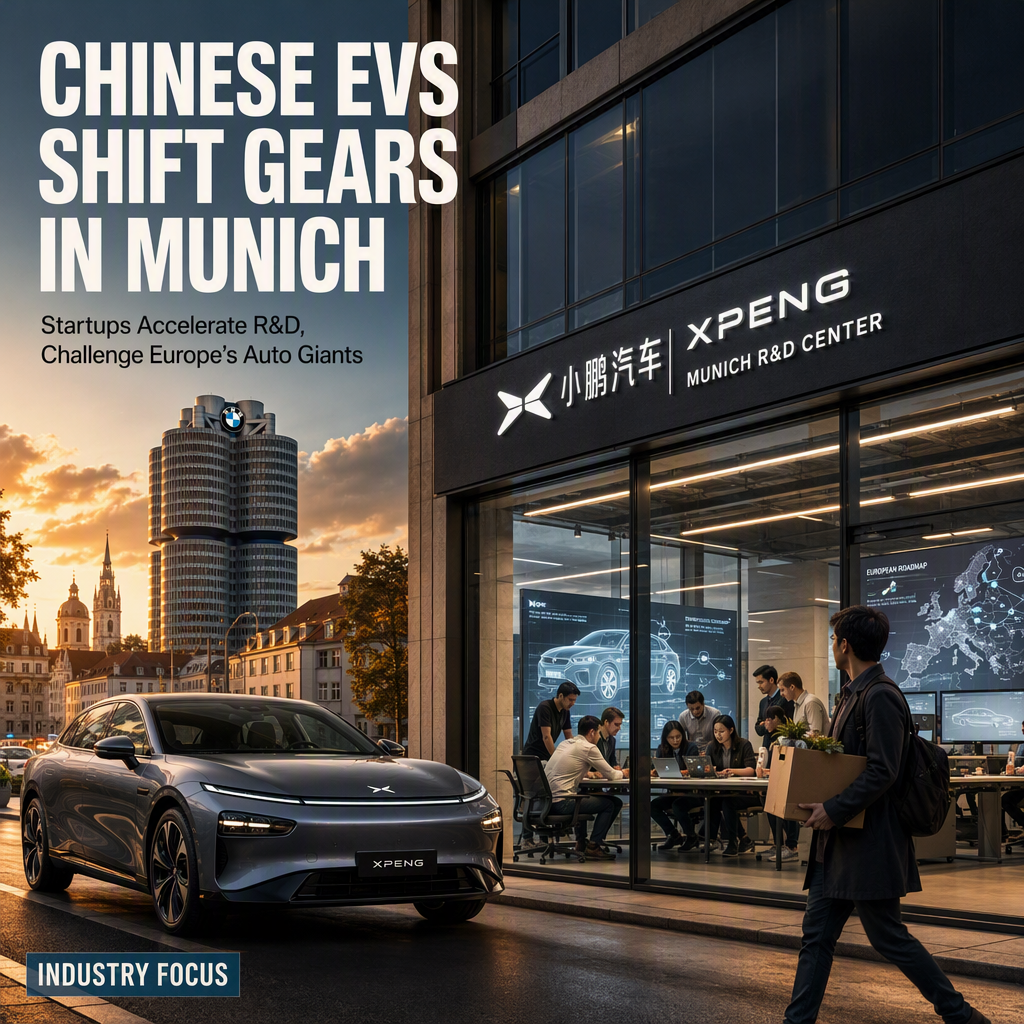
Chinese electric vehicle manufacturers are increasingly establishing their research and design offices in Munich, a city recognized as an automotive hub due to the presence of BMW's headquarters [1]. This trend is highlighted by Xpeng's recent media workshop in Munich, where presenters demonstrated the importance of adapting assisted driving software to local European conditions, such as rural Bavarian roadwork barriers, which would not be recognized by software trained solely in China [1]. The influx of Chinese EV startups into Munich is driven by the city's access to local talent and market expertise, positioning it as a focal point for Chinese companies seeking a European R&D presence [1].
BMW has reportedly lost staff to Chinese startups, which are now perceived as dynamic and innovative players in the rapidly evolving EV sector [1]. This migration of talent underscores the competitive pressures faced by established European automakers and signals the growing sophistication and ambition of China's auto industry abroad [1].
While the article does not provide specific figures regarding the number of Chinese EV companies or employees involved, it emphasizes the strategic importance of Munich for Chinese automakers and the potential implications for the European automotive landscape [1]. No forward-looking statements or analyst opinions are included in the source [1].
CONCLUSION
Chinese EV manufacturers are leveraging Munich's automotive ecosystem to strengthen their European R&D capabilities, intensifying competition for local talent and challenging established automakers. The expansion signals a shift in industry dynamics, with Chinese startups gaining momentum and recognition in the European market. Market implications are medium, as the move highlights both competitive pressures and innovation in the sector.