
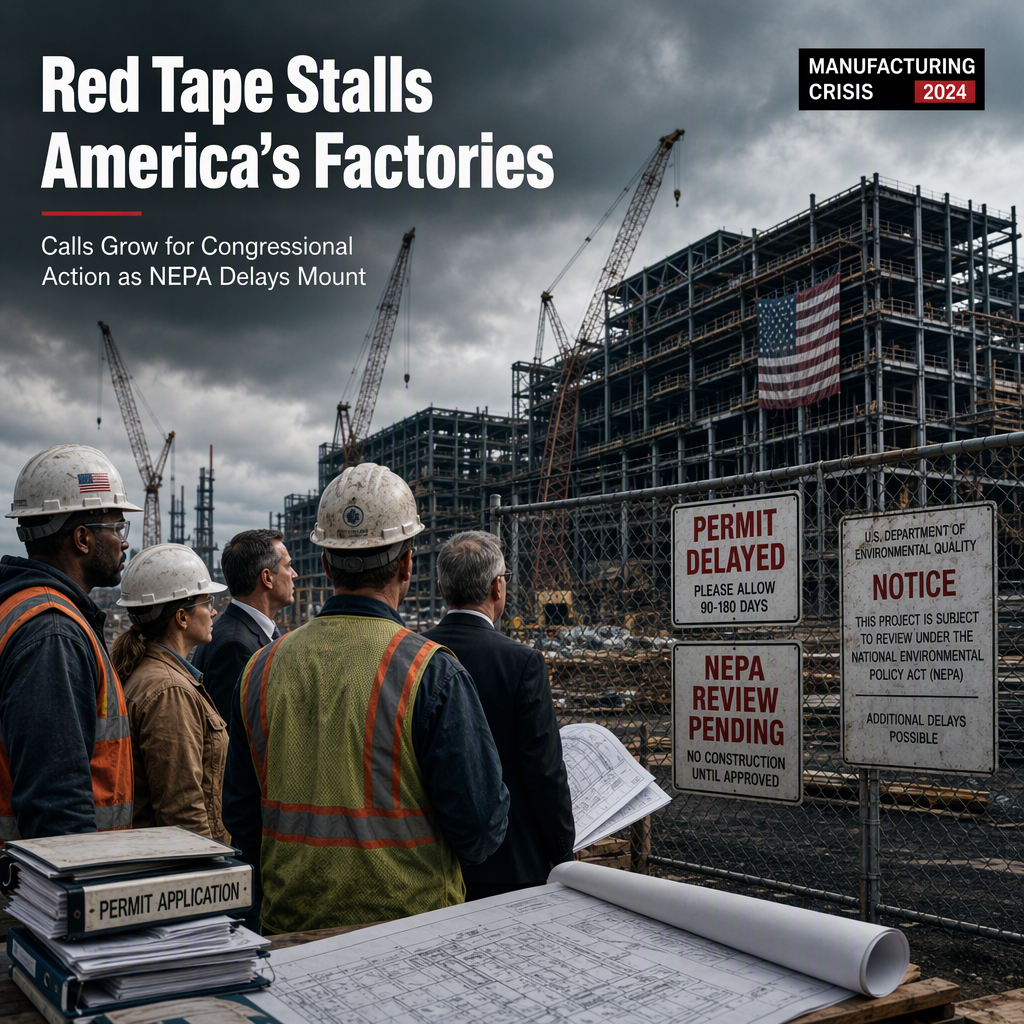
The article highlights a significant decline in America's share of global manufacturing output, which has dropped from 25% in 1997 to 15% today, with projections suggesting it could fall further to 11% by 2030 if no intervention occurs [1]. The author attributes this decline not to a lack of talent, capital, or technology, but to regulatory barriers—specifically, the National Environmental Policy Act (NEPA)—that make it nearly impossible for American businesses to build new facilities [1].
NEPA, originally intended as a procedural safeguard requiring analysis and disclosure of environmental impacts, has evolved into a major obstacle for projects with any federal connection due to regulatory layering and aggressive legal interpretation [1]. The article notes that the median NEPA review in 2024 took 26 months, with more demanding environmental impact statements averaging 3.8 years and even the so-called fast-track environmental assessments taking a year or more [1]. These timelines are not legally mandated but result from bureaucratic caution and litigation risks [1].
The financial burden is also substantial: Department of Energy data cited in the article shows mean environmental assessment preparation costs exceeding $300,000, while environmental impact statement costs average $6.6 million, excluding legal fees, staff time, and litigation costs [1]. These expenses can be prohibitive, especially for small businesses and startups, potentially ending their projects before they begin [1].
The article points out that a broad coalition—including renewable energy advocates and oil and gas executives—has united in 2024 to push for NEPA reform, underscoring the widespread impact of these regulatory hurdles across industries and political lines [1]. The author calls for Congressional action to address these barriers and enable American businesses to build and compete globally once again [1].
CONCLUSION
The article underscores that regulatory barriers, particularly NEPA, are a critical factor in the decline of U.S. manufacturing competitiveness. With mounting costs and lengthy delays, there is growing bipartisan and cross-industry pressure for Congressional reform to restore America's ability to build and innovate.