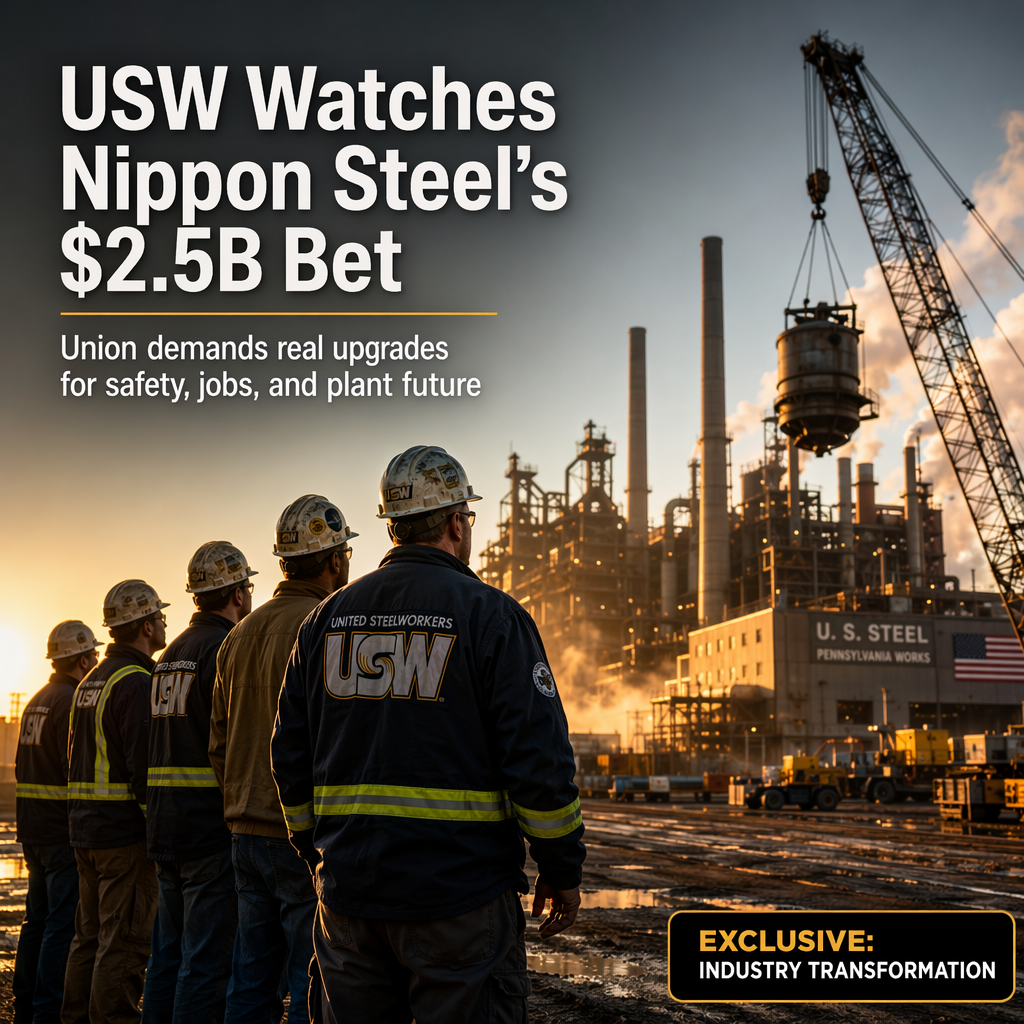
The United Steelworkers union (USW), which had previously opposed Nippon Steel's acquisition of U.S. Steel, is now cautiously optimistic about the partnership one year after the deal, according to USW executive Bernie Hall [1]. Hall emphasized the union's commitment to ensuring that Nippon Steel fulfills its investment promises, specifically referencing the company's announced plan to invest up to $2.5 billion in U.S. Steel's Pennsylvania complex for equipment upgrades and facility modernization [1].
Hall highlighted the importance of these investments translating into tangible improvements in safety, job security, and the long-term viability of the plants. He noted that the union is particularly focused on addressing the challenges posed by 90-year-old equipment, which has historically impacted productivity and worker safety at U.S. Steel [1]. The union intends to ensure that the upgrades are substantive and not merely cosmetic, aiming for real improvements in working conditions and competitiveness [1].
Market analysts have raised questions about Nippon Steel's ability to exceed its own forecasts for U.S. Steel's turnaround, given the scale of the planned investments and the complexities of modernizing legacy assets [1]. The USW is closely monitoring progress and expects transparent communication from management regarding investment timelines, capital allocation, and operational targets [1].
While no specific technical analysis or price levels were discussed, the overall sentiment among workers and stakeholders is described as cautiously optimistic. Hall stated that the union will remain active in negotiations and oversight to protect its members' interests, reflecting a watchful but hopeful stance toward the partnership's future impact on U.S. Steel's performance and worker welfare [1].
CONCLUSION
The USW is taking a vigilant but hopeful approach to Nippon Steel's $2.5 billion investment in U.S. Steel, emphasizing the need for real improvements in plant safety, job security, and competitiveness. Market analysts remain skeptical about the company's ability to deliver on its ambitious turnaround plans, making ongoing union oversight and transparent management communication critical for future success.