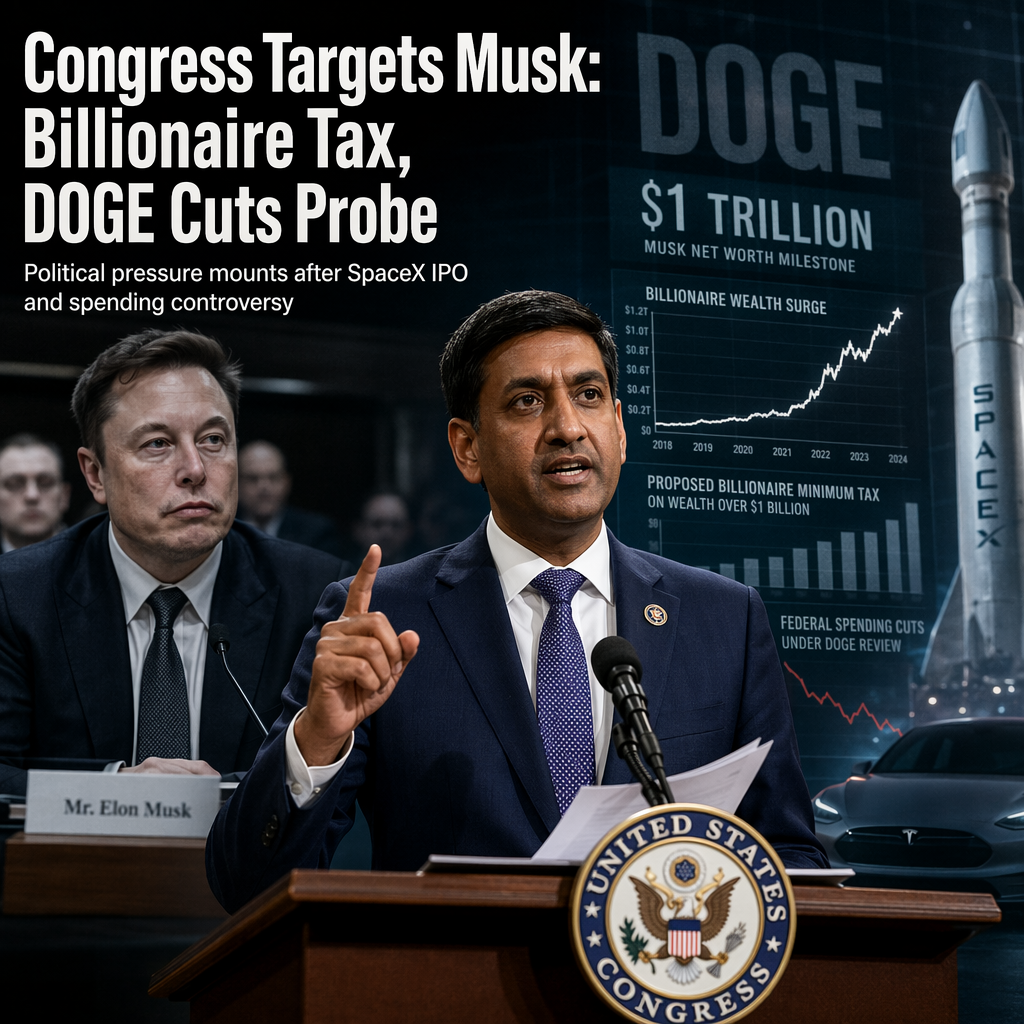
Rep. Ro Khanna, D-Calif., has publicly called for an investigation into Tesla and SpaceX CEO Elon Musk, alleging that Musk's spending cuts through the Department of Government Efficiency (DOGE) may have 'possibly sentenced to death' 4.5 million children worldwide. Khanna stated that if the Democratic Party regains control of the House or Senate, they should prioritize holding Musk accountable, including potentially subpoenaing him and launching a formal investigation into his actions regarding DOGE [1].
The criticism follows Musk's recent milestone of becoming the world's first trillionaire after SpaceX's record-breaking IPO earlier this month, which solidified his position as the world's richest man. Khanna contrasted the celebration of Musk creating 4,400 millionaires with the alleged negative humanitarian impact of DOGE's government spending cuts, emphasizing the need for accountability and oversight [1].
Podcast host Jennifer Welch echoed Khanna's sentiments, accusing Musk of 'killing millions through DOGE's government spending cuts' and highlighting perceived hypocrisy among Musk's supporters. The renewed scrutiny of Musk comes amid broader criticism from Democratic politicians and mainstream media following his financial achievements [1].
In addition to calls for investigation, Khanna has advocated for the 'Make Billionaires Pay Their Fair Share Act,' a legislative proposal that would impose a 5% annual wealth tax on assets exceeding $1 billion. Khanna argues that this measure would address the deep economic divide in the United States by ensuring billionaires contribute more to support families struggling with basic needs, while maintaining the country's innovative edge [1].
CONCLUSION
Rep. Ro Khanna's statements signal increased political pressure on Elon Musk, particularly regarding DOGE's spending cuts and their alleged humanitarian impact. The proposed wealth tax and calls for investigation could have significant implications for Musk and other ultra-wealthy individuals if pursued by lawmakers. Market participants may view these developments as a medium-level risk to Musk's business interests and broader billionaire taxation policy.