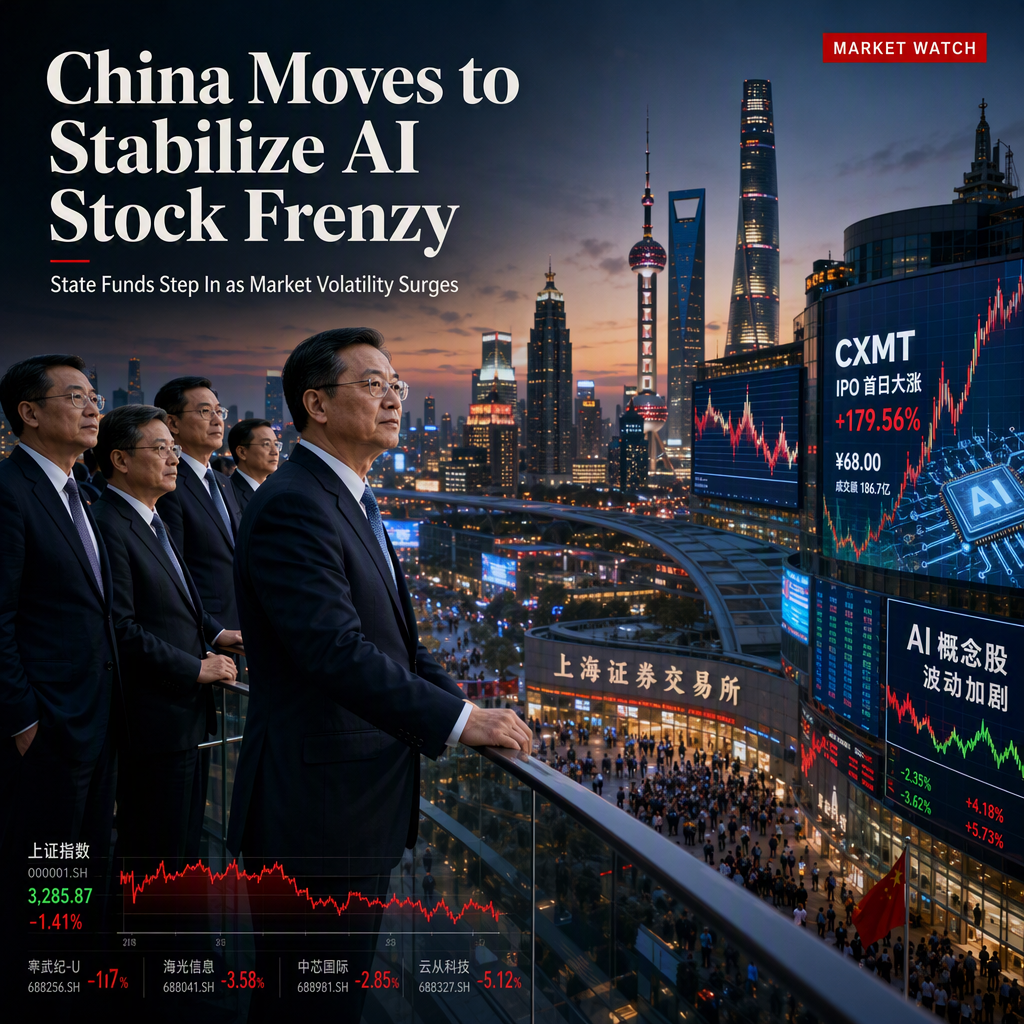
China's stock market has experienced significant volatility in recent weeks, primarily driven by concerns over the valuations of AI-related stocks. This turbulence has posed a major challenge to Beijing's strategy of fostering a steady, long-term upward trend in the market, often referred to as a 'long bull' [1]. In response, the so-called 'national team'—a group of Chinese state-backed funds—became visibly active on July 19, shortly before the initial public offering of memory chip maker CXMT, in an effort to stabilize the market [1].
Tech-focused exchange-traded funds (ETFs) have seen record inflows, reflecting investor confidence in the government's commitment to market stability. This influx of capital has been closely linked to official statements and pledges, with ETF flows tracking policy signals [1]. Market participants have observed that the government's direct and indirect support for technology and AI stocks has provided a price floor, especially during periods of heavy selling. However, this intervention has also contributed to heightened short-term volatility, as traders attempt to anticipate further government actions [1].
The STAR Market, often referred to as China's Nasdaq, has been a focal point for these developments. The listing of CXMT propelled the index higher and attracted additional inflows, underscoring the influence of high-profile tech IPOs on market sentiment [1]. Despite the government's stabilizing efforts, price levels for leading AI stocks have fluctuated sharply, with some analysts warning of overvaluation while others emphasize the sector's long-term potential [1].
Brokerages have responded by advising investors to adopt cautious entry points, implement strict risk management strategies, and closely monitor for further signs of government intervention. Technical analysis indicates that key resistance levels for tech indices remain elevated, with support levels reinforced by state-led buying. Market sentiment is described as mixed: optimism about ongoing government support is counterbalanced by fears of abrupt corrections should AI stock momentum wane [1].
CONCLUSION
China's state-backed funds have played a crucial role in stabilizing the volatile AI stock sector, but their actions have also fueled short-term swings as investors react to policy signals. While government intervention has bolstered confidence and attracted record ETF inflows, concerns about overvaluation and the potential for sudden corrections persist. The market remains highly sensitive to official statements and further intervention.