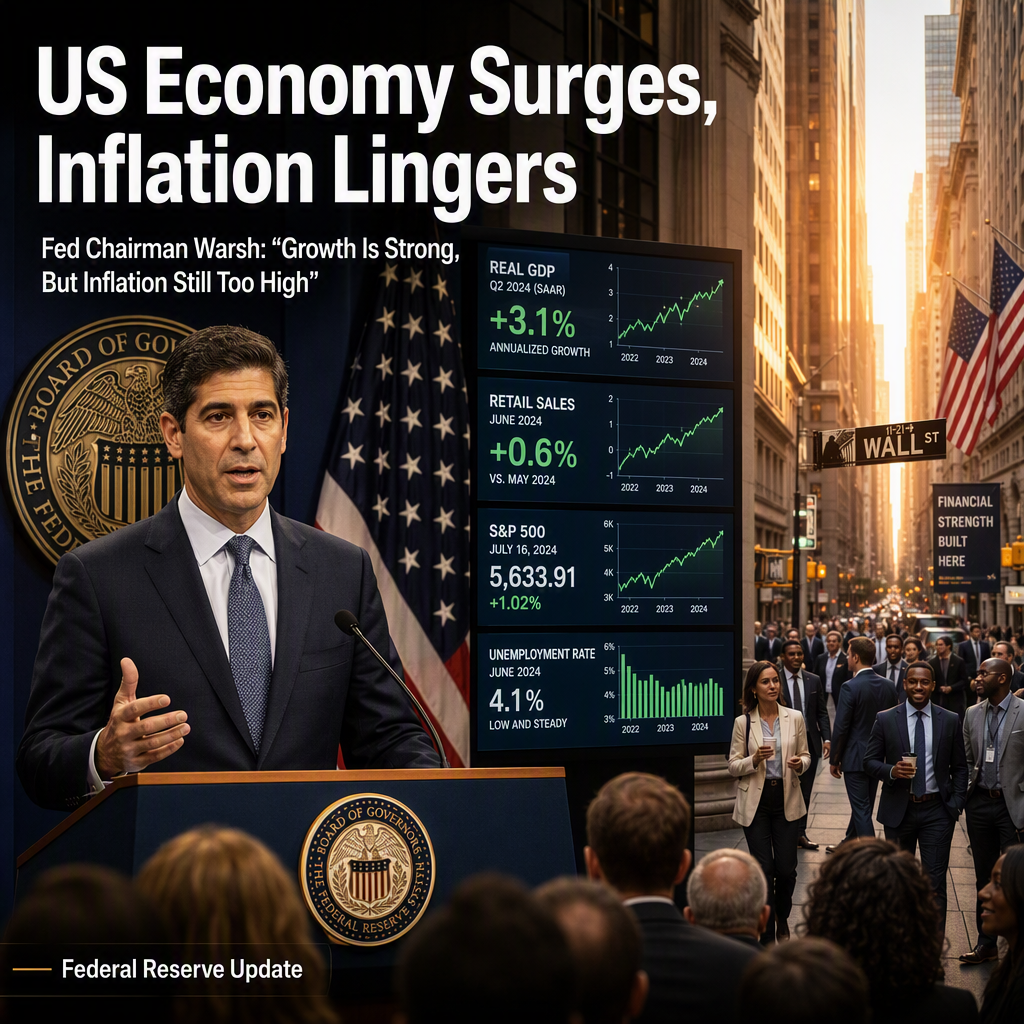
The US economy is currently experiencing strong growth, with the Atlanta Fed raising its GDPNow estimate for the third quarter ending September 30 to 5.1 percent real growth. Core GDP, defined as real domestic private sales, increased by over 4 percent in the previous quarter, indicating robust economic activity [1]. Retail sales have also shown strength, rising 6 percent year-on-year, while productivity growth and capital investment remain strong. Unemployment is low, and nonfinancial productivity has been increasing at over 3 percent annually for the past two years, which is described as counterinflationary [1].
Capital investment has been bolstered by 100 percent immediate expensing for machinery, equipment, and some buildings, which is expected to support future economic growth and infrastructure rebuilding. The Census Bureau reported that real median household income reached an all-time high, with Hispanic and black poverty at all-time lows and incomes for the bottom 25 percent at their highest level ever [1]. Manufacturing profits are also described as soaring, contributing positively to the stock market and the broader economy [1].
Despite these positive indicators, inflation remains a concern. Fed Chairman Kevin Warsh noted that the inflation rate is still too high, with the 12-month change in total Personal Consumption Expenditures (PCE) index prices likely around 3.6 percent in August. Core PCE and Consumer Price Index (CPI) are running at about 3.2 percent and 2.4 percent, respectively. Warsh emphasized that 'the plain fact is that inflation is too high and has been for too long,' and expressed concern that underlying inflation trends have not improved to his satisfaction [1].
The Federal Open Market Committee unanimously voted to raise rates, reflecting ongoing efforts to address inflation. Warsh also referenced a 21 percent cumulative inflation rate inherited from previous administrations and a temporary oil shock related to geopolitical events, which have contributed to current inflationary pressures [1].
CONCLUSION
The US economy is demonstrating strong growth, low unemployment, and rising incomes, but persistent inflation remains a key concern for policymakers. The Federal Reserve, under Chairman Warsh, continues to monitor inflation closely and has taken action to address it. Market participants are likely to view the robust economic data positively, but inflation risks may temper enthusiasm.