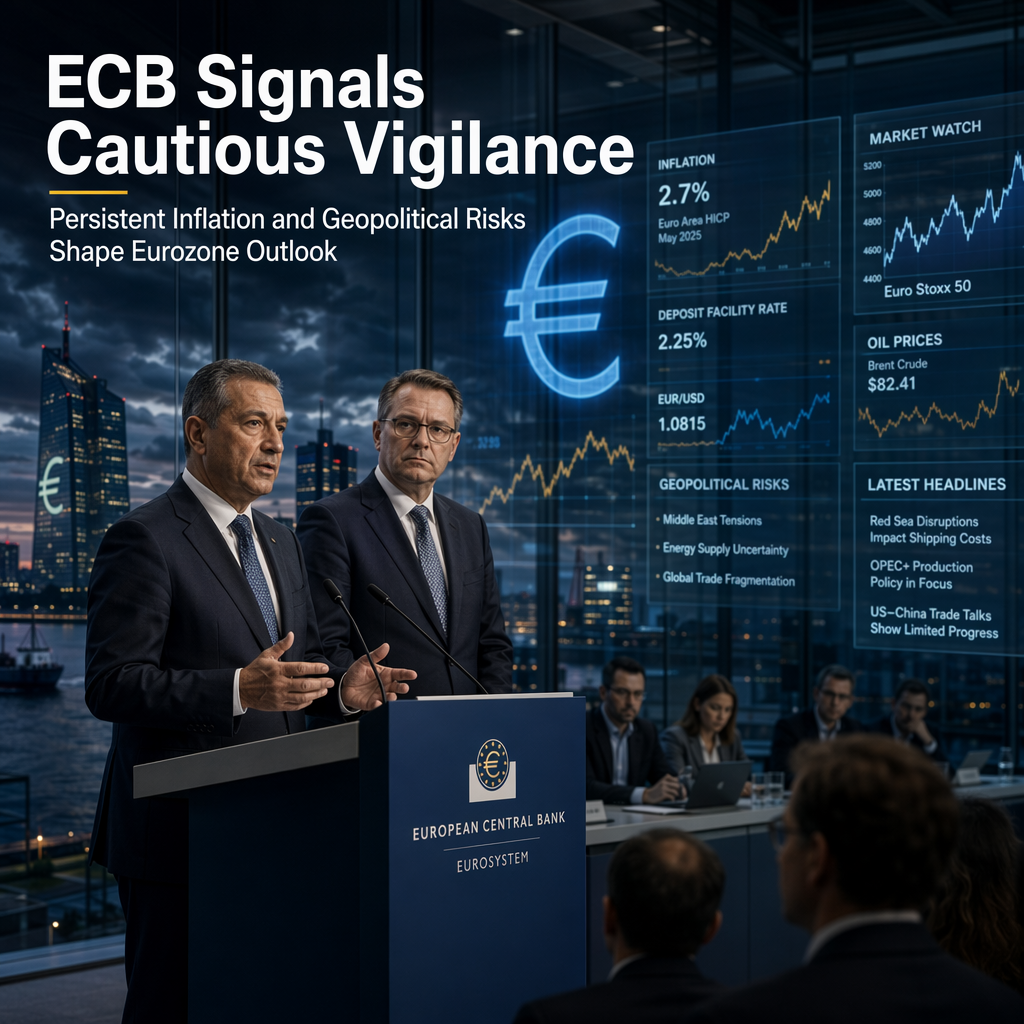
European Central Bank (ECB) policymakers delivered cautious yet vigilant messages regarding the Eurozone's inflation outlook and monetary policy stance during Wednesday's European trading session. Fabio Panetta, ECB policymaker and Governor of the Bank of Italy, warned that inflationary pressures in the Eurozone could hover around 3% and are likely to remain above that level until early 2027. Panetta emphasized the ECB's goal of keeping inflation expectations firmly anchored and limiting indirect and second-round effects of shocks, signaling reluctance to ease policy quickly. He also highlighted that recent equity market gains following the Iran conflict may reflect an underestimation of risks, with higher energy prices, tighter financial conditions, and persistent geopolitical uncertainty only partially incorporated into market evaluations. This combination of sticky inflation and underpriced risk suggests elevated volatility in Euro pairs and a likely reassessment of Euro-area rates and risk premia in the near term [1].
Joachim Nagel, ECB Governing Council Member and President of the Deutsche Bundesbank, echoed a similarly cautious tone, stating that the central bank should be prepared for monetary policy adjustments if needed. Nagel stressed the importance of reacting with caution but acting decisively if necessary, maintaining a vigilant stance. He referenced recent geopolitical 'hopes and disappointments,' underscoring ongoing event risk and the need to keep policy options open in case inflation or financial stress re-emerges. Nagel's remarks, while moderately hawkish, were softer than his historic average, tempering immediate upside for the Euro and supporting a watchful, data-dependent approach [2].
Despite these policy signals, there was no immediate impact on the Euro, with EUR/USD trading flat at around 1.1424 following both Panetta's and Nagel's comments [1][2]. The market reaction suggests that traders are awaiting further data or developments before adjusting positions, even as policymakers flag persistent inflation and underappreciated risks.
CONCLUSION
ECB officials Panetta and Nagel both signaled a cautious but vigilant approach to monetary policy, highlighting persistent inflation and ongoing geopolitical risks. While their remarks suggest a reluctance to ease policy quickly, the immediate market reaction was muted, with the Euro remaining flat. Investors are likely to remain attentive to future data and ECB communications for clearer direction.