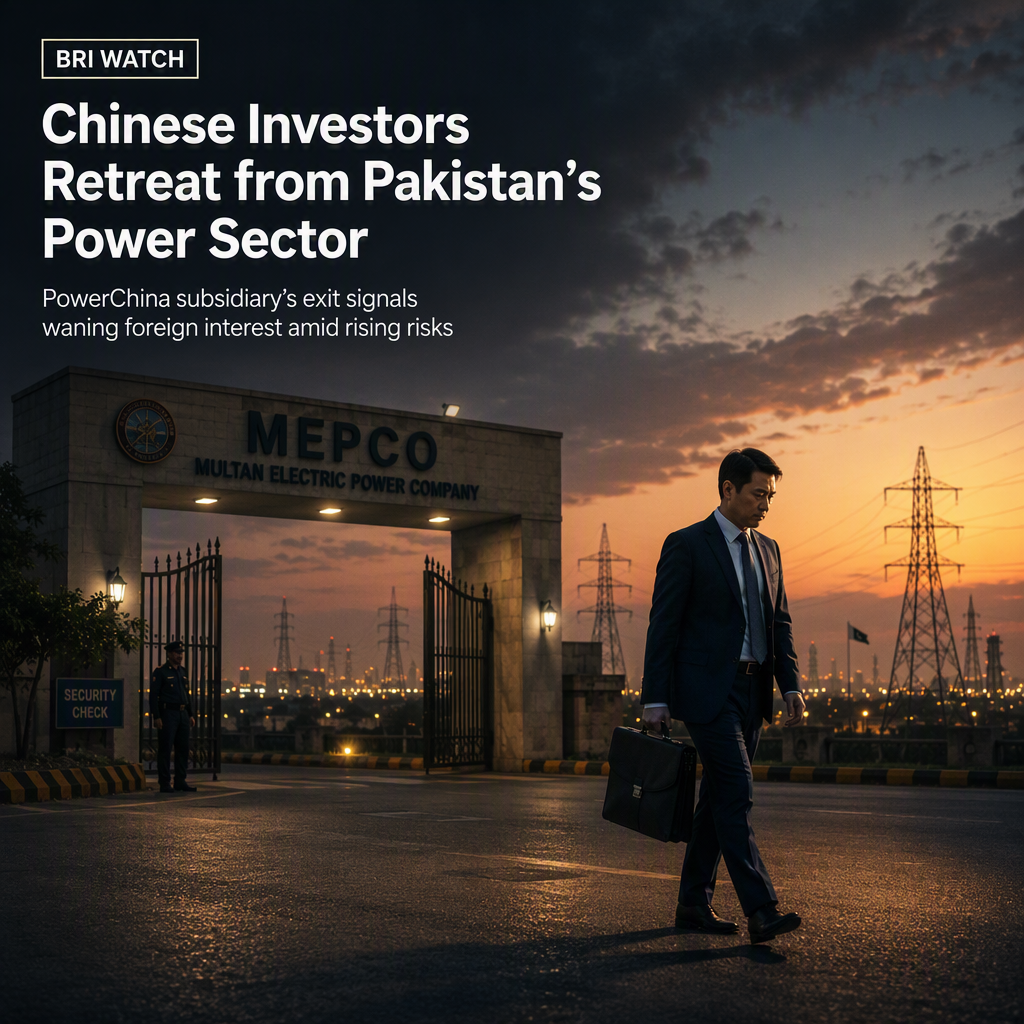
A subsidiary of PowerChina has withdrawn from the bidding process to acquire one of Pakistan's largest electricity distribution companies, marking a notable decline in Chinese interest in Pakistan's power sector despite longstanding ties under the Belt and Road Initiative (BRI) [1]. The PowerChina subsidiary submitted its bid document in Chinese, which analysts interpret as a sign of initial apathy toward the deal [1].
This exit is viewed as indicative of broader disengagement by Chinese investors from Pakistan's utility sales, as Beijing reassesses its exposure and commitments in the country. The move comes amid concerns about profitability, regulatory instability, and rising security risks that have affected Chinese investments in Pakistan [1]. Financial analysts suggest that the withdrawal could hinder Pakistan's efforts to privatize and attract foreign capital to its power sector, which is currently grappling with circular debt and operational inefficiencies [1].
Market sentiment has shifted, with the likelihood of Chinese participation in future deals appearing to decline. Industry experts warn that Pakistan may need to offer more attractive terms or seek alternative investors if it hopes to secure fresh capital and technical expertise for its power sector [1]. The development also raises questions about the sustainability of BRI projects in Pakistan, as Chinese firms reassess their risk appetite and strategic priorities in the region [1].
The withdrawal is expected to impact the valuation of Pakistan's utility assets and may prompt the government to reconsider its approach to privatization and foreign investment. No trading advice or specific price levels were mentioned in the article [1].
CONCLUSION
The exit of PowerChina's subsidiary from the utility sale signals a shift in Chinese investment strategy and raises concerns about the future of foreign capital in Pakistan's power sector. Pakistan may need to adjust its privatization approach and seek new investors to address operational challenges and attract fresh capital. The development could have medium-term implications for asset valuations and the sustainability of BRI projects in the country.