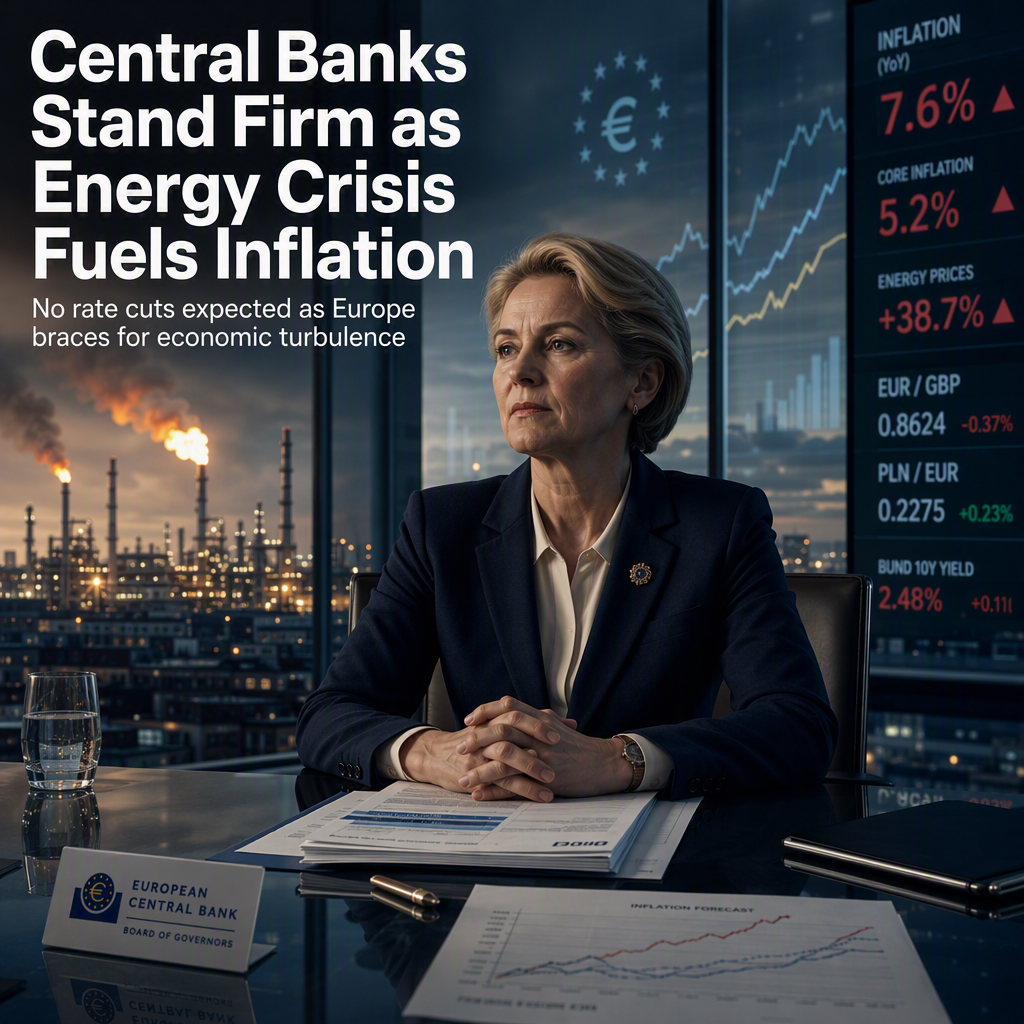
The European Central Bank (ECB) is widely expected to raise its deposit rate to 2.50% at its September policy meeting, driven by surging energy prices resulting from the ongoing US-Iran conflict and persistent inflation risks in the Eurozone [1][2]. Nomura strategists anticipate the ECB will keep rates elevated for the foreseeable future, with no rate cuts expected in coming years, and highlight that risks are skewed towards further hikes due to ongoing tensions in the Middle East [1]. ING's global head of macro, Carsten Brzeski, described the anticipated move as a 'dovish rate hike,' suggesting it is more of an insurance measure against inflation [2]. Recent Eurozone inflation data showed a rise back above 3% in August, reinforcing the case for a rate hike [2]. Euro area GDP growth has remained stable at around 0.3% quarter-on-quarter since the start of 2024, which aligns with estimates for potential economic growth and supports the rationale for raising the ECB’s deposit rate [1].
The currency markets have responded to these developments, with EUR/GBP remaining steady around 0.8580 during European hours on Wednesday. The Euro could gain further support ahead of the ECB decision, as traders have fully priced in a 25-basis-point move to 2.5% [2]. Meanwhile, Bank of England Governor Andrew Bailey has flagged upside inflation risks for the UK, citing the energy shock from the US-Iran war and Ukrainian attacks on Russian refineries as key drivers of higher energy and refined product prices. This has kept UK inflation risks skewed to the upside and supported Pound resilience, with markets inclined to price out aggressive BoE cuts [2].
In Poland, Commerzbank’s Tatha Ghose expects the National Bank of Poland (NBP) to leave rates unchanged at 3.75% at its September meeting, with rate cuts seen as unlikely before year-end due to fuel-driven inflation pressures and a weaker Zloty [3]. The reversal of the fuel VAT cut on 1 September led to sharp increases in Polish pump prices, with petrol up 18.3% and diesel up 14.4% week-on-week as of 3 September [3]. CPI inflation accelerated to 3.4% year-on-year in August, and the preferred seasonally-adjusted month-on-month rate of increase has breached the 2.5% target level in the past two months [3]. Glapinski’s earlier hints at imminent rate cuts are now considered obsolete, and a shift from dovish to cautious stance is expected to modestly support the PLN [3].
Across Europe, central banks including the ECB, Riksbank, Norges Bank, and SNB are facing the effects of the global energy price shock due to the Iran war, making them more likely to raise rates. However, differences in inflation backdrops, policy rates compared to neutral, FX moves, and transmission mechanisms mean their reactions may vary [1].
CONCLUSION
European central banks are maintaining or raising interest rates in response to surging energy prices and renewed inflation pressures, with no rate cuts expected in the near term. The ECB is poised for a 25-basis-point hike, while Poland's NBP is set to hold rates steady, both reflecting a shift towards caution amid geopolitical tensions. Currency markets have responded with stability in the Euro and resilience in the Pound, as traders price in continued restrictive monetary policy.