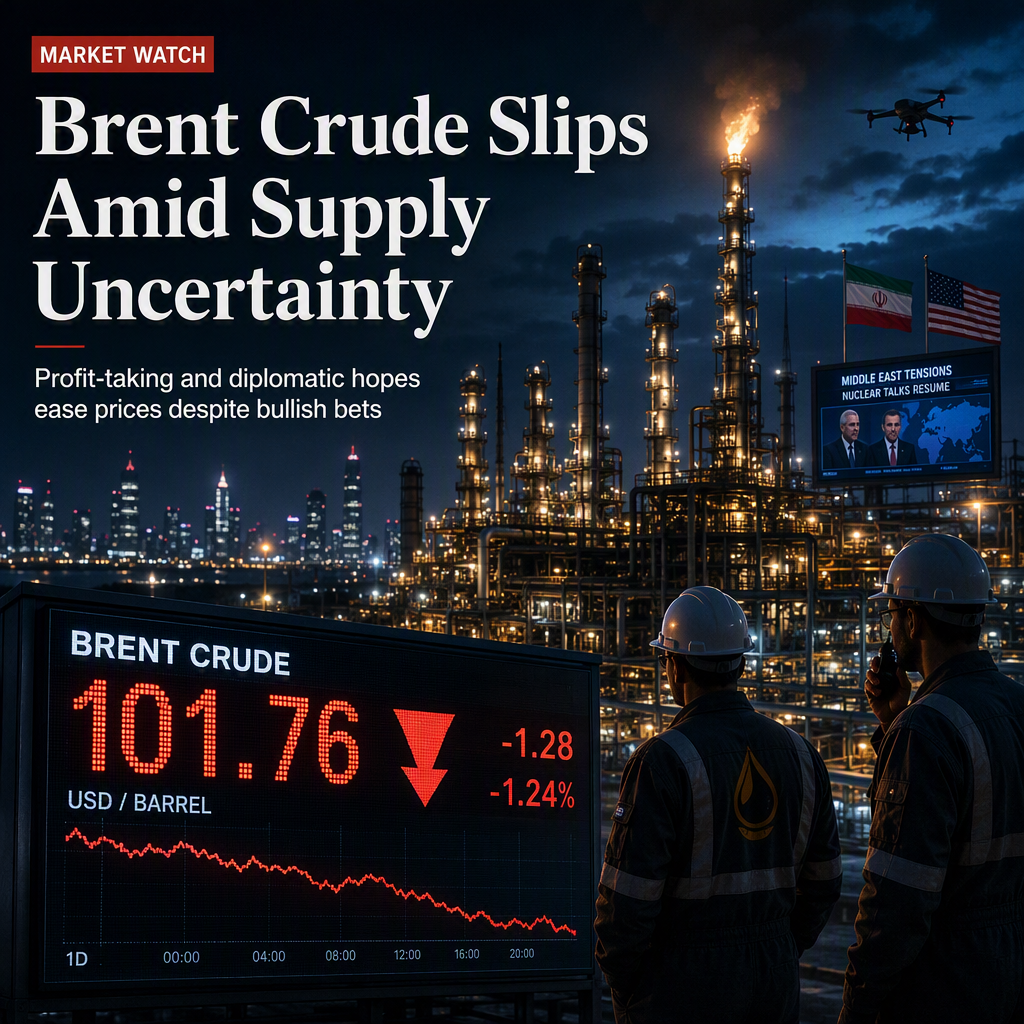
Brent crude oil prices started the week on a softer note, with ICE Brent falling around 2% to below $102 per barrel and WTI easing to approximately $98 per barrel, despite persistent supply risks and elevated speculative length in the market [1]. ING strategists Ewa Manthey and Warren Patterson attribute the price pullback to profit-taking after recent gains, as well as improved market sentiment driven by hopes for constructive discussions at the upcoming UN General Assembly and the Trump-Xi meeting [1].
Supply concerns remain elevated, particularly due to Saudi Aramco's warning to some European customers that it may be unable to allocate crude cargoes next month under long-term contracts. This is a result of disruptions to the East-West pipeline at Yanbu, which was damaged in last week's drone attacks and could take several weeks to fully restart [1].
Speculative positioning in Brent remains firmly bullish, with ICE data showing money managers increased their net long Brent position by 16,904 lots over the past week to 282,657 lots as of last Tuesday. This marks the largest net long since late May 2026, driven largely by short covering as investors continue to price in greater upside risk from Middle East supply disruptions [1].
Refined product markets are also tight, with August exports from key Asian suppliers declining due to constrained crude availability and refinery outages. India's gasoline and diesel exports fell 14.5% and 19.2% year-on-year, respectively, while Chinese gasoline exports dropped 57.4% year-on-year. Although Chinese diesel exports increased, lower overall product availability from Asia has kept Western markets undersupplied and supported crack spreads. The ICE gasoil crack spread has risen to around $95 per barrel this week, up from an average of roughly $74 per barrel in August [1].
CONCLUSION
Despite ongoing supply risks and bullish speculative positioning, Brent crude prices have softened, reflecting profit-taking and improved sentiment ahead of key diplomatic events. Tight refined product markets and reduced Asian exports continue to support crack spreads and underscore supply concerns. The market remains alert to further disruptions and developments in geopolitical negotiations.