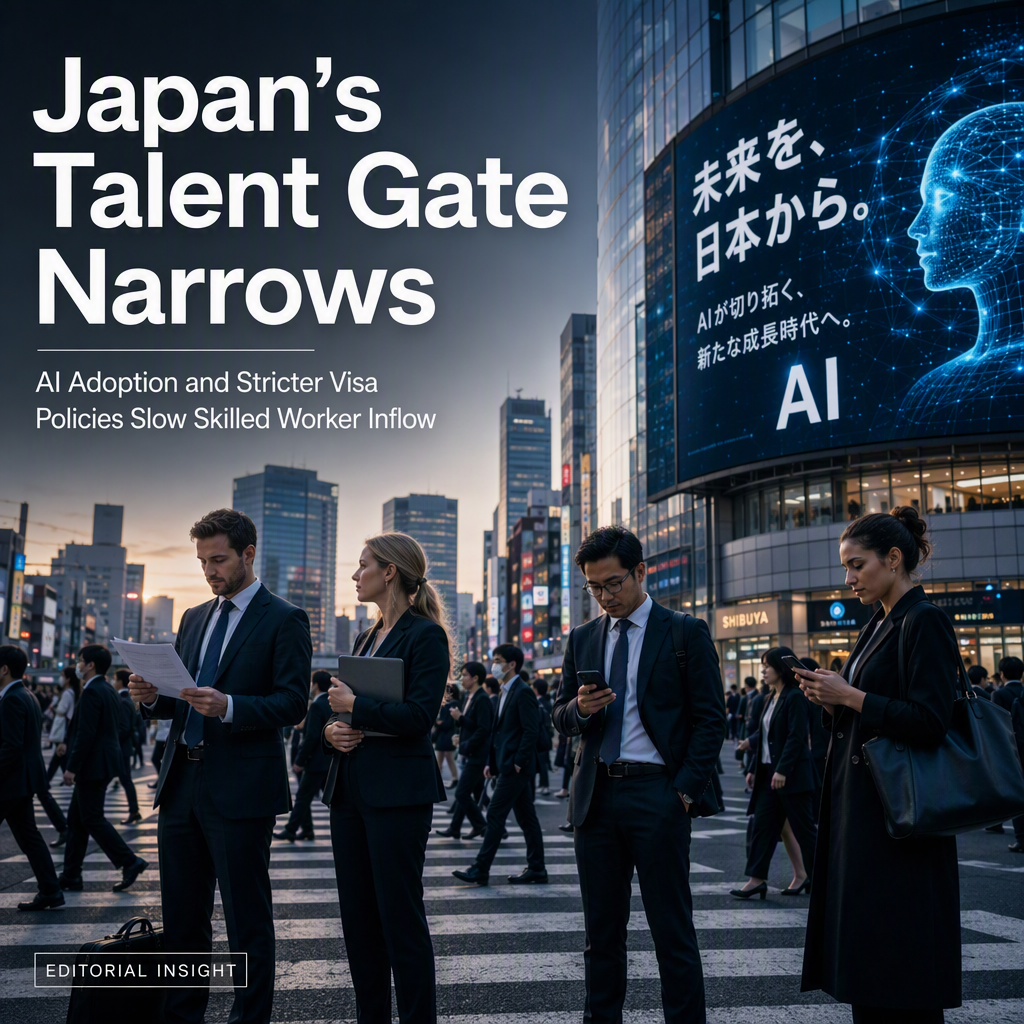
Japan has experienced a slowdown in the arrival of skilled foreign white-collar workers since last fall, a shift attributed to the increasing adoption of artificial intelligence and tighter government oversight of visa programs [1]. The number of foreign nationals holding highly skilled professional status in Japan had more than tripled over the past decade, but recent trends indicate a decrease in new arrivals over the past year [1].
The spread of AI technologies has specifically reduced demand for IT workers and translators, sectors previously reliant on foreign expertise [1]. At the same time, the Japanese government has intensified scrutiny of the highly skilled professional visa program, aiming to prevent alleged abuses of this residency status [1].
Officials and analysts cited in the article emphasize that Japan continues to value foreign talent to address ongoing labor shortages and support economic growth. However, they acknowledge that technological advancements and evolving immigration policies are reshaping the market for international professionals [1].
No specific market reactions, analyst forecasts, or company ticker symbols are mentioned in the article [1].
CONCLUSION
Japan's inflow of foreign professionals is slowing due to AI-driven changes in labor demand and stricter visa enforcement. While the country still seeks international talent, both technology and policy shifts are altering the landscape for skilled foreign workers.