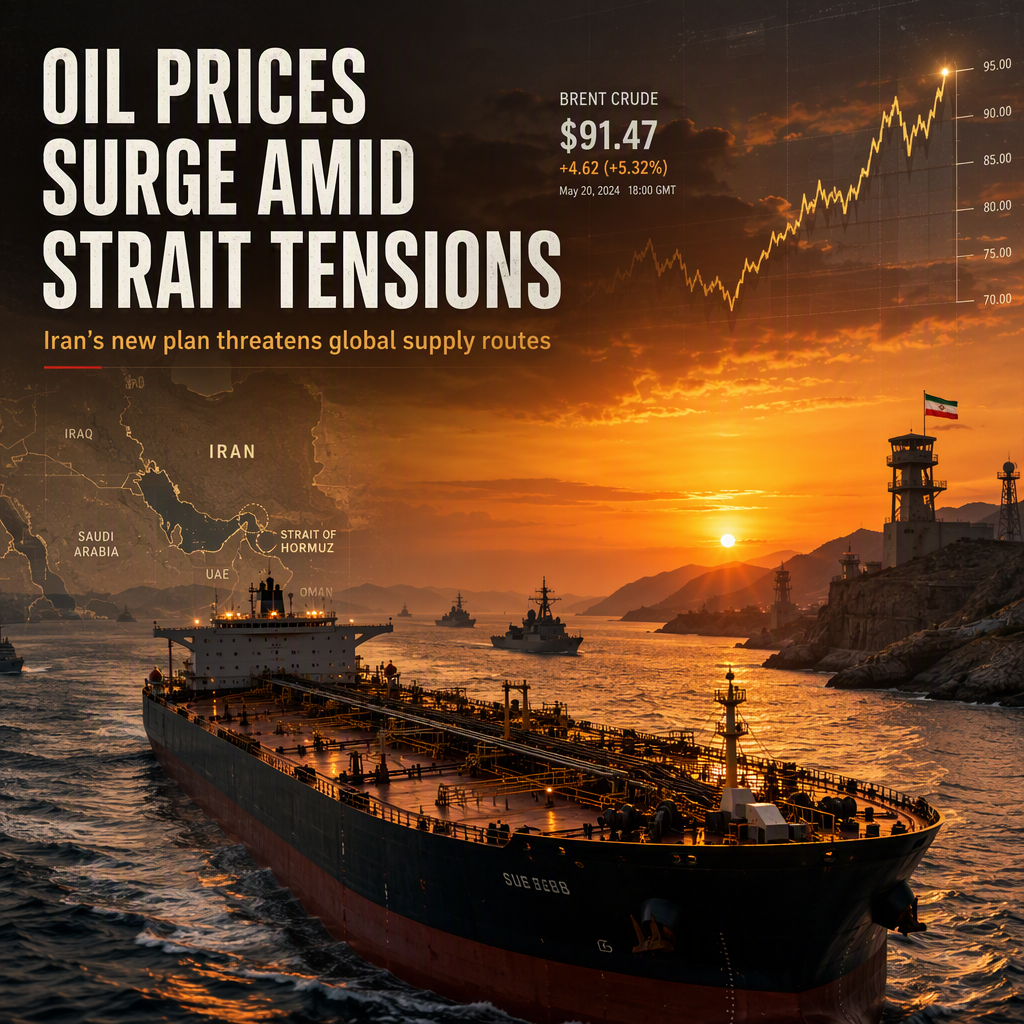
West Texas Intermediate (WTI) oil prices remained steady after modest gains, trading around $77.50 per barrel during Asian hours on Friday, while U.S. WTI futures for September advanced 1.11% to $78.15 per barrel and Brent crude for October delivery gained 1.22% to $83.50 a barrel [1][2]. The stability and rise in oil prices were driven by renewed tensions in the Strait of Hormuz, following Iran's publication of a restrictive draft plan that threatens to disrupt global oil supply routes [1][2]. The draft plan proposes banning U.S. and Israeli vessels from transiting the strait and requires compensation from nations deemed hostile before passage is granted [1][2]. Penalties for violations could equal 20% of a vessel’s cargo value, and the waterway would only fully reopen once the U.S. maritime blockade is lifted [1]. While Iran and Oman are reportedly working on an agreement to define transit routes, no deal has been announced; media reports suggest inbound traffic would transit Iranian waters and outbound traffic would go through Omani waters [2].
Regional instability is further heightened by Iran's warning to neighboring Gulf states that any new U.S. attack on its territory would trigger retaliatory strikes against critical energy infrastructure across the region [1]. Additionally, Yemen's Houthis claimed missile and drone attacks on Saudi deployments in Marib and Hadramout, reportedly killing or wounding hundreds of Saudi-aligned fighters and destroying military camps, weapons depots, and armored vehicles [1]. Supply concerns were exacerbated by Ukraine's strikes on two major Russian oil refineries (Yaroslavl/Yanos and Bashneft's Novoil facility) and a drop in U.S. imports of Saudi crude to zero in July for the first time since 1985 [2].
Strategists at BNY noted that oil prices steadied as traders digested Iran’s claim of reaching an agreement with Oman on a proposed shipping route, which helped calm immediate fears of supply disruption, though market participants remain vigilant [1]. Westpac highlighted that higher oil prices signal a further inflationary impulse from energy and Middle East tensions, sending the U.S. dollar higher and government bonds lower [2].
U.S. President Donald Trump commented in the Oval Office, referencing Iran, that he thinks the war in Iran will end "pretty soon" [2].
CONCLUSION
Oil prices have surged and steadied amid escalating tensions in the Middle East, particularly due to Iran's restrictive draft plan for the Strait of Hormuz and additional supply disruptions. Market participants remain cautious, with strategists noting ongoing risks to energy infrastructure and inflationary pressures. The situation continues to evolve, with no final agreement announced and geopolitical risks driving high market impact.