
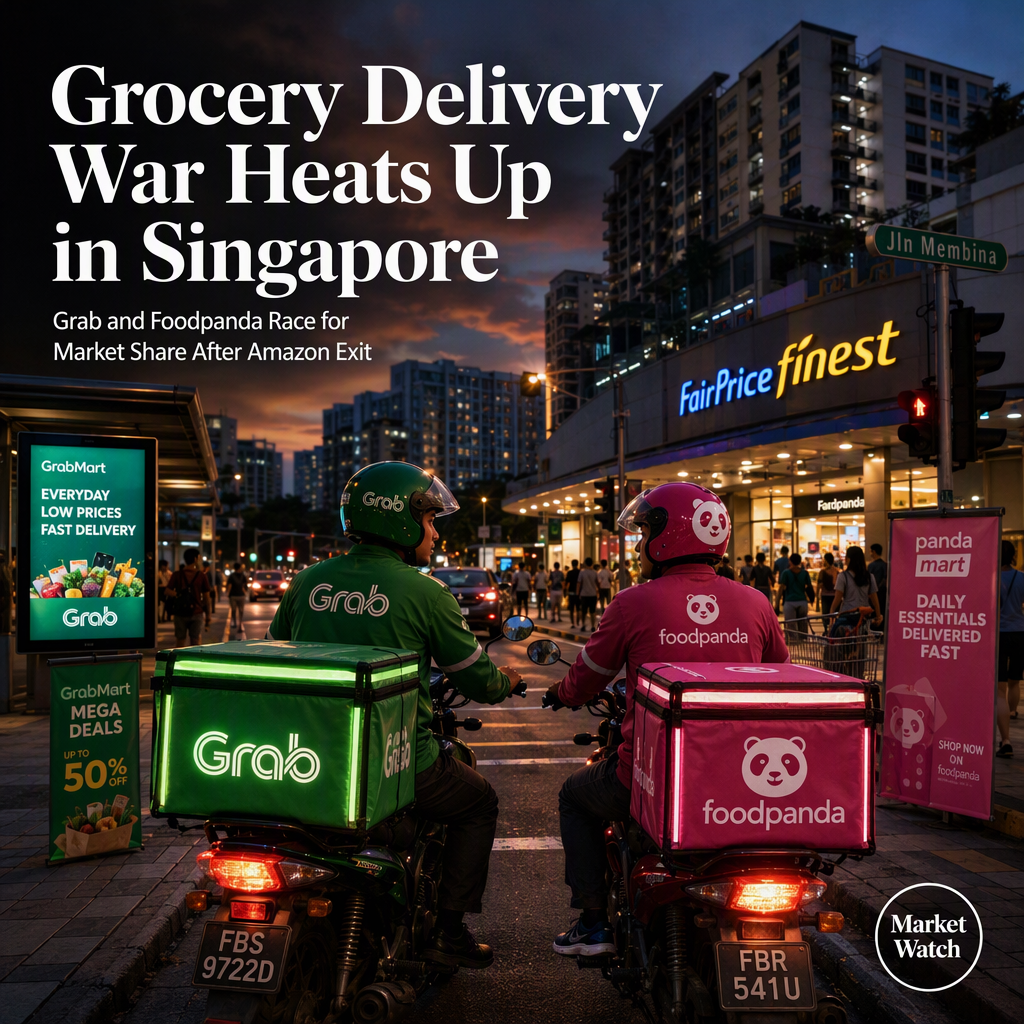
Grab and Foodpanda have significantly ramped up their grocery delivery offerings in Singapore, intensifying competition with established online supermarket operators in the city-state [1]. The sector has seen increased activity, with food and grocery delivery mopeds becoming a common sight, reflecting the fierce battle for market share [1]. This escalation follows Amazon's exit from the Singapore grocery delivery market, which has created a gap that Grab and Foodpanda are moving quickly to fill by launching promotions and expanding their product ranges to attract more consumers [1].
Both companies have invested heavily in logistics, technology, and partnerships with local suppliers, aiming to improve service quality and customer experience, although specific financial details of these investments have not been disclosed [1]. Industry observers note that the market is becoming increasingly crowded, with operators offering faster delivery times and wider selections to outpace rivals [1]. Analysts suggest that the high level of competition is likely to drive down delivery fees and increase consumer choice, but profitability remains a challenge as operators balance aggressive expansion with cost control [1].
A retail industry analyst commented, "The exit of Amazon has left a gap, but it also underscores the difficulties in achieving sustainable margins in this market. Grab and Foodpanda are betting on volume and operational efficiency to win, but the landscape is far from settled" [1]. Market sentiment is cautiously optimistic, fueled by Singapore's urban population and tech-savvy consumers who demand convenient grocery delivery services [1]. The sector is expected to grow further, with operators seeking new ways to differentiate themselves, such as offering premium products or leveraging data analytics for personalized recommendations [1].
In summary, Singapore's grocery delivery war is heating up, with Grab and Foodpanda emerging as the leading contenders following Amazon's withdrawal. The outcome will depend on their ability to innovate, manage costs, and win consumer loyalty in a highly competitive environment [1].
CONCLUSION
Grab and Foodpanda are aggressively expanding their grocery delivery operations in Singapore, aiming to capture market share left by Amazon's exit. While the sector is poised for growth and increased consumer choice, profitability remains uncertain amid intense competition and ongoing investments. The ultimate winners will be those who can innovate and efficiently manage costs in this crowded market.