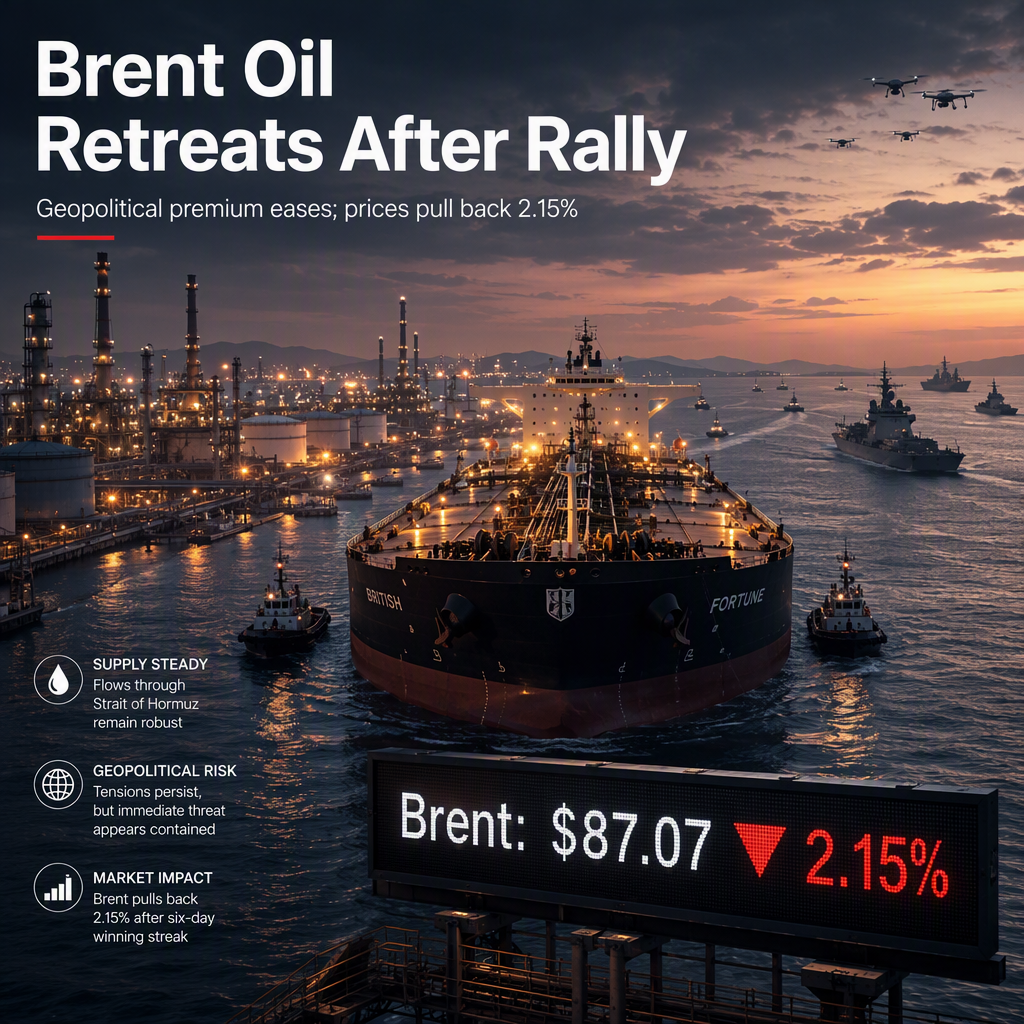
Brent crude oil prices ended a six-day winning streak, pulling back by 2.15% to close at $87.07 per barrel, according to Deutsche Bank analysts cited by FXStreet. This decline comes as some of the geopolitical risk premium, which had driven prices higher, was partially unwound in the absence of significant new developments, despite ongoing intraday volatility linked to headlines from Houthi and Iranian sources [1].
During the trading session, Brent crude rebounded from an intraday low of $85.85 per barrel after reports from the Houthi-run Saba news agency indicated that the Houthis were targeting the Aramco refinery in the Jizan region. Additionally, Iran’s state-run IRIB reported that a joint military command spokesman stated no ship could safely transit the Strait of Hormuz without approval. However, these headlines did not result in a sustained price increase, as the market ultimately focused on the lack of material escalation and continued shipping activity through the Strait of Hormuz, including shuttle transfers and ships operating without transponders [1].
The pullback in oil prices contributed to a dovish market sentiment, with investors reducing expectations for a Federal Reserve rate hike. This sentiment was further supported by a downside surprise in the US Producer Price Index (PPI) inflation print, which helped push the S&P 500 up by 0.65% to fresh highs. Lower oil prices provided additional momentum for market doves [1].
Despite the recent decline, Brent crude remains approximately 20% above pre-Iran war levels. In comparison, US wholesale gasoline prices are about 50% higher and European diesel prices are about 60% higher than before the conflict, indicating that refined product markets remain tight even as crude prices have fallen more than 25% from their spring peak [1].
CONCLUSION
Brent crude's modest pullback signals a partial unwinding of the geopolitical risk premium, though refined product markets remain tight and prices elevated. The easing in oil prices has contributed to a more dovish market outlook, supporting equity gains and reducing expectations for further Fed rate hikes. Overall, the market appears to be stabilizing despite ongoing geopolitical tensions.