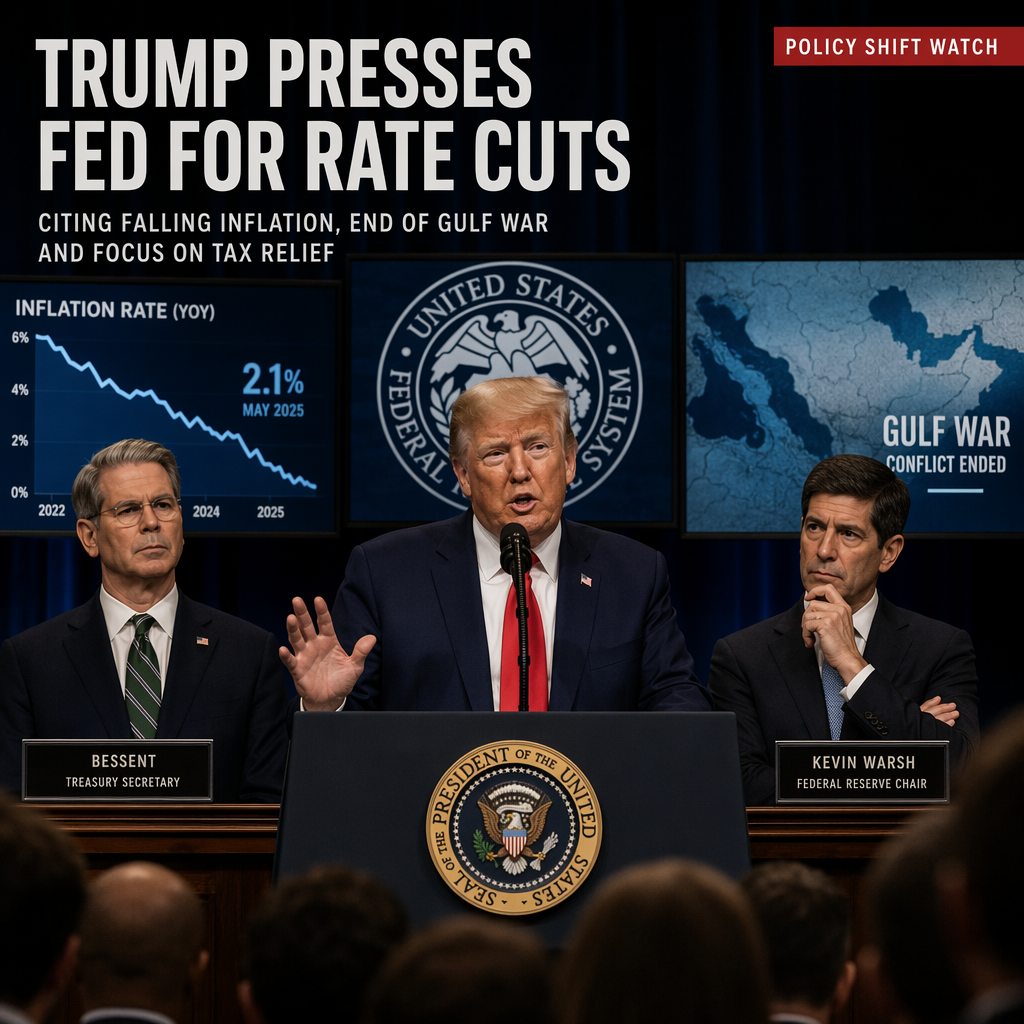
US President Donald Trump, in remarks made late Monday during the North American session, urged the Federal Reserve to lower interest rates for the first time, citing a recent positive inflation report and rapidly falling costs. Trump asserted that prices should drop significantly once the Gulf War concludes. He expressed confidence in Fed Chair Kevin Warsh, stating that Warsh would 'do the right thing,' but noted that Warsh is constrained by the decisions of the broader Federal Reserve Board [1].
Additionally, US Treasury Secretary Bessent highlighted the Trump administration's tax cuts, describing them as substantial relief for hardworking Americans, especially those in low- and middle-income households [1].
The article provides context on the Federal Reserve's dual mandate of price stability and full employment, explaining that the Fed typically raises rates when inflation is above its 2% target and lowers rates when inflation is below target or unemployment is high. Lowering rates generally encourages borrowing and can weaken the US Dollar, while raising rates strengthens it. The article also explains the concepts of Quantitative Easing (QE) and Quantitative Tightening (QT), noting their respective impacts on the US Dollar [1].
No specific market reactions or analyst forecasts are mentioned in the article. However, the call for rate cuts by the President, combined with the assertion of falling inflation and prices, suggests a potential shift in monetary policy direction if the Federal Reserve responds to these pressures [1].
CONCLUSION
President Trump's public call for Federal Reserve rate cuts, citing falling inflation and the anticipated end of the Gulf War, signals potential pressure on US monetary policy. While no immediate market reaction is detailed, the statements highlight a possible shift toward looser policy if the Fed acts on these suggestions. The emphasis on tax relief and lower prices could influence future economic and market expectations.