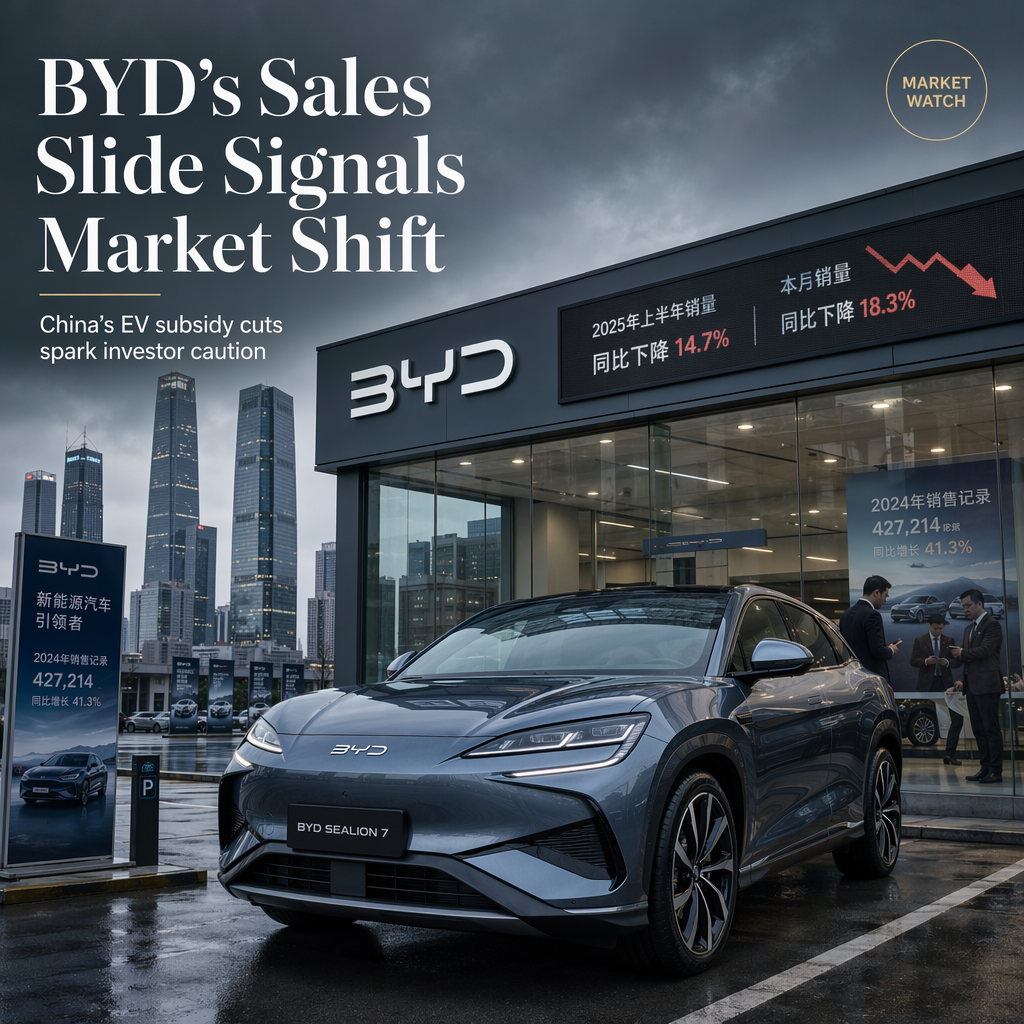
BYD, a leading Chinese automaker, reported a 16% year-on-year decline in new-vehicle sales for the first half of 2026, totaling 1.8 million units sold between January and June. This marks the first time in six years that BYD has experienced a sales drop during this period, signaling a significant shift in the company's growth trajectory [1]. More than half of BYD's sales are concentrated in the domestic Chinese market, making the company particularly vulnerable to local market dynamics [1].
The decline in sales is attributed to recent changes in China's electric vehicle (EV) subsidy policies, which have led to a slump in consumer demand and heightened price competition among automakers. Industry analysts have noted that the reduction in government subsidies has negatively impacted overall market sentiment, with the Chinese EV market now undergoing a correction after years of rapid expansion [1].
Analysts warn that automakers like BYD will need to adapt their strategies to maintain profitability in this new environment. The market sentiment surrounding BYD and its peers has turned cautious, with investors closely monitoring potential policy adjustments from Beijing and looking for signs of recovery in domestic sales volumes [1].
No direct trading recommendations or technical chart data were provided in the article. However, the overall tone suggests heightened uncertainty and a watchful stance among market participants [1].
CONCLUSION
BYD's first-half sales decline underscores the significant impact of China's EV subsidy changes on the domestic market. With market sentiment turning cautious, both investors and industry observers are awaiting further policy signals and evidence of a sales rebound before regaining confidence in the sector.