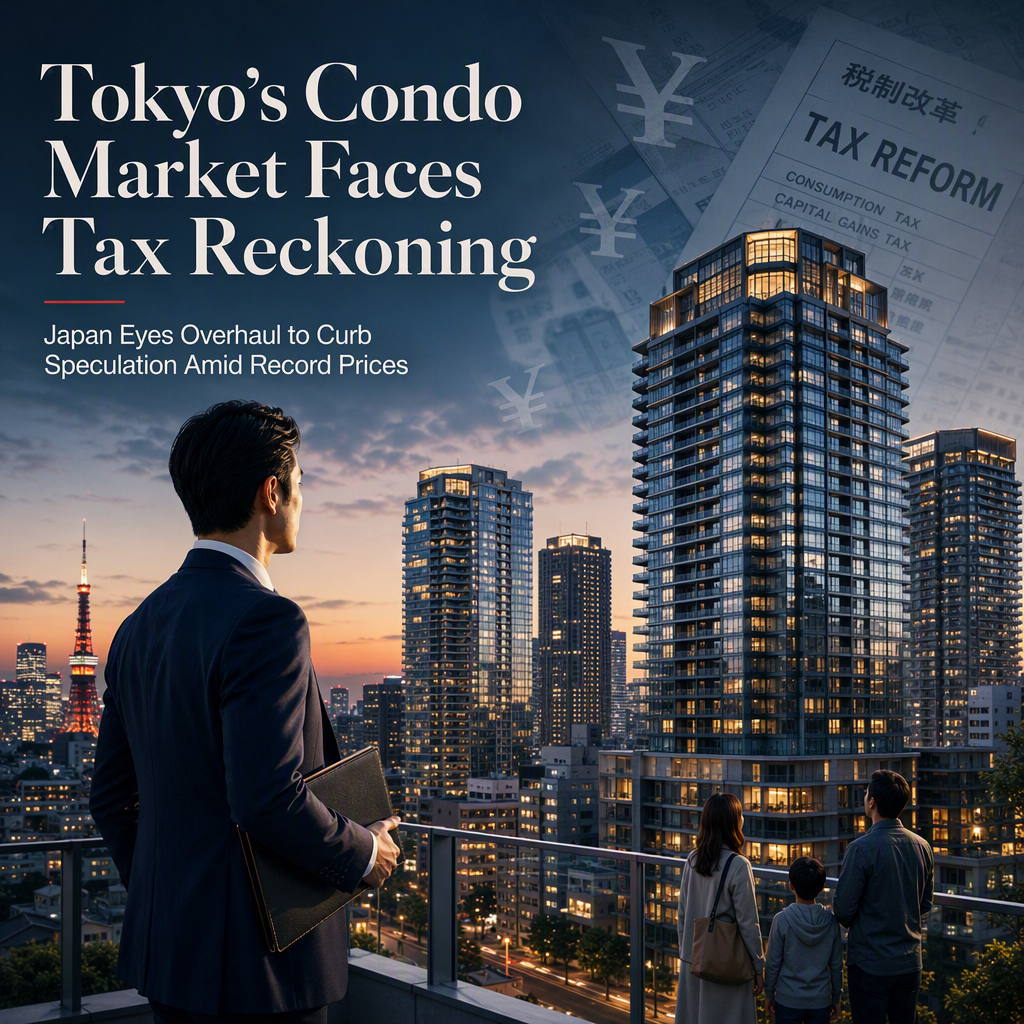
Japan's land ministry is planning to propose changes to the tax code for fiscal 2027 aimed at discouraging speculative condominium transactions, which have been identified as a key factor in driving up urban home prices and making housing less affordable for regular buyers [1]. The initiative comes as average prices for new condominiums in central Tokyo reached a record high in the first half of 2026, with prices in the Tokyo area surpassing 100 million yen between January and June for the first time [1].
The surge in property values has been fueled by strong luxury demand, with cash purchases dominating penthouse sales in both Tokyo and Osaka. Additionally, there has been a notable influx of investment from Taiwan into Japanese real estate, while demand from mainland Chinese buyers has receded [1].
Government officials are considering revisions to the capital gains tax regime specifically targeting short-term speculative condo sales, with the intention of stabilizing the market and making housing more accessible to residents. The specifics of the tax measures, including thresholds for holding periods and potential exemptions for regular homebuyers, are still under discussion [1].
Analysts suggest that tighter regulations and higher taxes on short-term sales could encourage longer holding periods and help reduce rapid price escalation in the condominium market. Market participants are closely monitoring the situation for further details, as the proposed changes are expected to have a direct impact on investor sentiment and market dynamics [1]. Technical analysis indicates that upward momentum in urban condo prices continues, with resistance forming around the 100 million yen level in central Tokyo. However, market sentiment could shift if the new tax measures are implemented and speculative activity declines [1].
CONCLUSION
Japan's proposed tax changes targeting speculative condo sales signal a significant policy shift aimed at cooling the overheated urban property market. While details are still pending, the initiative is expected to impact investor behavior and could alter the trajectory of condominium prices in major cities.