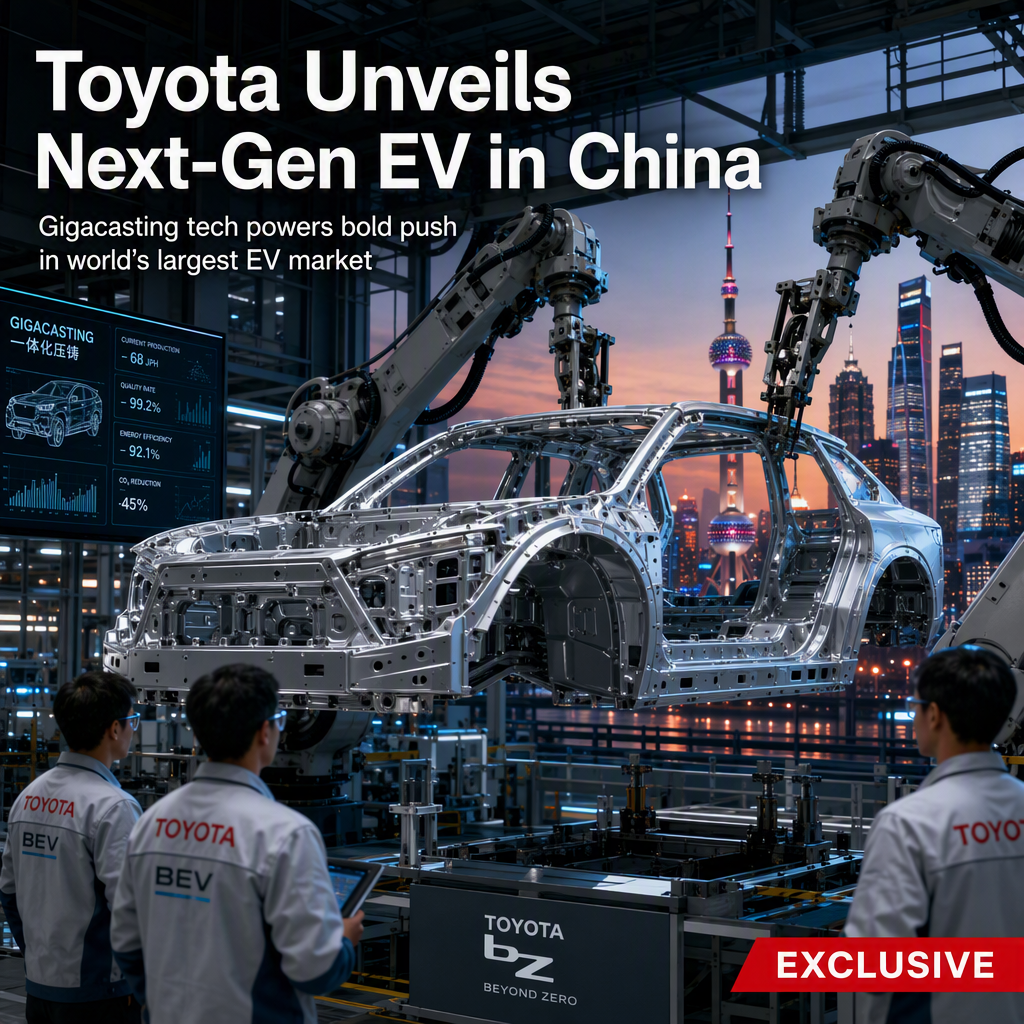
Toyota Motor has announced plans to build its next-generation electric sport utility vehicle (SUV) in China, with production set to begin in the fall of next year [1]. This marks a strategic shift from Toyota's traditional approach of launching new models in Japan first, as the company seeks to capitalize on the rapidly expanding Chinese electric vehicle (EV) market, which is now the largest in the world [1]. The new SUV will utilize gigacasting technology, a manufacturing process that enables the casting of large, complex car parts in a single piece, thereby improving production efficiency and reducing costs [1].
Toyota's decision comes amid intensifying competition from both Chinese manufacturers and global rivals, as the Chinese EV sector increasingly sets the pace for global innovation and cost competitiveness [1]. The company aims to leverage local manufacturing advantages and advanced technologies to better meet consumer demand and respond to competitive price pressures in China [1]. This move is part of Toyota's broader strategy to expand its global EV presence, increase output, and diversify its offerings in key markets [1].
Financial analysts cited in the article note that Toyota's adoption of gigacasting in China is a direct response to declining global EV prices, which are being driven down by low-cost Chinese models [1]. By optimizing production and reducing costs, Toyota seeks to maintain profitability amid these market shifts [1]. Industry observers expect the next-generation EV to feature competitive pricing, advanced battery technology, and improved performance metrics, positioning Toyota strongly against both local and international competitors [1]. The use of gigacasting is anticipated to enable higher-volume production with reduced material waste and lower labor costs, potentially enhancing Toyota's margins as global EV prices continue to fall below those of hybrids [1].
CONCLUSION
Toyota's decision to build its next-generation EV in China using gigacasting technology signals a major strategic pivot to address intensifying competition and falling prices in the global EV market. By leveraging advanced manufacturing and local market advantages, Toyota aims to strengthen its position and profitability in the world's largest EV market.