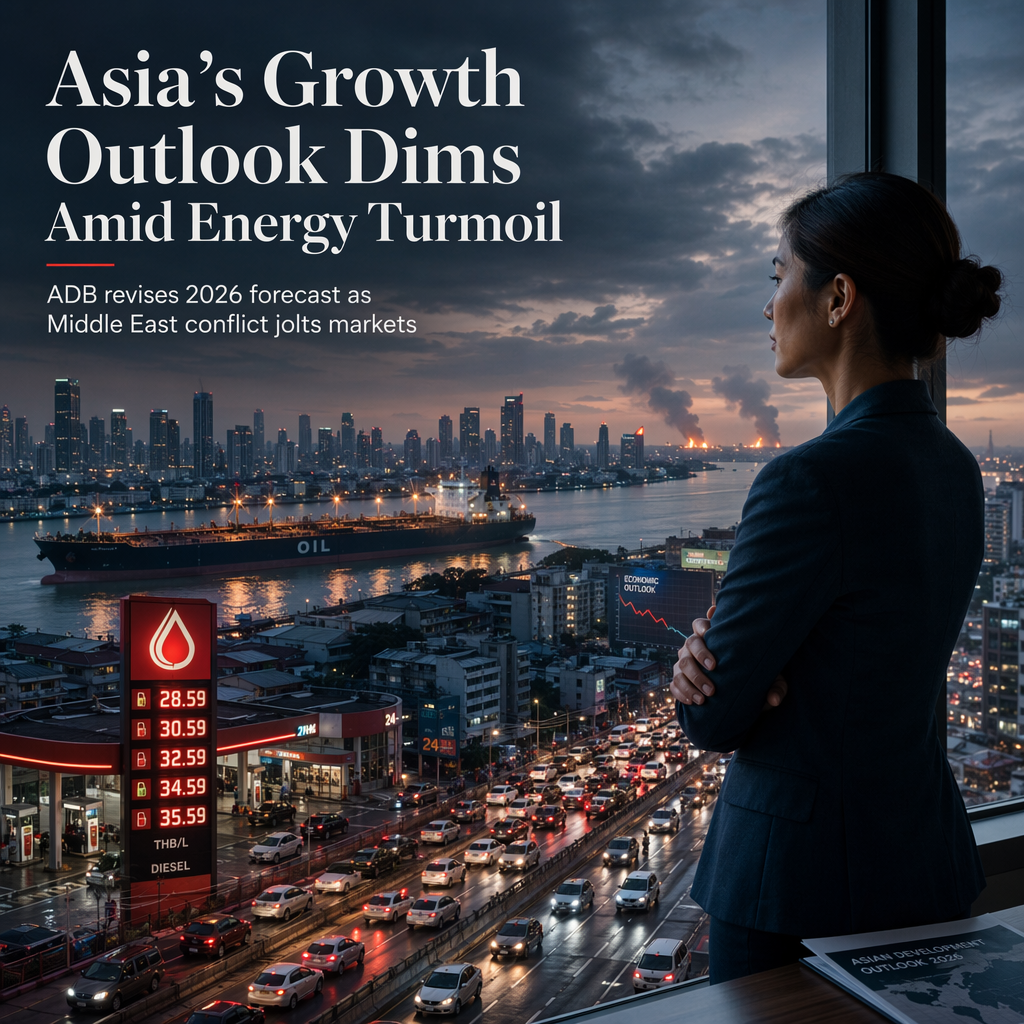
The Asian Development Bank (ADB) has revised its 2026 growth forecast for developing Asia and the Pacific, lowering it to 4.9% from the 5.1% projected in April. This adjustment is attributed to the prolonged fallout from the Middle East conflict, which has disrupted energy markets and supply chains across the region [1]. The ADB maintained its 2027 growth forecast at 5.1% [1].
The bank specifically highlighted the Philippines as one of the countries most affected by the energy shock, which has resulted in higher fuel prices, increased production costs, and mounting inflationary pressures throughout developing Asia [1]. Despite some easing in global fuel costs, the ADB warned that the risk of further escalation in the Middle East could keep energy prices volatile, potentially impacting the region's economic recovery prospects [1].
The updated outlook underscores the vulnerability of developing Asian economies to external shocks, especially those related to energy and commodity prices. The ADB urged policymakers to closely monitor inflation and implement measures to support households and businesses facing rising costs [1].
No specific market reactions, analyst opinions, or forward-looking statements beyond the ADB's recommendations and warnings were provided in the article [1].
CONCLUSION
The ADB's downward revision of its 2026 growth forecast for developing Asia reflects ongoing concerns about energy market disruptions and inflationary pressures linked to the Middle East conflict. Policymakers are advised to remain vigilant and responsive to these external shocks to support economic stability in the region.