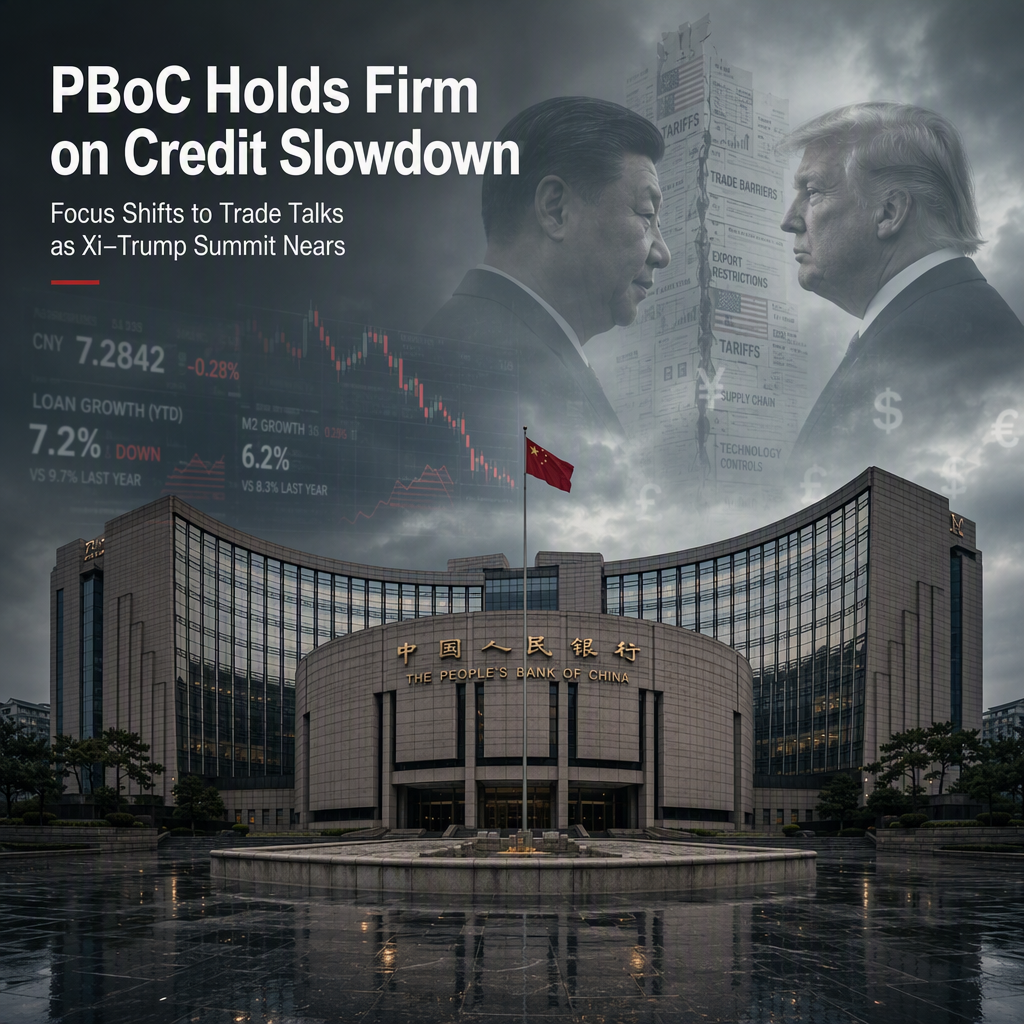
The People's Bank of China (PBoC) is signaling comfort with a slowdown in credit growth, as highlighted by Governor Pan Gongsheng in an article published in the Communist Party’s policy journal Qiushi [1]. Governor Pan characterized the weaker loan growth as a structural feature of economic upgrading, rather than a sign of economic distress, and indicated that the central bank is not preparing an imminent credit-driven stimulus [1]. This stance follows August credit data showing that aggregate financing and loan expansion weakened more than expected, with M2 money supply growth also falling short of consensus forecasts [1].
The PBoC’s validation of slower credit expansion suggests a reduced probability of near-term monetary easing, even as households and corporates show less appetite for new borrowing due to ongoing pressures in the property sector and subdued consumer confidence [1]. With fiscal policy yet to provide a decisive boost and domestic demand remaining soft, the policy focus is shifting towards trade diplomacy, particularly as US–China tariff-reduction talks progress ahead of the Xi–Trump summit [1].
A constructive outcome from the upcoming US–China summit could offer a modest improvement in market sentiment, according to Commerzbank’s China-focused FX Research [1]. However, Chinese policymakers face a challenging external environment, with simultaneous pressures from the European Union and the US Federal Reserve’s renewed tightening cycle as year-end approaches [1].
CONCLUSION
The PBoC’s acceptance of slower credit growth signals no imminent monetary stimulus, shifting the policy emphasis towards trade negotiations ahead of the Xi–Trump summit. While a positive summit outcome could boost sentiment, external pressures and subdued domestic demand continue to pose challenges for China’s economic outlook.