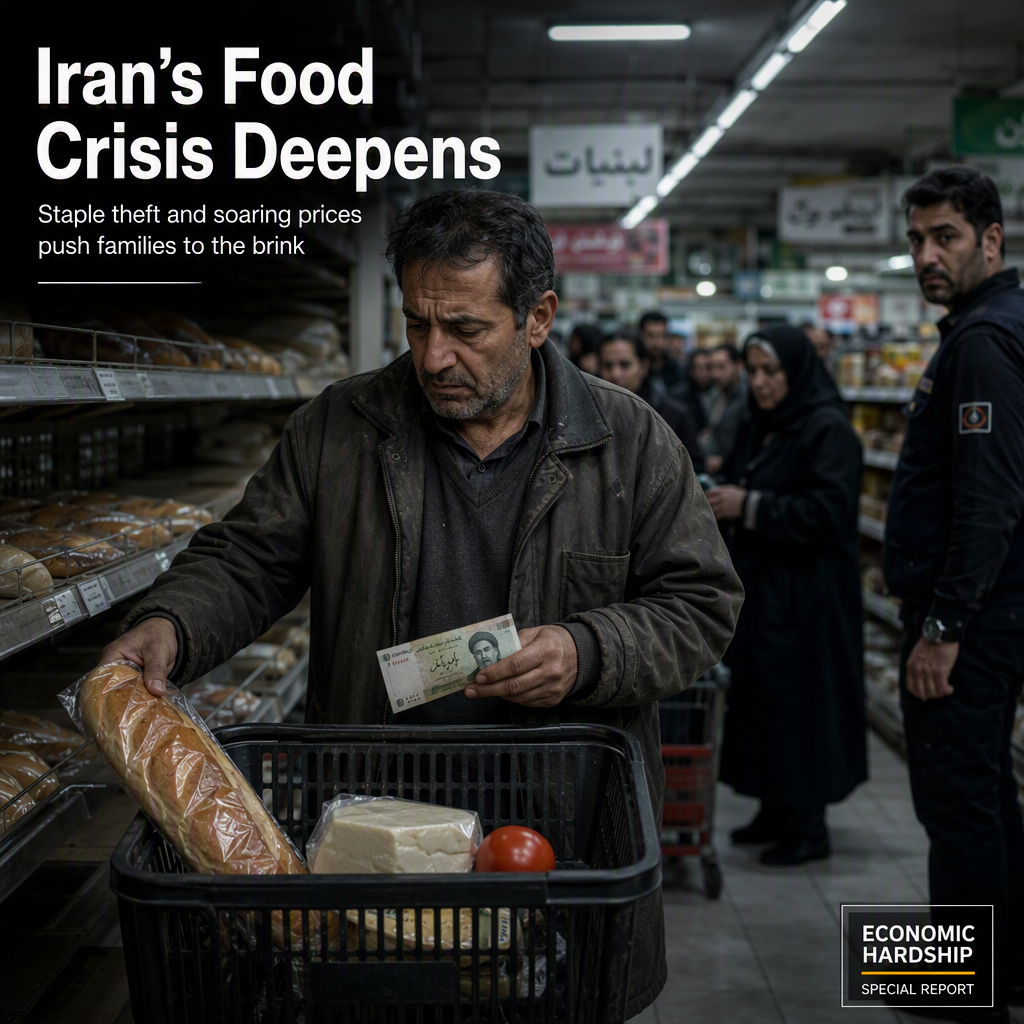
Iran is experiencing a deepening economic crisis, with reports emerging of citizens resorting to stealing basic groceries such as bread, cheese, and meat, highlighting the severe pressure on households due to inflation, currency depreciation, and collapsing purchasing power [1]. An investigation by the Iranian newspaper Jahan-e Sanat detailed supermarket workers' accounts of customers concealing or consuming inexpensive food items without paying, which, while anecdotal, align with broader economic data indicating widespread hardship [1].
Miad Maleki, an associate fellow at the Foundation for Defense of Democracies, stated that Iran is already 'inside the tipping zone,' describing the situation as a slow-motion crisis marked by currency collapse and World War II-level food inflation, leading to a breakdown in basic nutritional access for a significant portion of the population [1]. Maleki noted that Iran's annual food inflation has reached between 112.5% and 'Information not available' [1].
Iranian President Masoud Pezeshkian acknowledged the country's 'difficulties and problems' in a televised address on August 5, but insisted that Iran remains powerful and respected, attributing the unrest to foreign pressure aimed at provoking protests [1]. Maleki warned that worsening food insecurity could trigger renewed demonstrations, referencing the November 2019 protests following a sharp increase in gasoline prices, but cautioned that economic desperation does not guarantee immediate political change due to the regime's history of suppressing unrest through the Islamic Revolutionary Guard Corps and Basij paramilitary forces [1].
A supermarket employee, Amirhossein, reported witnessing several suspected thefts over the past ten months, attributing the incidents primarily to poverty and the immense pressure faced by ordinary Iranians [1].
CONCLUSION
Iran's economic crisis is intensifying, with soaring food inflation and reports of staple theft reflecting widespread hardship. While the government blames foreign pressure, analysts warn that food insecurity could spark further unrest, though immediate political change remains uncertain due to the regime's repressive measures.