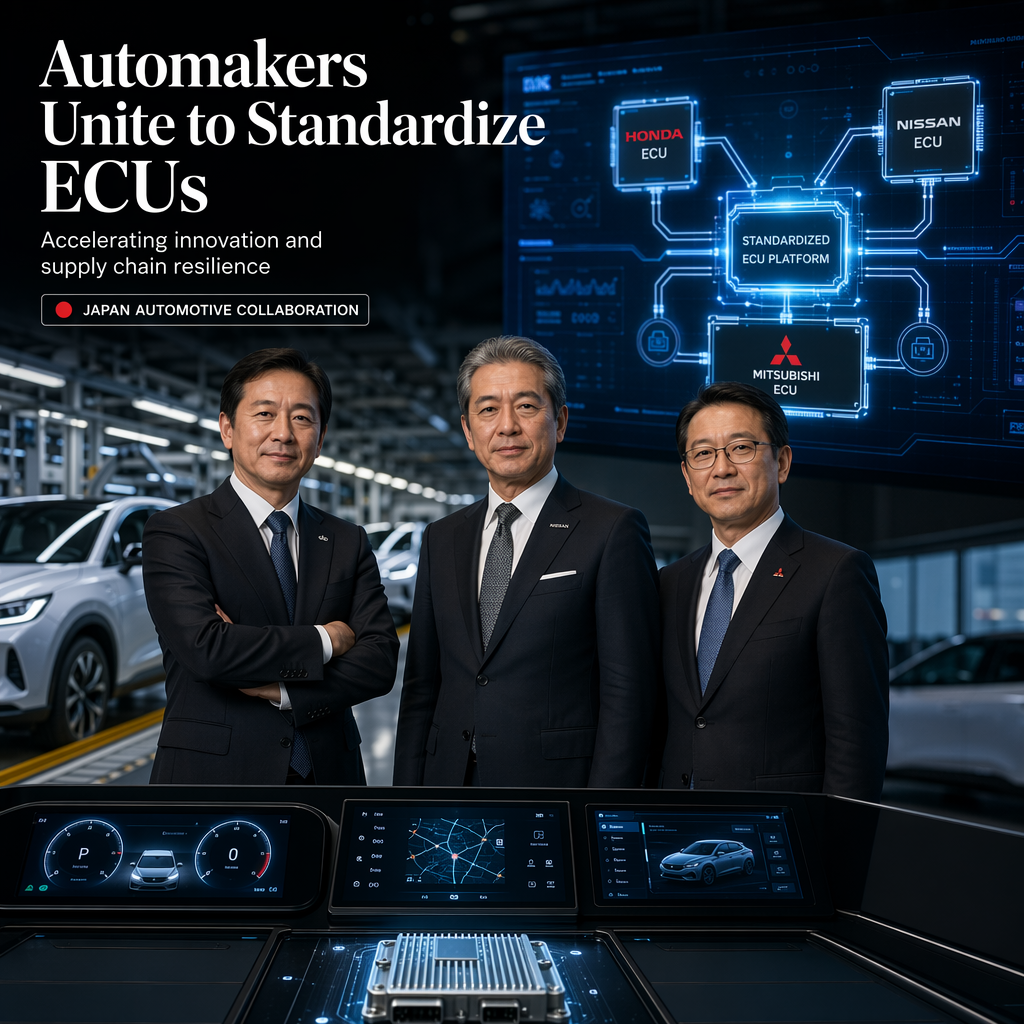
Honda Motor, Nissan Motor, and Mitsubishi Motors have entered final discussions to standardize electronic control units (ECUs) for their next-generation vehicles, according to Nikkei Asia [1]. ECUs are critical components that regulate software for advanced automotive features such as autonomous driving, connectivity, and electrification [1]. The three Japanese automakers are focusing on joint procurement and shared specifications for these units, aiming to significantly reduce development and production costs for future vehicle models [1].
This initiative is a strategic response to global pressures on automakers, including the need for increased investment in electric vehicles and advanced driver-assistance systems, as well as challenges posed by rising material costs and ongoing supply chain disruptions [1]. By standardizing ECUs, Honda, Nissan, and Mitsubishi seek to achieve economies of scale, enhance their bargaining power with suppliers, and accelerate the deployment of new automotive technologies [1].
Additionally, joint procurement is expected to help the companies better manage fluctuations in semiconductor supply and decrease reliance on any single supplier, a risk mitigation strategy that has grown in importance for the automotive sector [1]. While no specific financial terms or projected savings have been disclosed, the automakers anticipate that this collaboration will improve their cost competitiveness and speed up the development process for next-generation vehicles [1].
CONCLUSION
Honda, Nissan, and Mitsubishi are moving toward standardizing ECUs to cut costs and strengthen their competitive position in the evolving automotive market. The collaboration is expected to enhance supply chain resilience and accelerate innovation, though precise financial impacts have not been disclosed. Market participants may view this as a positive step toward greater efficiency and technological advancement.