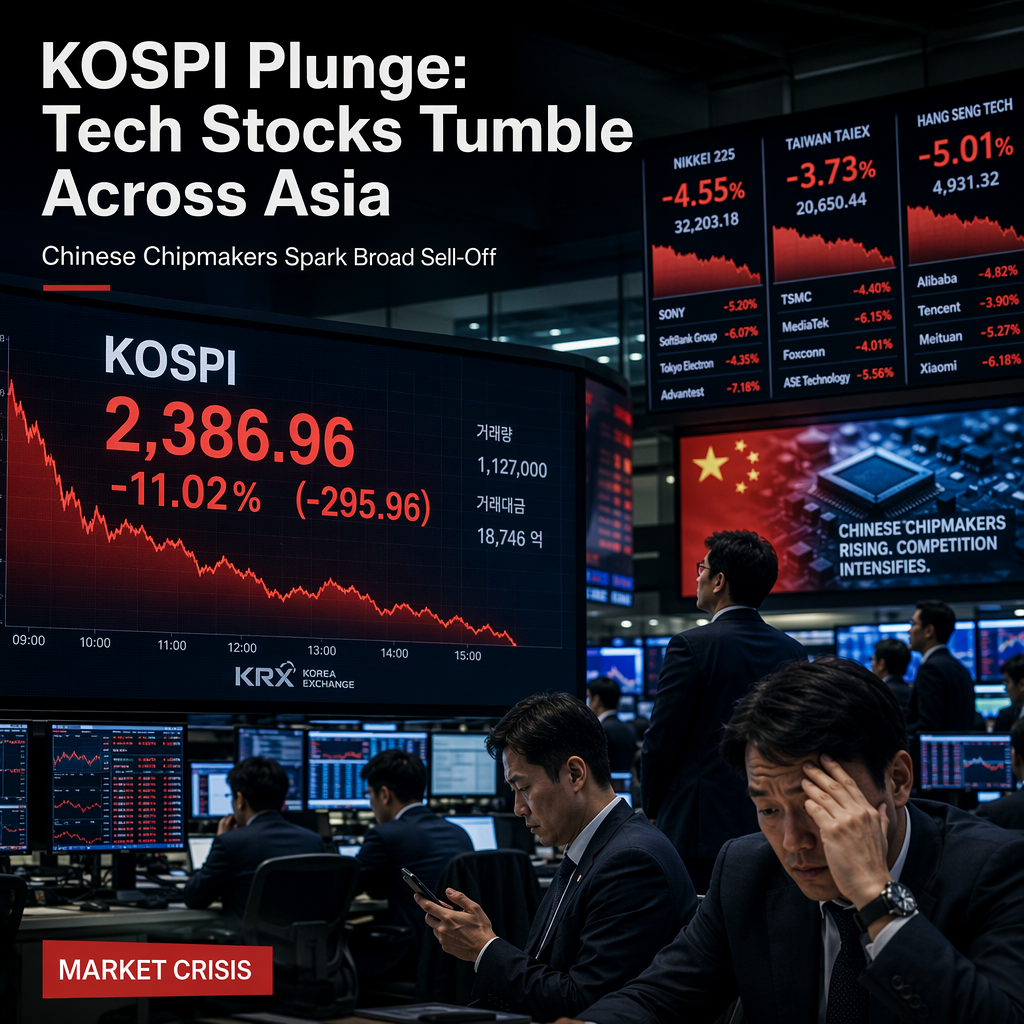
South Korea's KOSPI index experienced a dramatic plunge of 11% on July 28, 2026, as market concerns intensified over the rapid expansion of Chinese chipmakers and the associated risks to established semiconductor leaders in South Korea, Japan, and Taiwan [1]. The sell-off was led by technology and semiconductor sectors, with major tech stocks in Japan and Taiwan also suffering sharp declines, reflecting a broad-based risk-off sentiment across Asian markets [1].
The catalyst for the downturn was a combination of overnight losses in technology shares on Wall Street and escalating fears regarding the cost of large-scale investments required to compete with aggressive Chinese entrants in the chip industry [1]. Investors expressed particular anxiety about the potential erosion of profit margins and market share for incumbent players, as Chinese companies ramp up their presence in both memory and logic chip segments [1].
An analyst at a major Tokyo brokerage noted, 'The rapid rise of Chinese chipmakers is changing the competitive landscape,' highlighting that investors are now re-evaluating risk profiles in key technology names, especially those with significant exposure to semiconductors [1]. Technical analysts warned that the KOSPI could face further declines, with long-term support seen in the 2,300-2,350 range, and options trading volumes surged as traders sought protection against additional downside risk [1].
Market participants shifted towards defensive stocks and cash, reducing exposure to cyclical and growth-oriented technology names. Traders advised caution in the near term, citing uncertainty about the pace and scale of Chinese chipmaker expansion and the potential for further earnings downgrades among leading Asian tech companies [1].
CONCLUSION
The KOSPI's 11% plunge underscores heightened market anxiety over Chinese competition in the semiconductor sector, triggering a broad sell-off in Asian tech stocks and a shift to defensive positioning. With no clear support levels and ongoing uncertainty about the competitive landscape, market sentiment remains cautious and risk-averse.