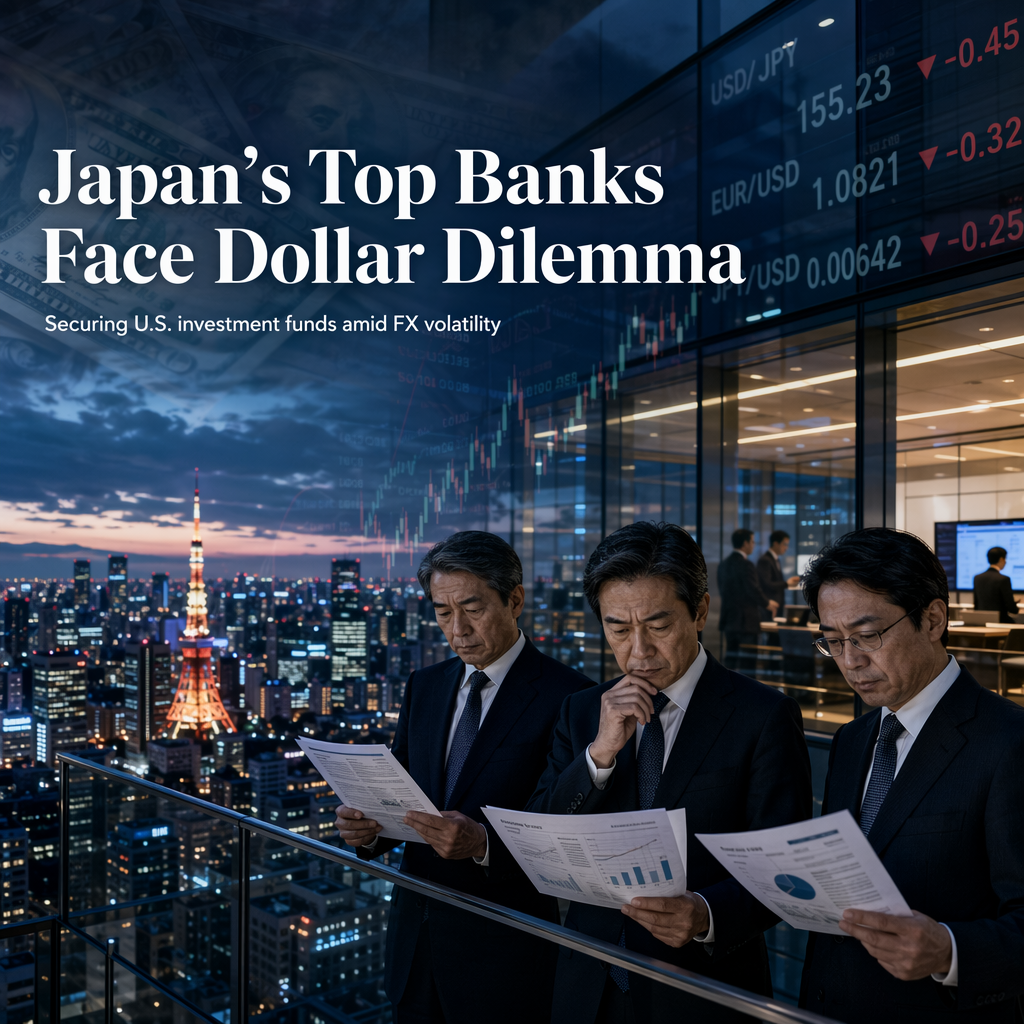
Japan's leading banks, alongside the government-backed Japan Bank for International Cooperation (JBIC), have begun financing the initial projects agreed upon during recent U.S.-Japan tariff negotiations. However, these institutions are already encountering difficulties in raising the necessary dollar funding to meet their investment commitments in the United States [1].
As the need for substantial dollar funding grows, Japanese banks are actively seeking ways to obtain more dollars without causing disruptions in financial market functions. Private sector officials have approached both the government and the Bank of Japan (BOJ) for assistance in securing foreign exchange, highlighting the increasing complexity of dollar procurement. The challenge is further intensified by a doubling of global infrastructure funding over the past five years, a trend led by Japanese banks [1].
Competition among Japanese banks for dollars is mounting as overseas corporate payments increase, all while foreign exchange markets remain volatile. Some bank executives have described this FX volatility as 'undesirable' after discussions with government officials, including Japan's Takaichi. The BOJ's reduction in Japanese government bond (JGB) purchases has also complicated domestic funding, prompting banks to explore alternative methods for acquiring dollars [1].
There are concerns that aggressive efforts to secure dollars could disrupt market liquidity and impact exchange rates, leading banks to proceed cautiously. The situation underscores the delicate balance Japanese financial institutions must maintain as they fulfill their U.S.-Japan investment pledges while seeking government and central bank support to avoid destabilizing the financial system [1].
CONCLUSION
Japan's top banks are facing significant challenges in raising dollar funding for their U.S. investment commitments, with concerns about market liquidity and FX volatility. The need for government and BOJ support is evident as banks navigate these complexities, highlighting potential risks to market stability if dollar procurement is not managed carefully.