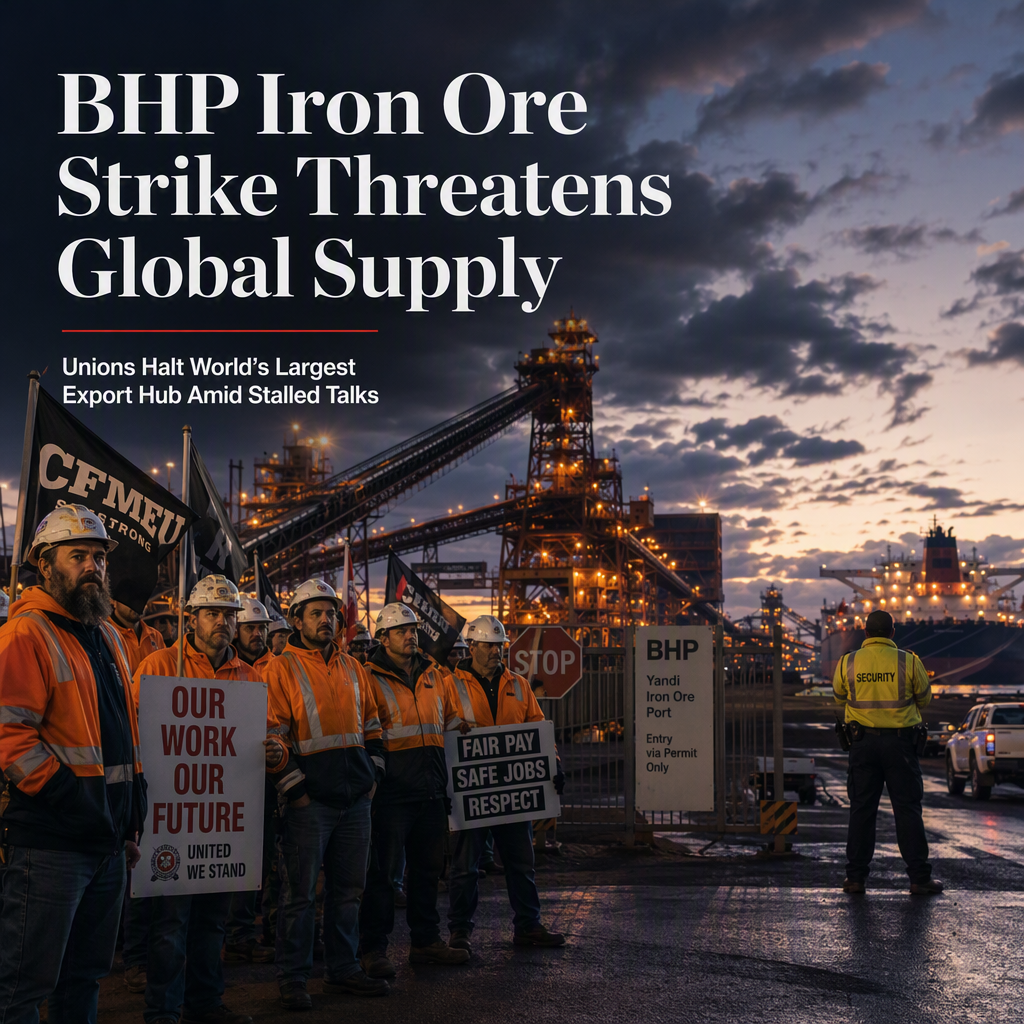
Workers at BHP's iron ore export hub, the world's largest, are set to begin a 48-hour strike this weekend, demanding improved compensation and clearer career progression in response to strenuous working conditions, including long shifts, extreme heat, and extended time away from family [1]. BHP's management has expressed frustration with the stalled union negotiations, which have reached a stalemate over wage and working condition demands [1].
The industrial action is anticipated to disrupt iron ore exports, potentially affecting global supply and pricing. Traders and analysts are monitoring the situation closely, as BHP's export hub is a critical supplier to major steel producers worldwide [1]. Prolonged operational halts could exert upward pressure on iron ore prices, which have already experienced volatility in recent months due to supply concerns [1].
Market sentiment remains cautious, with some analysts suggesting the strike could trigger short-term price spikes, particularly if inventories at receiving ports are low. Technical resistance for iron ore has been observed around recent highs, while support levels may be tested if supply chains face further disruption [1].
BHP's management continues to seek a resolution and has warned that ongoing strikes could impact not only the company's financial results but also the broader iron ore market. The company is urging unions to return to negotiations to prevent further escalation [1].
CONCLUSION
The planned 48-hour strike at BHP's iron ore export hub is expected to have significant implications for global iron ore supply and pricing. Market participants are cautious, anticipating potential price spikes and supply chain disruptions if the industrial action persists. BHP is actively seeking a resolution to avoid further negative impacts on its operations and the broader market.