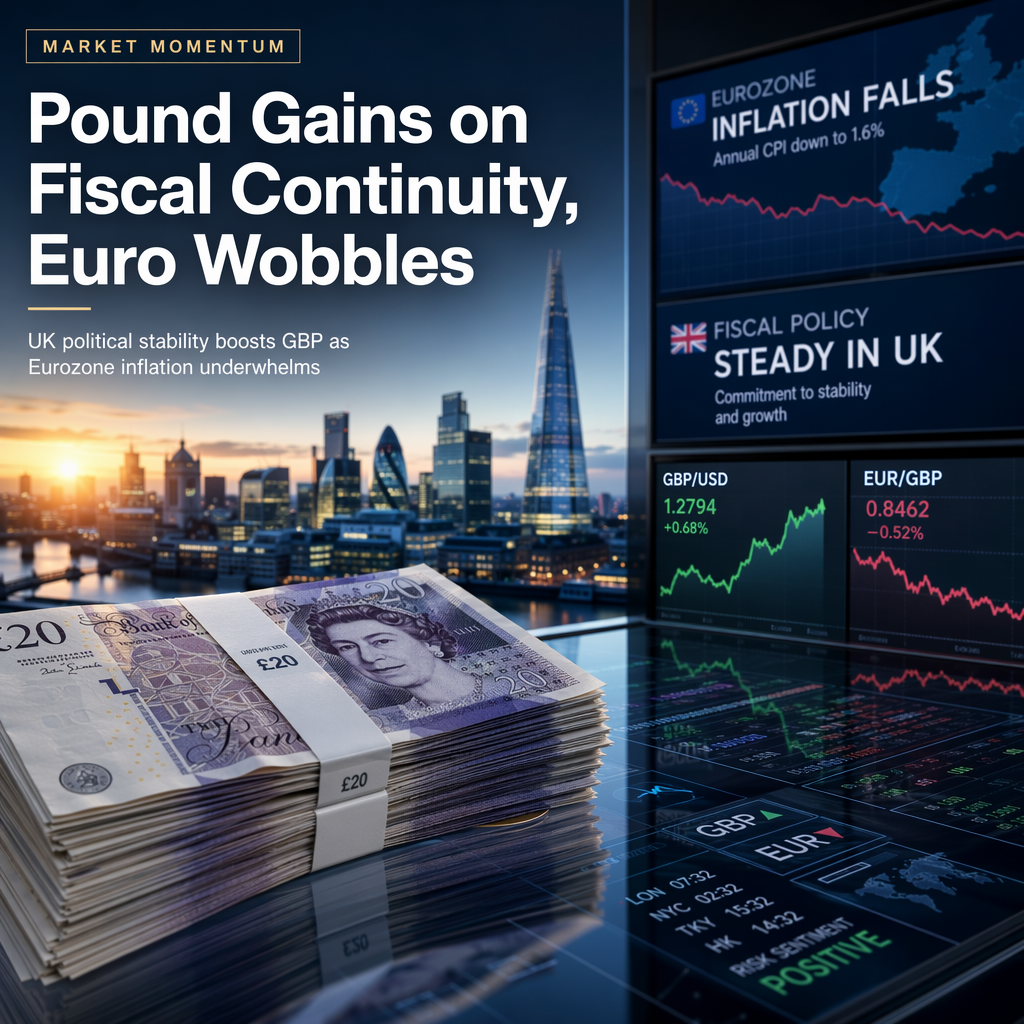
The British Pound (GBP) has extended its recovery against major peers, trading up 0.1% to near 1.3290 against the US Dollar (USD) during the European session on Thursday, and outperforming other currencies throughout the week [1]. This strength is attributed to firm hopes that the United Kingdom's fiscal principles will remain intact despite a leadership change, with Greater Manchester Mayor Andy Burnham, the frontrunner for the next Prime Minister after Keir Starmer's resignation, vowing to adhere to the Labour Party’s 2024 manifesto and ongoing fiscal policy [1][2]. Burnham's commitment to fiscal rules has calmed traders' nerves and provided near-term support for the Pound, though analysts at Natixis caution that markets will closely monitor future budgets for any signs of fiscal relaxation to finance higher public spending [2].
On the technical front, GBP/USD has recovered to near the 20-day exponential moving average (EMA) at 1.3295, suggesting a neutral near-term trend. The Relative Strength Index (14) at 46.6 indicates subdued bullish momentum, with immediate resistance at the 20-day EMA. A decisive break above this level could see the pair advance toward 1.3400, while failure to do so may result in renewed declines [1].
Meanwhile, the Euro (EUR) has weakened against the British Pound, with the EUR/GBP cross falling to around 0.8565. This move is driven by softer Eurozone inflation data, which has reduced expectations for an interest rate hike by the European Central Bank (ECB) at its next policy meeting on July 23. Eurozone inflation, as measured by the Harmonized Index of Consumer Prices (HICP), dropped to 2.8% year-on-year in June from 3.2% in May, coming in below the consensus of 3.0% [2]. Morgan Stanley economists noted that this softer inflation could lower the bar for the ECB to remain on hold in September as well [2].
Market participants are also closely watching upcoming speeches from ECB President Christine Lagarde and Bank of England Governor Andrew Bailey, as well as the US Nonfarm Payrolls (NFP) data for June, which is expected to provide further cues on the Federal Reserve’s monetary policy outlook [1][2].
CONCLUSION
The British Pound has gained support from expectations of fiscal policy continuity under likely new leadership and from weaker Eurozone inflation, which has pressured the Euro. While near-term sentiment for GBP is positive, analysts remain cautious about future fiscal developments. Market attention now turns to central bank commentary and US labor data for further direction.