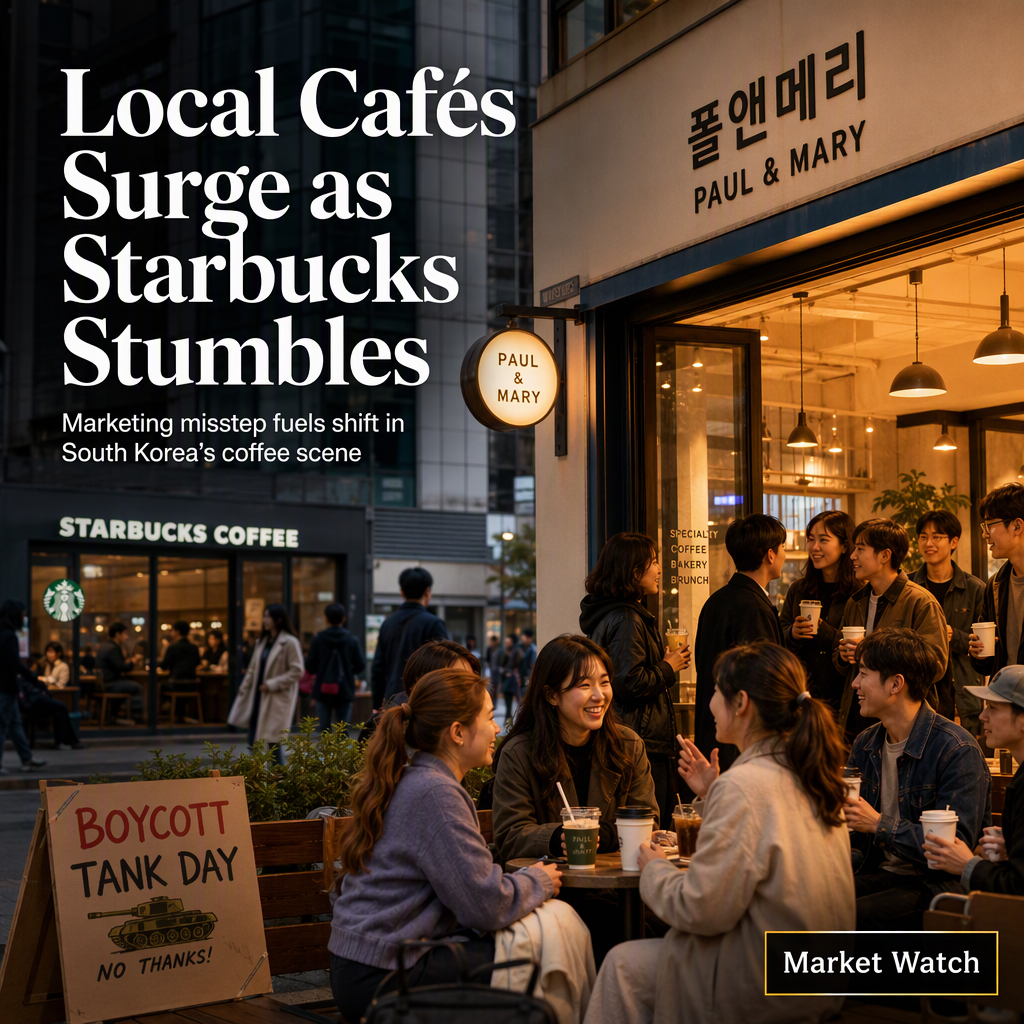
Starbucks Korea has come under scrutiny following a controversial 'Tank Day' mug promotion that sparked boycott calls and negative consumer sentiment in South Korea's competitive coffee market [1]. The incident has provided an opening for local coffee chains and independent shops to attract dissatisfied Starbucks customers, with some reporting a noticeable increase in foot traffic and sales in the aftermath [1].
Market analysts highlighted that such marketing missteps can significantly impact consumer sentiment, especially in a saturated market where alternatives are readily available [1]. In response, Starbucks' rivals have launched targeted campaigns focusing on reliability, taste consistency, and local values to capitalize on the situation and strengthen their brand loyalty [1].
Industry experts are monitoring key indicators such as sales growth and customer retention rates to assess the long-term impact of the controversy. They note that the competitive landscape could shift further if Starbucks is unable to recover its reputation and market share [1]. Technical metrics like customer satisfaction will be crucial in determining which brands can sustain their momentum following Starbucks' marketing error [1].
CONCLUSION
The fallout from Starbucks Korea's marketing misstep has provided a significant opportunity for local competitors to expand their market presence. The coming months will be critical for Starbucks as it seeks to restore consumer trust and prevent further erosion of its customer base in South Korea.