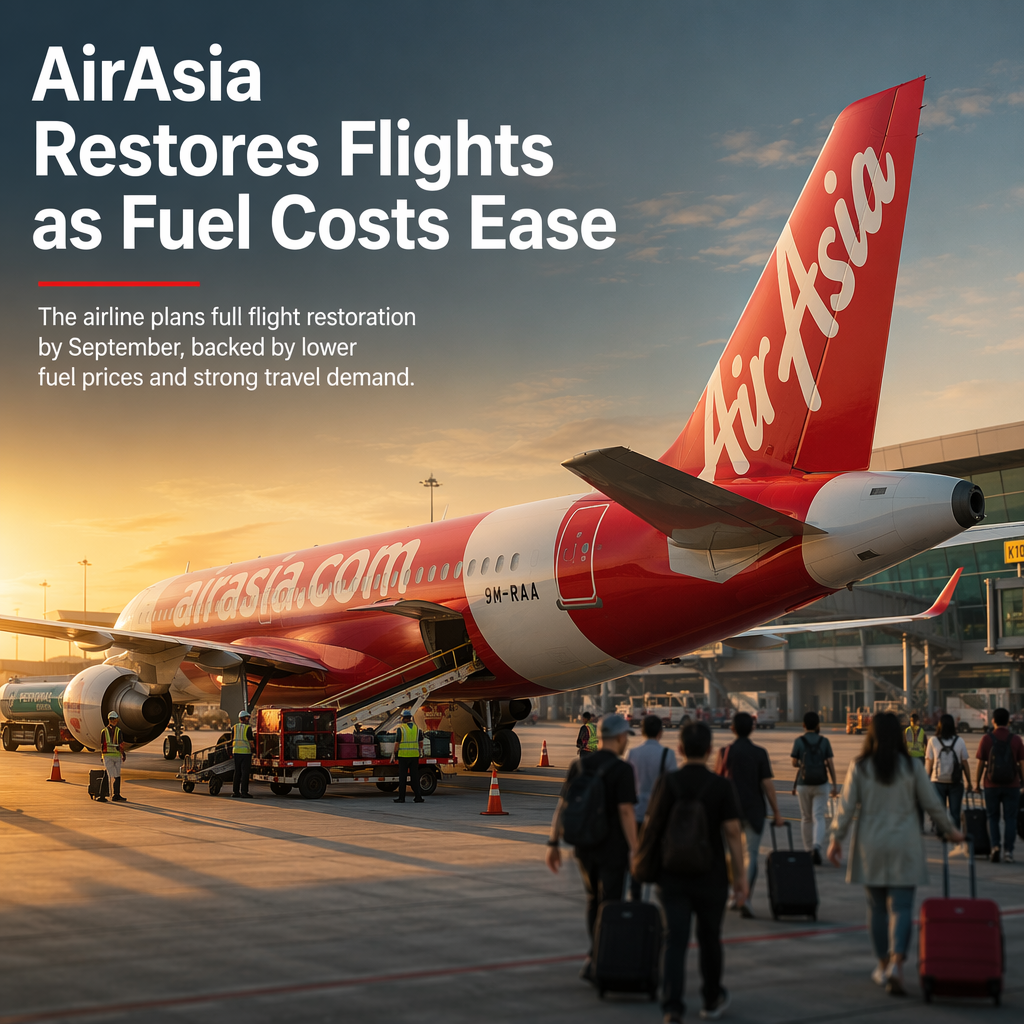
AirAsia, a leading Southeast Asian budget airline, announced plans to restore most of the flight capacity it had previously suspended due to this year's spike in oil prices. The company expects to reinstate these flights by September, following a period where high jet fuel costs forced the airline to scale back many routes and impacted profitability [1].
According to AirAsia's CEO, the recent stabilization and easing of fuel prices have enabled the airline to lower fares by 5% in an effort to attract more passengers. The CEO stated, 'As fuel costs come down, we are able to pass on some of these savings to our customers and increase our flight frequencies' [1].
The airline's strategy is to return to pre-spike capacity levels within the next three months, positioning itself for further growth in the competitive regional budget airline market. This move is set against the backdrop of ongoing volatility in fuel prices, which continues to affect the broader airline industry by squeezing margins and prompting operational changes [1].
CONCLUSION
AirAsia's decision to restore suspended flights and reduce fares signals optimism amid easing fuel costs. The airline's actions suggest a positive outlook for capacity and passenger growth, though industry-wide challenges from volatile fuel prices remain.