
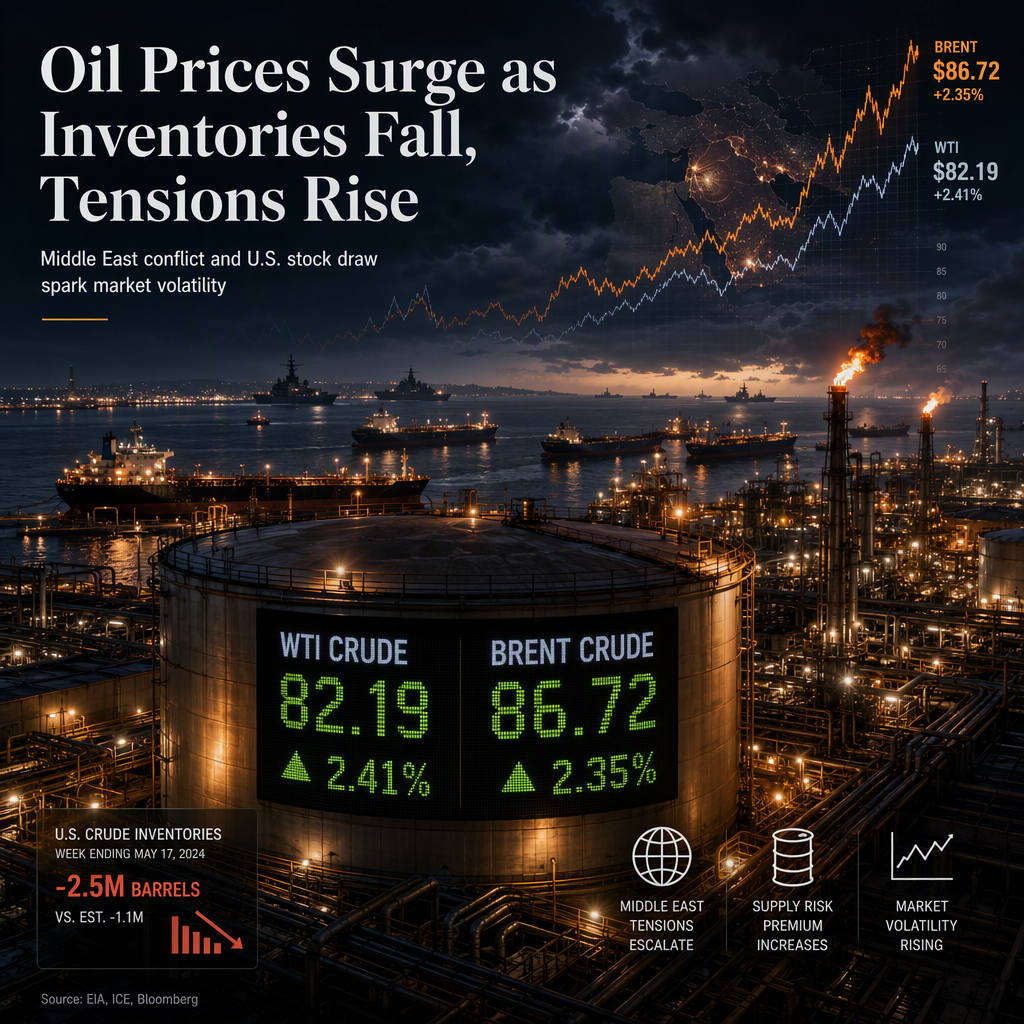
West Texas Intermediate (WTI) crude oil posted modest gains, trading around $88.55 during early Asian hours on Thursday, following an unexpected draw in U.S. crude oil inventories for the week ending October 2. The Energy Information Administration (EIA) reported a decrease of 3.186 million barrels, contrasting with the previous week's increase of 922,000 barrels and defying market expectations of a 1.9 million barrel rise [1]. U.S. WTI futures for November advanced 1.04% to $89.32 per barrel, while international benchmark Brent crude for December delivery gained 1.36% to $101.54 a barrel [2].
Market sentiment was further influenced by escalating tensions in the Middle East. Iran-backed Houthi militants launched fresh strikes on Saudi Arabia, including attacks on airports in Jazan and Najran [1][2]. The Saudi-led coalition retaliated, targeting more than 80 Houthi military sites across several governorates [1]. Additionally, Tehran has reportedly attacked tankers in the Hormuz Strait [2]. NBC News reported that President Donald Trump and his national security team have discussed the possibility of restarting large-scale U.S. military operations in Iran in the coming weeks, including potential strikes before the next month's midterm elections [2].
To address surging fuel prices, the International Energy Agency (IEA) agreed to accelerate the release of strategic oil stocks, deploying about 325 million barrels under a March emergency action plan in response to supply disruptions triggered by the Iran war [1]. This move may cap further upside in WTI prices [1].
Analyst commentary highlighted that crude prices are likely to remain sensitive to the security of Gulf export routes and infrastructure. Inki Cho, a financial markets consultant at Exness, stated that any escalation affecting traffic through the Hormuz Strait or Saudi energy infrastructure could threaten physical supply and lift prices further [2]. According to TD Securities, commodity trading advisors remain net long WTI crude, with current exposure at 23.0% of maximum historical size and an upside trigger level at $97.70 [1].
Technical analysis from FXStreet noted that WTI's near-term bias has turned bearish, with prices slipping below the 20-day simple moving average and the Relative Strength Index at 46.33, indicating waning upside momentum [1].
CONCLUSION
Oil prices have risen on the back of an unexpected U.S. inventory draw and heightened geopolitical risks in the Middle East, particularly involving Iran and Houthi attacks on Saudi Arabia. While the IEA's release of strategic reserves may limit further gains, ongoing tensions and potential U.S. military action in the region are likely to keep crude markets volatile and sensitive to further developments.