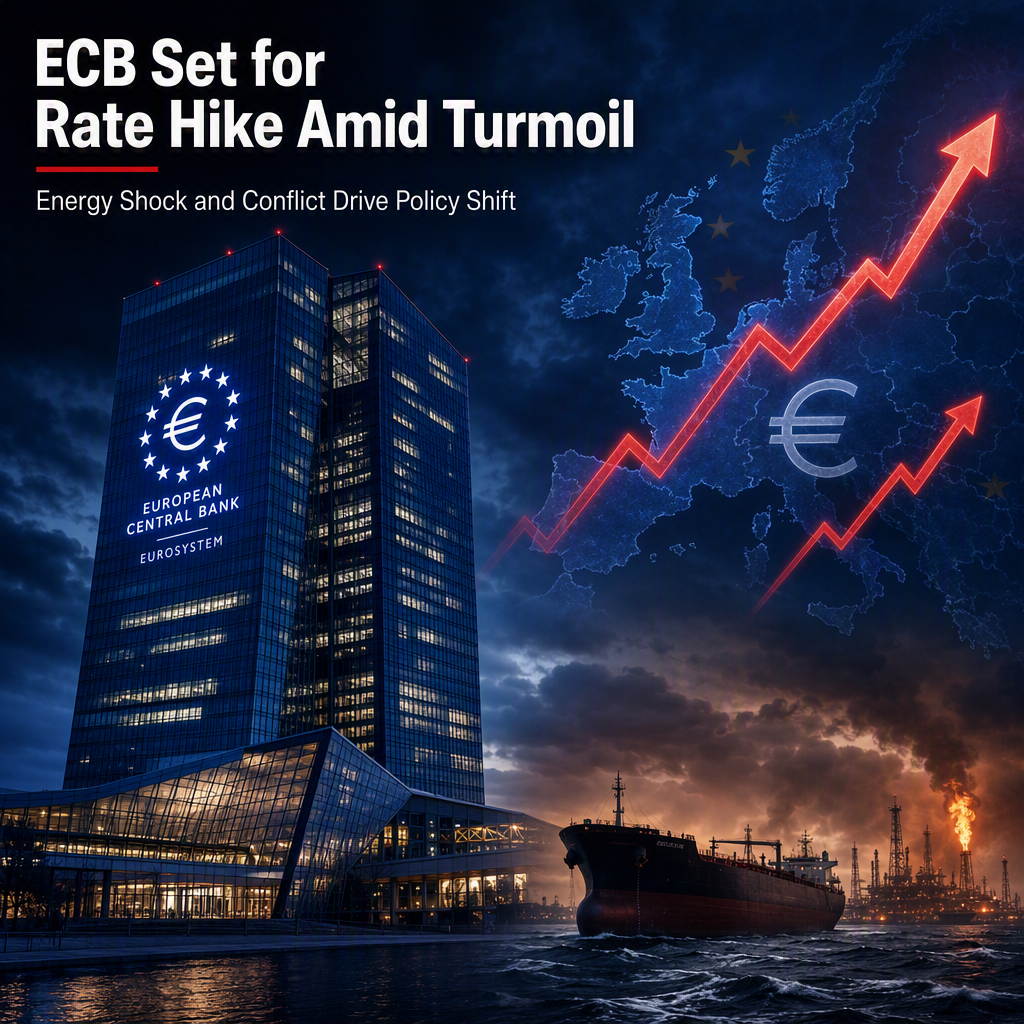
The European Central Bank (ECB) is widely expected to raise its key interest rate by at least 25 basis points at its upcoming meeting, with markets pricing in a 100% chance of this move according to LSEG data [1]. This anticipated hike comes as the U.S.-Iran war has intensified, clouding the outlook for the ECB's longer-term policy path and contributing to volatility in energy prices [1]. Recent data showed euro zone inflation reached 3.3% in August, with energy inflation surging to 14.3%, well above the ECB's 2% target [1].
The euro zone, a net importer of energy, has been particularly affected by the conflict in the Middle East, which threatens commodity transit through the Strait of Hormuz and has caused oil prices to spike and remain volatile [1]. As a result, government borrowing costs have risen sharply, with European bond yields hitting multi-decade highs as investors price in higher inflation and further rate hikes [1]. The ECB previously raised rates in June for the first time since 2023, bringing its key interest rate to 2.25%, and held rates steady at its subsequent meeting while closely monitoring the energy shock and its effects [1].
ECB President Christine Lagarde has emphasized that policymakers are not pre-committing to a particular rate path, citing upside risks for inflation and downside risks for economic growth [1]. Analysts, including Felix Feather from Aberdeen, are 'all but certain' that the ECB will raise rates, with the more important question being whether the bank's tone signals a protracted tightening cycle [1]. Feather expects a hawkish tone, noting that the eurozone economy has proved more resilient than expected, and that high energy prices, stronger wage trackers, and elevated inflation expectations will keep policymakers focused on upside risks [1].
Feather also suggests that the ECB may revise its growth forecasts higher, as the economic fallout from the war has been more limited than projected. However, he notes there remains a path to a protracted hold of interest rates at 2.5% after Thursday's meeting, given easing underlying inflation measures, contained wage pressures, and limited evidence of widespread second-round effects from the energy shock [1]. He adds that a de-escalation of tensions between the US and Iran would be necessary to ease energy market pressures [1].
CONCLUSION
The ECB is expected to raise rates in response to persistent inflation and energy market volatility driven by the Middle East conflict. Analysts anticipate a hawkish tone, but the bank may opt for a prolonged hold at higher rates if inflation pressures ease. The market impact is high, with investors closely watching for signals on the ECB's future policy direction.