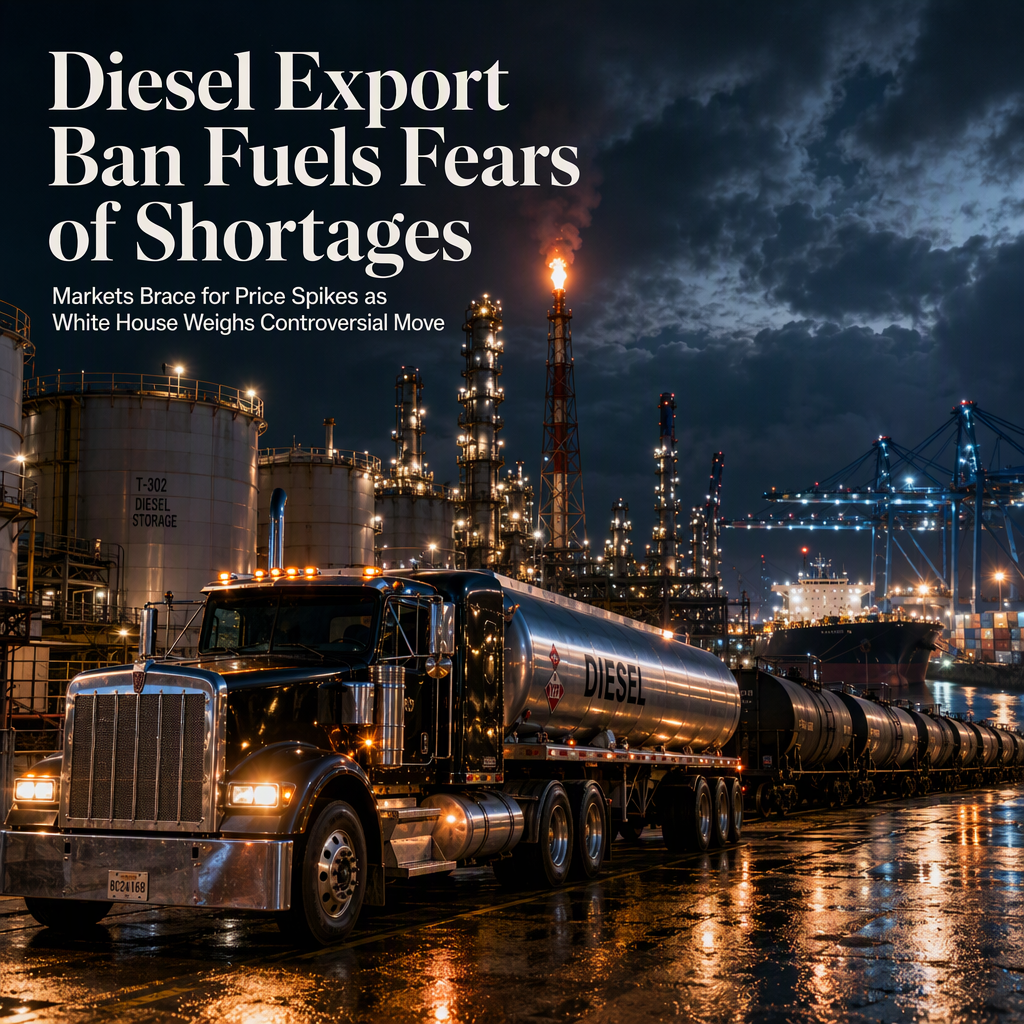
The core event discussed is the potential implementation of a diesel export ban by the current administration, which has raised significant concerns regarding its economic and market impact [1]. According to Larry Kudlow, the American Petroleum Institute reports that of the 8 million barrels of diesel fuel traded by sea, the United States supplies approximately 1.5 million barrels, accounting for about 20 percent of the global market [1]. If enacted, the ban would remove a substantial portion of diesel from international markets, likely resulting in higher global diesel prices due to reduced supply [1].
Kudlow further explains that diesel is produced as a distillate of oil, and halting diesel exports would necessitate a reduction in oil production. This would also impact gasoline production, with estimates from some oil companies suggesting a decrease of 550,000 to 750,000 barrels per day, potentially leading to a 30 cent increase in the price of a gallon of gasoline [1]. The Northeast and East Coast, which rely heavily on imported fuel, would be particularly affected, facing shortages and price spikes [1].
The proposal has sparked debate within the administration. Energy Secretary Chris Wright, Interior Secretary Doug Burgum, and Treasury Secretary Scott Bessent reportedly oppose the ban, while Vice President Vance and some Republican senators support it. The president is said to be considering the measure, but no final decision has been made [1].
Kudlow advocates for increasing refining capacity and streamlining permitting rules as a more effective solution, noting that efforts to expand oil reserves, such as those in Venezuela, will take time. He also suggests that regime change in Iran could address broader oil price issues, referencing the president's recent United Nations speech [1].
CONCLUSION
The proposed diesel export ban is expected to significantly disrupt fuel markets, causing shortages and price increases for both diesel and gasoline, especially in regions dependent on imports. The administration remains divided on the issue, with no final decision announced, while alternative solutions such as expanding refining capacity and addressing geopolitical factors are being considered.