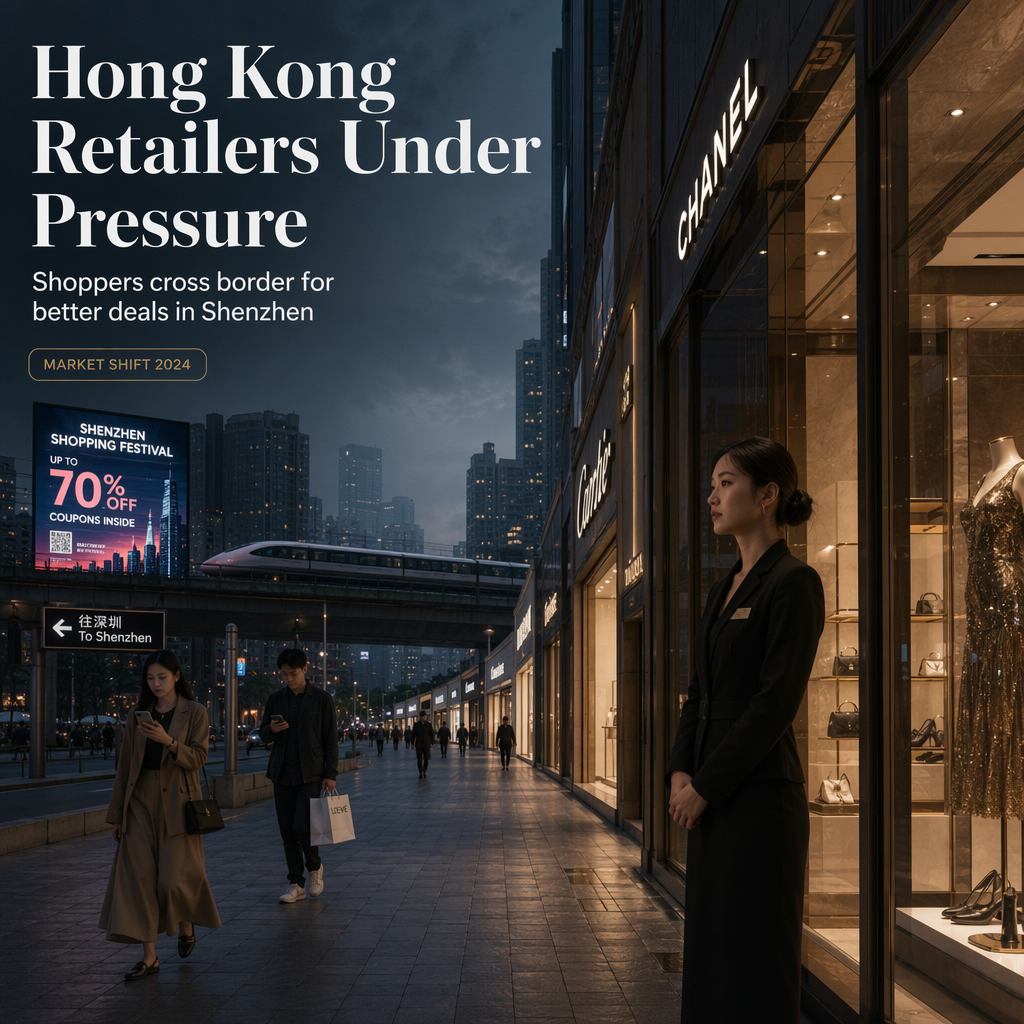
Hong Kong's retail sector is experiencing significant challenges as a growing number of residents choose to shop, dine, and seek entertainment in Shenzhen, mainland China, rather than locally. This trend is evidenced by surging traveler numbers at Lo Wu Control Point and the five other major land checkpoints between Hong Kong and mainland China, as residents are drawn by lower prices and what many describe as 'superior' services in Shenzhen [1].
Retailers in Hong Kong are reporting declining foot traffic and sales, particularly in sectors such as dining and consumer electronics. The shift is attributed to favorable exchange rates, lower taxes, and aggressive pricing strategies by Shenzhen businesses. Market analysis indicates that price levels in Shenzhen for many products are up to 30% lower than in Hong Kong, and the RMB/HKD exchange rate has been favorable for Hong Kong shoppers [1].
Technical indicators show declining retail sales volume in key Hong Kong districts, with resistance forming at previous support levels as local retailers attempt to maintain market share. Some Hong Kong retail executives warn that this cross-border competition could accelerate store closures and threaten the city's retail landscape unless local operators adapt quickly [1].
Analysts suggest that retailers should monitor price differentials and consider strategies such as loyalty programs or exclusive products to attract customers back. Market sentiment remains cautious, with expectations that cross-border shopping will continue to be strong unless Hong Kong's retail sector innovates or the price gap narrows [1].
CONCLUSION
Hong Kong's retail sector is under significant pressure as residents increasingly shop in Shenzhen for better prices and services. Unless local retailers adapt and narrow the price gap, the trend of cross-border shopping is expected to persist, potentially leading to further declines in Hong Kong's retail market.